
Last updated August 25, 2026
Free on-site gate assessment - hinges, posts, and your LiftMaster or Nice gate operator checked before anything is quoted
The assessment is free and the quote is the invoice.
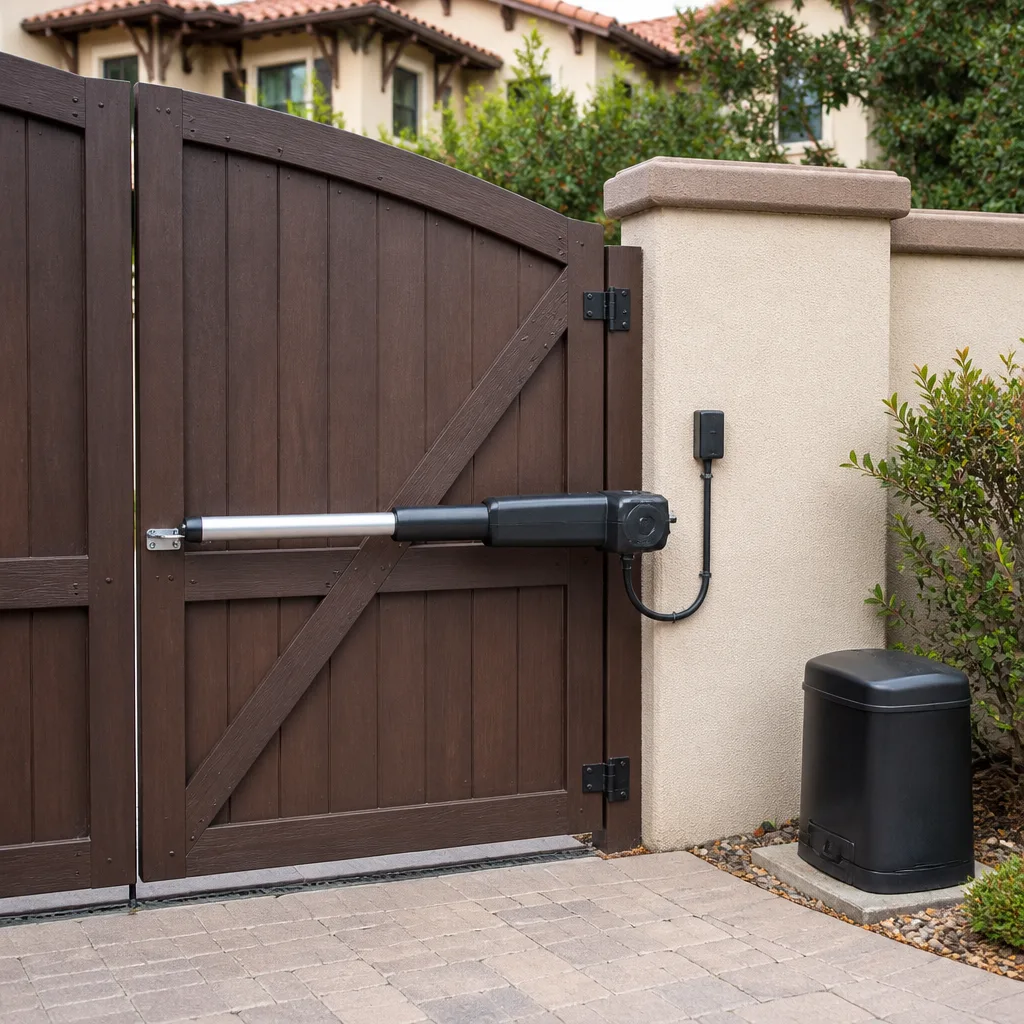
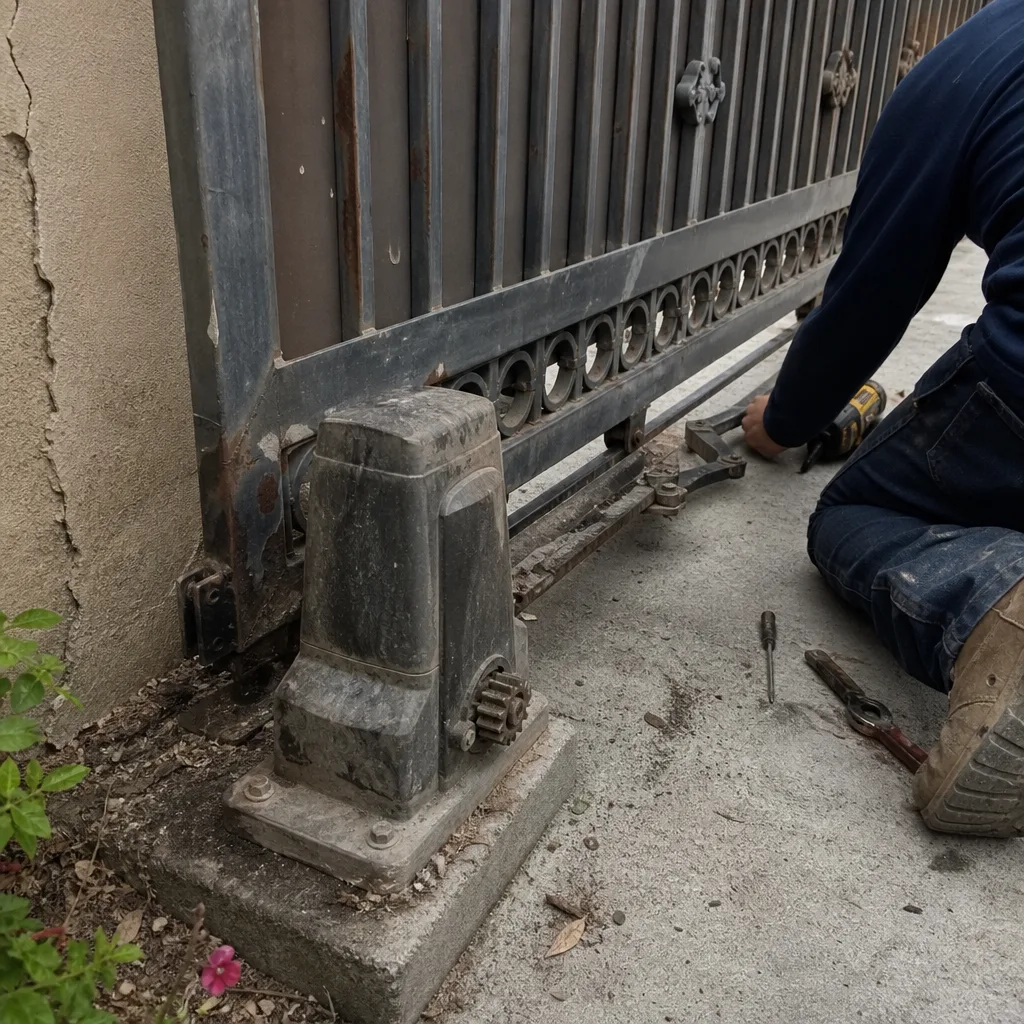 Before
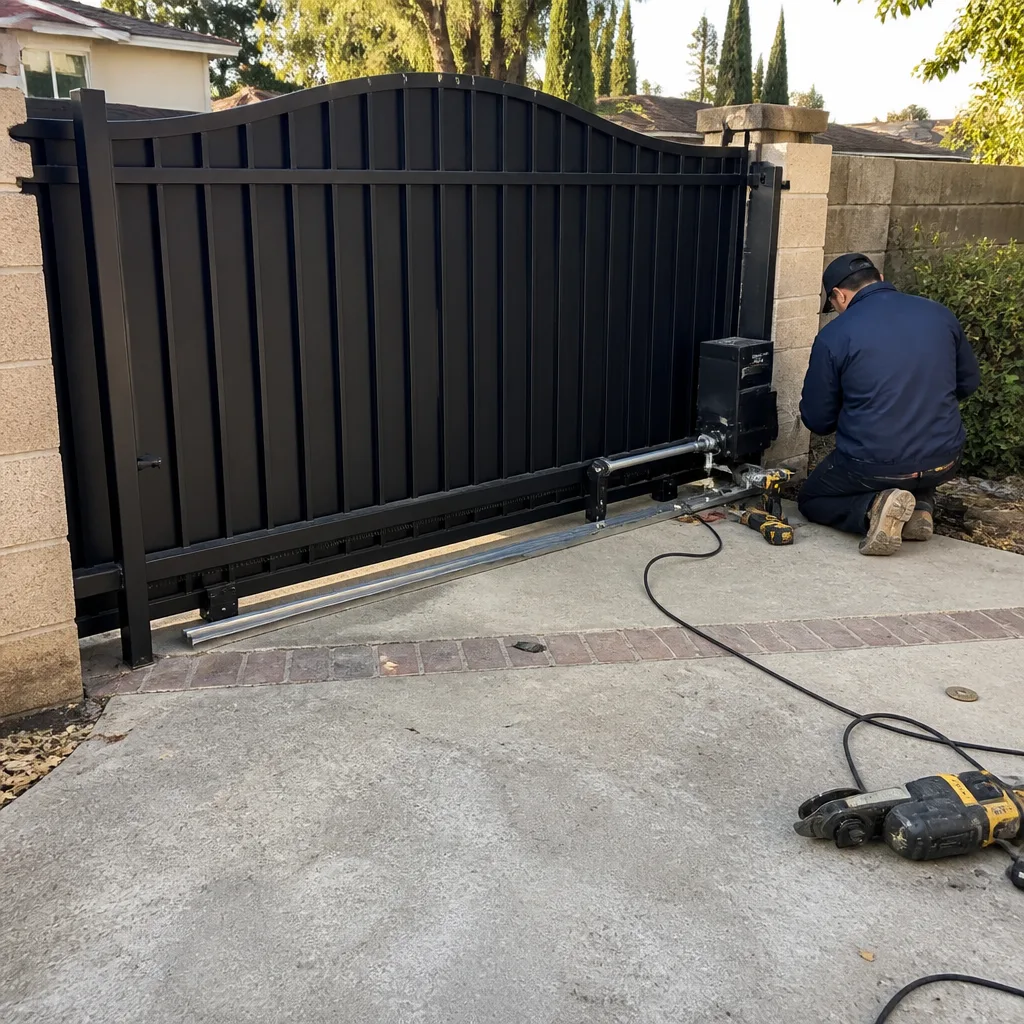 After
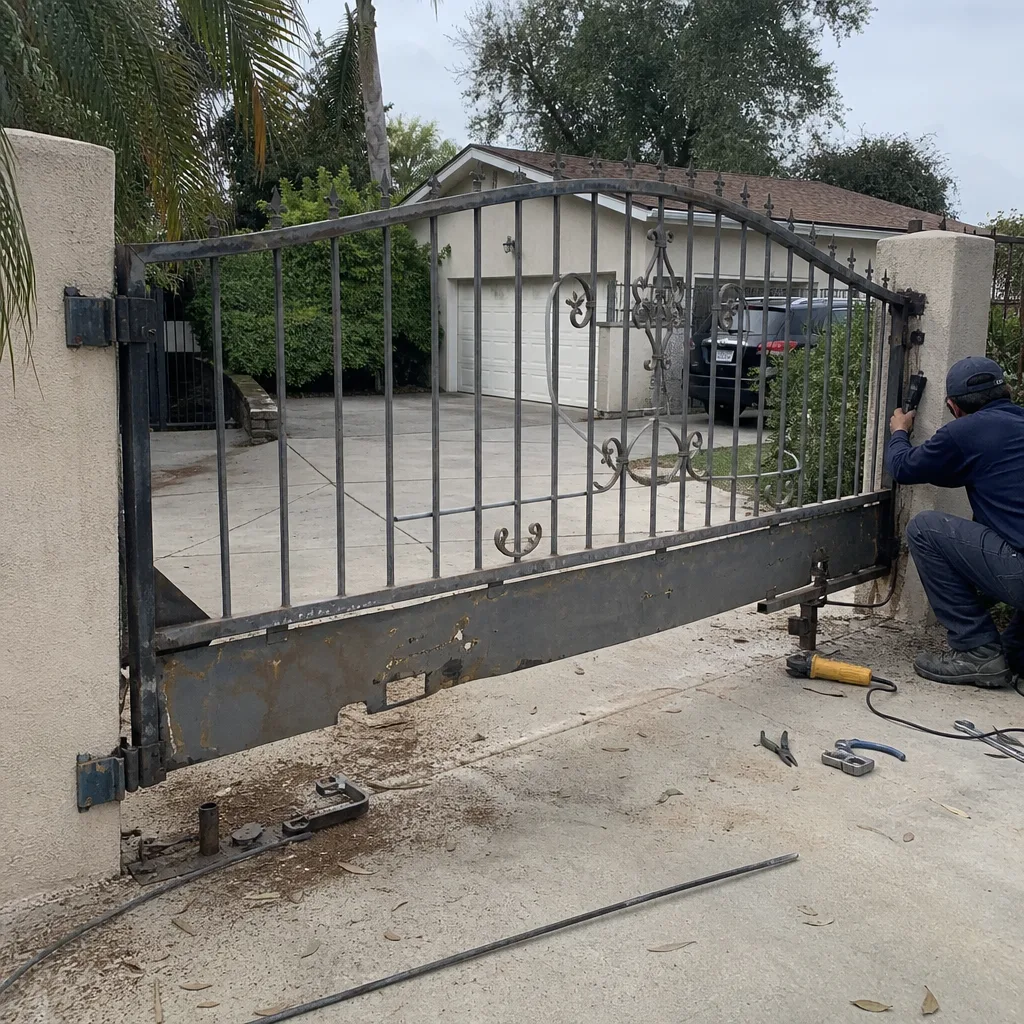 Before
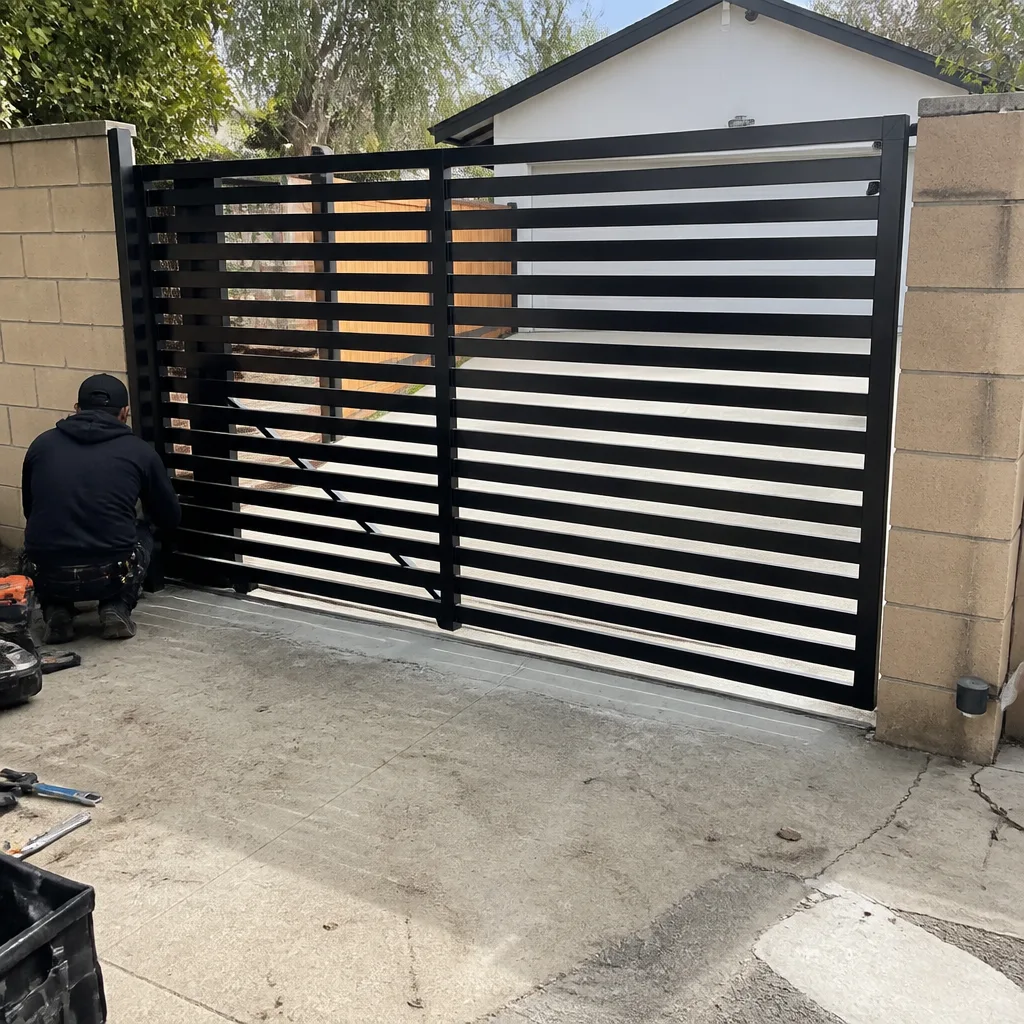 After
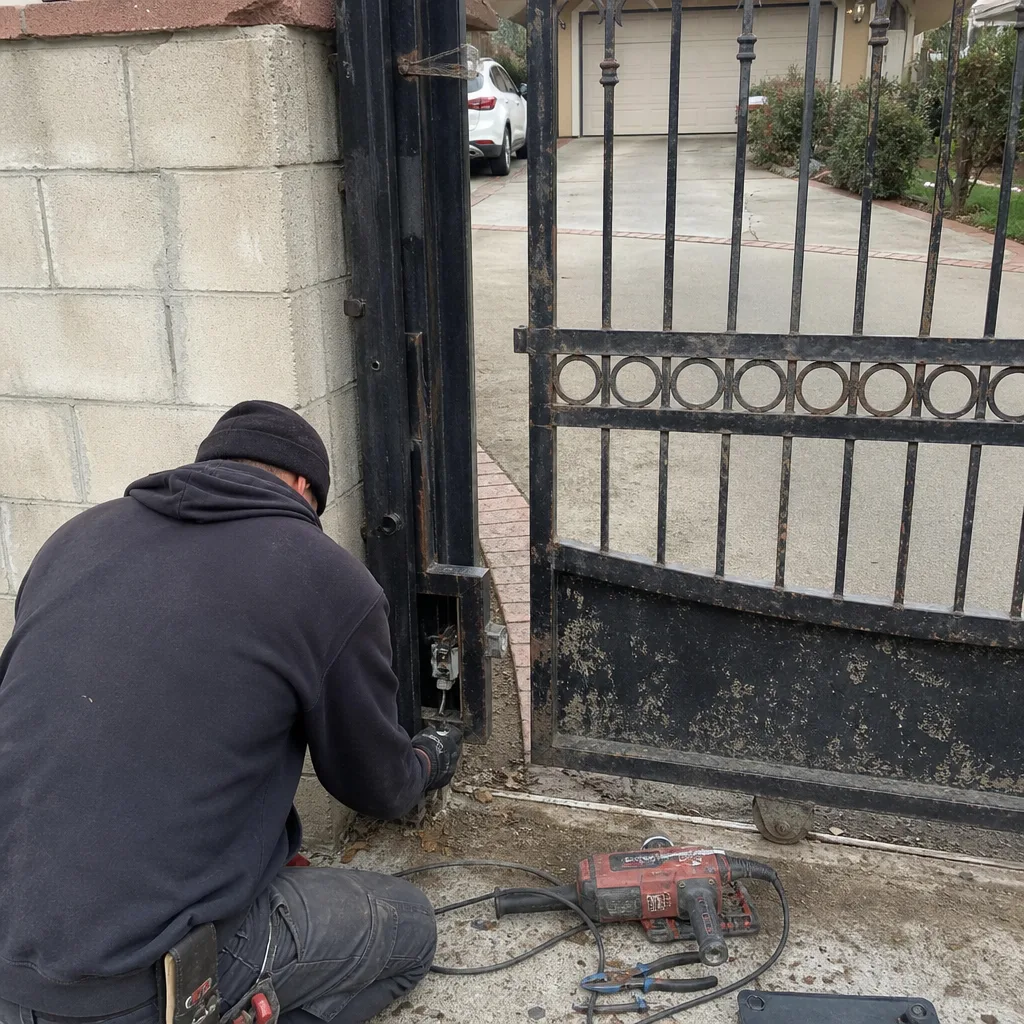 Before
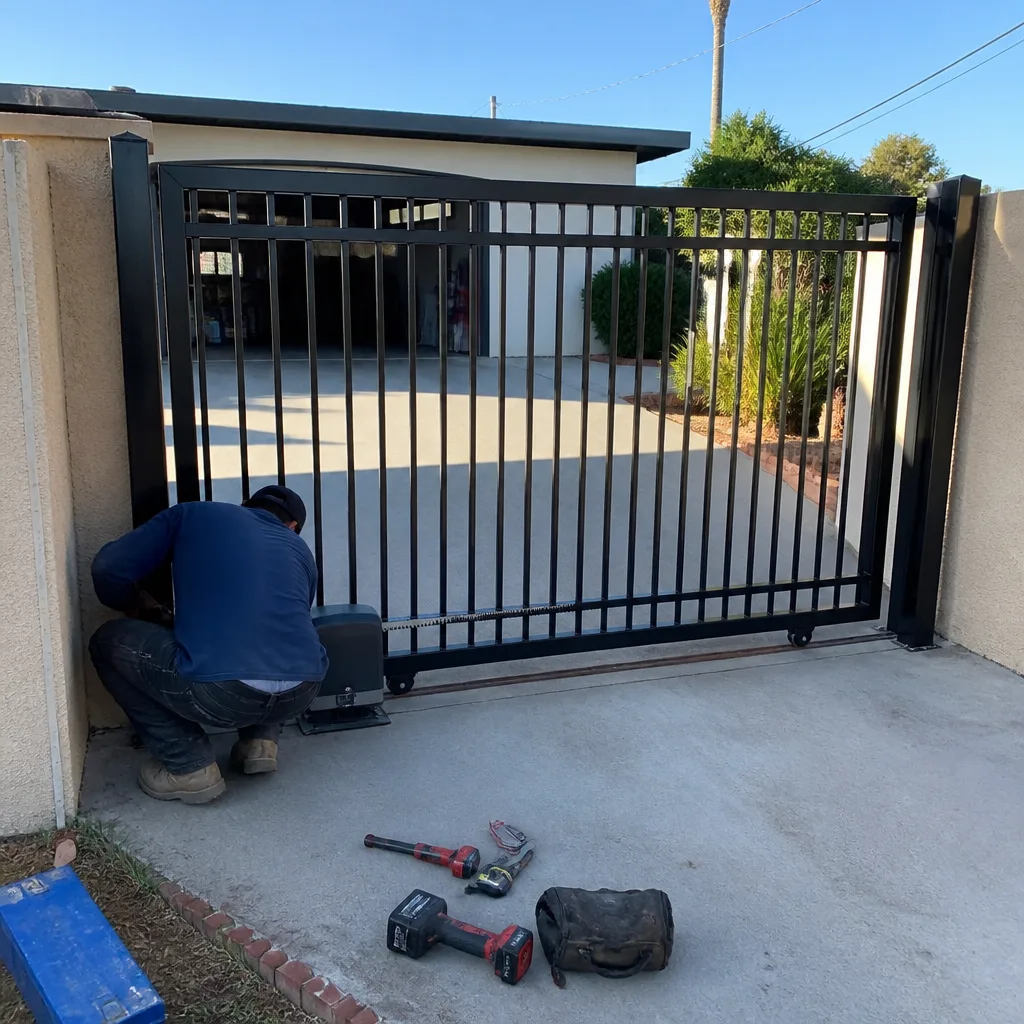 After
Gate Repair Permits, Codes & Inspections in CA: What You Need to Know
Most California homeowners are surprised to learn that a simple gate repair can trigger a permit, a code review, or even an inspection. The truth is, California treats automated driveway gates as potentially dangerous machinery. A gate that opens across a sidewalk, a poorly installed motor, or a missing safety sensor can create real liability, and most cities in the San Fernando Valley, including San Fernando, enforce their codes with a seriousness that catches people off guard. This guide walks you through what actually requires a permit, what the codes demand, what happens during an inspection, and how to stay ahead of it all without turning a repair into a paperwork nightmare.
Quick Answer
In California, repairing an existing gate rarely requires a permit if you are replacing like-for-like parts such as hinges, wheels, or an opener motor. A permit is generally required when you install a new gate, change the gate’s footprint, add automation to a gate that never had it, or run new electrical to the gate. Most cities in the San Fernando area follow the California Building Code with local amendments, and the two areas inspectors focus on most are the gate’s entrapment protection and the electrical work.
Table of Contents
- When Does a Gate Repair Actually Require a Permit in California?
- California Gate Codes: What the Law Actually Says
- Entrapment Protection: The Code Most Homeowners Miss
- Electrical Work on Automated Gates: What Needs a Licensed Electrician
- Gate Inspections in San Fernando: What the Inspector Checks
- HOA Rules vs. City Codes: When Both Apply
- Fire Access and Emergency Vehicle Gates
- What Permits and Inspections Cost in the San Fernando Area
When Does a Gate Repair Actually Require a Permit in California?
Here is the rule of thumb we tell homeowners in San Fernando: if the repair puts the gate back the way it was, you are almost always fine without a permit. If the repair changes the gate, you probably need one. That means replacing a worn hinge, a bent wheel, a failed circuit board, or a dead opener motor with the same type of part generally falls under routine maintenance. The California Building Code treats this as repair work, not construction.
But the moment you change the gate’s size, move its posts, add a pedestrian gate where none existed, or install automation on a manual gate, the city views that as new work. In San Fernando, as in most of Los Angeles County, that triggers the permit requirement. We have seen homeowners in the Mission City area surprised by this when they added a keypad and a motor to a gate that had been manually operated for twenty years. The city considers an automated gate a different animal entirely because of the safety code obligations that come with it.
Here is a simple breakdown:
- No permit needed: Replacing hinges, rollers, wheels, track, sensors, keypads, circuit boards, photocells, or opener motors with equivalents.
- Permit likely needed: Installing a brand new gate, widening the opening, moving the posts, adding automation for the first time, or running new electrical conduit from the house to the gate.
- Gray area: Replacing an entire gate structure on existing posts. Some inspectors treat this as repair, others as new construction. When in doubt, call the city planning counter and ask. A phone call costs nothing.
We always recommend asking the city directly if there is any doubt. The San Fernando Building and Safety division is small enough that a live person typically answers. Describe the job, get the answer, and ask for the person’s name. That is the cheapest insurance you will ever buy on a gate project.
California Gate Codes: What the Law Actually Says
California does not have a single stand-alone gate code. Instead, gate regulations live inside the California Building Code (CBC), the California Electrical Code (CEC), and, for automated vehicle gates specifically, a national standard called UL 325. The CBC adopts the International Building Code with California-specific amendments, and UL 325 is the safety standard that governs automatic gate operators. Any gate automation system installed in California must comply with UL 325, and any inspector worth the badge will check for it.
UL 325 has been around in some form since 1973, but the version that matters today took effect in 2016 and tightened entrapment rules significantly. Before 2016, a single safety device could be enough. After 2016, automated gates must have two independent forms of entrapment protection, and both must be monitored for proper operation. If either device fails, the gate operator must not run. This is not a recommendation. It is the law, and it is the first thing an inspector in San Fernando will test when they come out.
Here is what the code requires on every automated gate in California:
- Two independent entrapment protection devices: typically a pair of photo eyes, or a photo eye plus a reversing edge sensor, or a photo eye plus an inherent motor sensing system.
- Monitored operation: the operator must detect when a safety device is not functioning and refuse to operate, flashing an error code instead.
- Photocells positioned correctly: they cannot be mounted higher than the gate’s leading edge and must cover the full sweep of the gate’s travel.
- Warning signage: a permanent warning sign on each side of the gate, not faded or painted over.
- Manual release mechanism: a way to disconnect the operator and move the gate by hand in an emergency.
In our experience, the two-house rule is the one that surprises people most: UL 325 does not apply to gates serving a single one- or two-family dwelling if the gate is not accessible to the public. But the moment your driveway gate fronts a sidewalk, a public right-of-way, or a shared easement, the standard applies. In San Fernando’s older neighborhoods where homes sit close to the street, that is nearly every driveway gate in town.
Entrapment Protection: The Code Most Homeowners Miss
Entrapment protection is the single most frequently failed item on gate inspections in San Fernando. An inspector will place a test object in the gate’s path, or simulate a vehicle stopped in the gate’s sweep, and watch the operator respond. If the gate does not reverse or stop, the inspection fails. Simple as that.
The reason this catches so many homeowners is that older gate systems were installed under older rules. A slide gate from 2003 might have a single photo eye and a pressure-sensitive edge that has long since stopped working. The homeowner never notices because the gate opens and closes every day. But the inspector notices because the inspector is required to test it. When it fails, the homeowner is looking at a repair bill before the gate can be signed off.
What a compliant system looks like:
- Primary safety device: a set of photocells mounted no higher than six inches off the ground, aligned to create an invisible beam across the gate’s path.
- Secondary safety device: a reversing edge on the gate’s leading edge that trips when it contacts anything, or a motor with built-in obstruction sensing that detects resistance and reverses.
- Monitored wiring: both devices wired through the operator’s safety monitor loop, so a cut wire or failed sensor shuts the system down and flashes a fault code.
- UL 325 compliance sticker: still visible on the operator. If the sticker is gone, the inspector may ask for documentation.
Testing entrapment protection is not a casual task. A person can be seriously injured by a gate that does not reverse, and UL 325 exists because of real incidents. We do not recommend homeowners fabricate their own test objects or attempt to defeat safety devices. If a gate is failing an entrapment test, call a certified gate technician. The fix is usually straightforward: a bad photo eye, a corroded wire, or a friction clutch that needs adjustment. But the diagnosis requires someone who works on gates every day, not a general handyman with a multimeter and a guess.
Electrical Work on Automated Gates: What Needs a Licensed Electrician
Gate operators run on electricity, and that electricity has to come from somewhere. In most San Fernando homes, the power run to the gate is either an existing conduit from the house, a dedicated circuit, or in some cases a solar panel system. California Electrical Code requires that any new circuit, new conduit run, or new connection to the main panel be performed by a licensed electrician with a permit. The gate company can mount the operator, wire the low-voltage controls, and connect the operator to an existing junction box. But if the power is not already at the gate, an electrician enters the picture.
Here is where homeowners get tripped up: a gate technician can legally wire the operator to an existing disconnect or junction box. What the gate technician cannot do, unless they also hold an electrical contractor’s license, is pull a new circuit from the main panel, trench new conduit, or make connections inside the main panel. That work requires a C-10 electrical contractor license in California.
The practical sequence looks like this:
- Determine whether power already exists at the gate location.
- If no power exists, hire a licensed electrician to run the circuit and set a junction box or disconnect near the gate.
- Have the gate company install and wire the operator to that box using low-voltage control wiring.
- Schedule the city inspection once both the electrical and the gate work are complete.
In our experience, the most common electrical issue on San Fernando gate jobs is not missing power. It is ancient power. A gate that was automated in the 1990s may have deteriorated insulation, a jury-rigged extension cord, or a circuit shared with the garage door opener and a pool pump. When we open the junction box and find that, we stop and bring in an electrician. The last thing anyone wants is a gate circuit that trips when the pool pump kicks on.
Gate Inspections in San Fernando: What the Inspector Checks
If you pulled a permit, you will get an inspection. In San Fernando, gate inspections are handled by the city’s Building and Safety division, and the inspector will be looking at the permit scope of work against what was actually installed. The inspection itself typically takes under an hour, but the prep work can take days if the job is not clean.
The inspector’s checklist, in order of priority:
- Entrapment protection: both devices present, functional, and compliant with UL 325. The inspector will test them.
- Gate travel and clearances: the gate must open and close without striking anything. For slide gates, the inspector will check that the gate does not extend past the property line or into the public right-of-way.
- Electrical connections: if the permit includes electrical, the inspector will verify the circuit, the connection method, and the bonding.
- Warning signs: UL 325 requires signage on both sides of the gate. Missing or faded signs are a common automatic fail.
- Manual release: the inspector will verify that the gate can be disconnected and moved by hand.
- Pedestrian safety: if the gate includes a separate pedestrian gate, the inspector will check its latch, swing direction, and clearance from the driveway gate’s path.
One practical note: in San Fernando, as in many smaller cities, inspection scheduling can run a week or two behind. If you have a gate that is halfway through a repair and waiting on inspection, plan for that gap. Do not leave a gate open or disabled while you wait. A functioning gate is a security device and a life-safety device before it is anything else.
HOA Rules vs. City Codes: When Both Apply
Many San Fernando neighborhoods have homeowners associations, and HOAs have their own rules about gates, fence heights, materials, colors, and even the direction a gate swings. A project can pass city inspection and still be in violation of an HOA covenant. The two systems do not talk to each other. The city cares about safety. The HOA cares about appearance and property values.
This is a useful distinction to internalize: the city inspector will never ask about your gate’s paint color. The HOA will never ask about your photo eyes. You need both approvals, and they happen on different timelines. If the HOA requires design review approval before work begins, that is your first step, not an afterthought. We have seen homeowners complete a full gate installation only to have the HOA demand changes because the gate was a half-inch taller than the architectural guidelines allowed.
How to sequence it:
- Check your HOA’s CC&Rs and architectural guidelines first. Look for language about gates, fences, and driveway features.
- Submit the design review application with the gate specifications, materials, and finish.
- Once HOA approval is in writing, pull the city permit if the project requires one.
- Complete the work and schedule the city inspection.
- Keep both approvals on file. When you sell the house, the buyer’s title company may ask for proof that the gate was properly permitted.
In San Fernando, where many homes were built in the 1950s and 1960s, some neighborhoods have no HOA at all. Others, particularly newer developments on the north side, have active HOAs with strict gate standards. Know which situation you are in before you start.
Fire Access and Emergency Vehicle Gates
California has specific rules about gates that control access to fire lanes, emergency vehicle access roads, or properties with long driveways. The California Fire Code requires that any gate across a fire department access road be operable by the fire department without stopping. That means a Knox key switch, an automatic opener tied to the fire panel, or a gate that fails to the open position on power loss.
This applies to more properties than people think. A long driveway in the hills above San Fernando that requires emergency vehicle access may trigger the fire code even if the gate is perfectly legal under the building code. The San Fernando Fire Department, which serves the city, reviews fire access requirements when permits are pulled. If the gate impairs emergency access, the fire marshal can require changes before the project is signed off.
Key requirements for emergency access gates:
- Knox key switch or fire department override: the fire department must be able to operate the gate without the homeowner present.
- Fail-safe operation on power failure: the gate must open or be manually operable without tools when power is lost.
- Clear width: the gate opening must accommodate a fire apparatus, typically 20 feet minimum for fire lanes.
- No secondary locks: padlocks, chains, or manual latches that defeat the fire department override are violations.
If you live on a flag lot, a hillside property, or any home with a driveway over 150 feet, check with the fire department before you touch the gate. A conversation now saves a failed inspection and a very expensive rework later.
What Permits and Inspections Cost in the San Fernando Area
Permit fees in the San Fernando area run lower than in some neighboring cities, but the total cost depends on the scope of work. A simple electrical permit for a gate operator circuit typically runs between $75 and $200. A full gate and electrical permit on a new installation might run $300 to $700 depending on the project valuation the city assigns. Inspection fees are usually bundled into the permit cost for the first inspection, with reinspection fees of $50 to $100 if the project fails the first time.
Here is a realistic picture of what to expect:
- Simple repair, no permit: $0 in permit costs. Just the repair bill, which is typically quoted and agreed before work starts.
- Operator replacement with existing power: often no permit needed. If a permit is required for the electrical connection, budget $75 to $200.
- New gate installation with automation and new electrical: $300 to $700 in total permit and inspection fees, plus the cost of the electrician and the gate work itself.
- Failed inspection and reinspection: $50 to $100 per reinspection, plus whatever repair costs are involved.
These are the fees from the city. They do not include the cost of the work itself, which varies widely depending on the gate, the operator brand, and the condition of the site. Every dollar of the permit and inspection cost is a fraction of what a non-flagged, non-compliant gate can cost when you sell the house or when an insurance claim is involved. In our experience, the homeowners who try to skip the permit are the same ones who end up paying twice.
Common Mistakes to Avoid
- Replacing a gate opener with a more powerful model without checking the electrical load. A larger motor on an old circuit can trip the breaker constantly or create a fire hazard, and it often fails inspection.
- Installing a new gate on existing posts that were never rated for the weight. The old posts may be hollow, rusted at the base, or set in shallow concrete. The gate will sag and bind within a year.
- Adding automation to a manual gate without upgrading the hinges and track. A gate that was designed to be pushed by hand now gets pushed by a motor. The stress on the hardware doubles, and the failure happens fast.
- Skipping the HOA review because the city permit was approved. The city and the HOA are two separate approvals. One does not satisfy the other.
- Leaving a gate disabled while waiting for an inspection. A gate that sits open for two weeks is an invitation. Keep it secure, even if it means manual operation.
- DIY low-voltage wiring without knowing the operator’s safety monitor requirements. UL 325 compliance depends on correctly wired safety devices. A homeowner who wire-nuts a photo eye into the wrong terminal creates a system that passes a visual check but fails operationally.
- Not documenting the permit, the inspection, and the HOA approval when the project is done. When you sell the house, the buyer’s inspector will ask. Missing paperwork can kill a deal.
When to Call a Professional
Call a gate professional the moment the gate stops being a straightforward hardware swap and starts being a system: automation, safety devices, electrical connections, or anything that touches the entrapment protection. A gate that does not reverse when it should is a serious injury waiting to happen, and testing the system safely requires someone who knows how UL 325 compliance works in practice. If you are in San Fernando and the gate is binding, the motor is straining, the safety eyes are flashing, or the gate simply stopped opening one morning, that is the moment to call. Ironworks Gate Co. offers free estimates in San Fernando, and every quote is settled before any work begins. Call (925) 307-8328 and describe what the gate is doing. A live person will answer.
Frequently Asked Questions
In most cases, no permit is required to replace a like-for-like gate opener on an existing automated gate. The exception arises when the replacement involves running new electrical from the main panel, which requires an electrical permit and a licensed electrician.
A straightforward electrical permit for gate operator work in San Fernando typically runs between $75 and $200. A full new gate installation with automation and new electrical can run $300 to $700 in permit and inspection fees, depending on the project valuation the city assigns.
California law allows a homeowner to act as an owner-builder on their own residence, which includes pulling permits for a gate installation. But the work must still meet UL 325 safety standards and pass city inspection, and electrical work on the main panel must be done by a licensed electrician regardless.
UL 325 is the safety standard that governs automatic gate operators in the United States. It requires two independent forms of entrapment protection, monitored operation of safety devices, warning signage, and a manual release, and it is the standard inspectors in San Fernando check when they test an automated gate.
If the gate already exists and the swing direction is not changing, the repair does not require a permit. If the gate is new, or if the swing direction is being changed so the gate sweeps over a sidewalk or public right-of-way, a permit is required and the city will check the swing clearance.
A gate inspection in San Fernando typically takes under an hour on site. The inspector tests the entrapment protection, checks the electrical connections, verifies the warning signs, and confirms the manual release works. Scheduling may run a week or two out depending on the city’s inspection backlog. Call (925) 307-8328 if you have questions about getting a gate inspected.
The Bottom Line
California gate permits and codes come down to a few core ideas. Routine repair of existing hardware rarely needs a permit. New gates, added automation, and new electrical work usually do. Every automated gate must meet UL 325 entrapment protection standards, with two independent monitored safety devices and a manual release. San Fernando inspections focus on those safety devices first, then on electrical connections and clearances. HOA rules run parallel to city codes and must be handled separately. And fire access rules apply to more properties than most homeowners realize. If any of this feels like more than you want to manage alone, that is what a dedicated gate company is for. Done right, and backed in writing.
Written by Ironworks Gate Co. at Ironworks Gate Co. home, serving San Fernando.