
Last updated August 25, 2026
Free on-site gate assessment - hinges, posts, and your LiftMaster or Nice gate operator checked before anything is quoted
The assessment is free and the quote is the invoice.
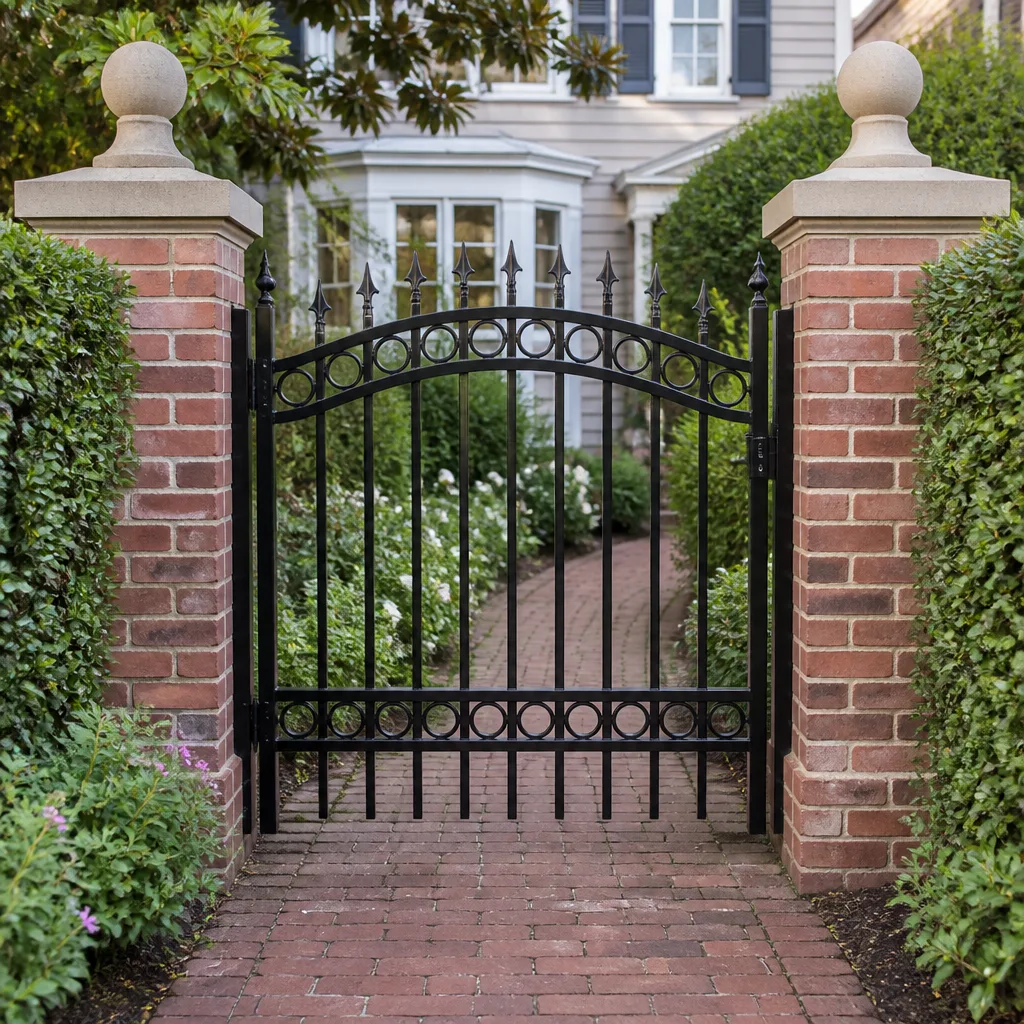
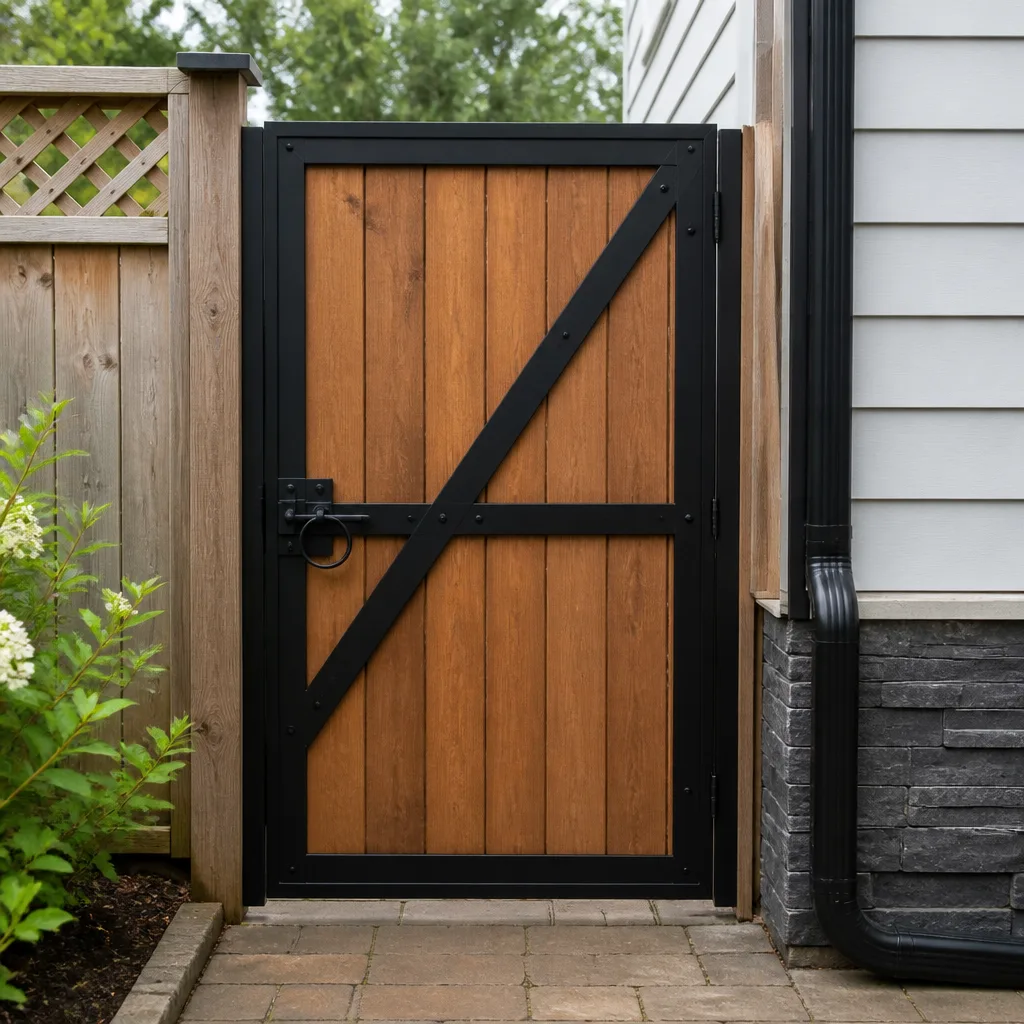
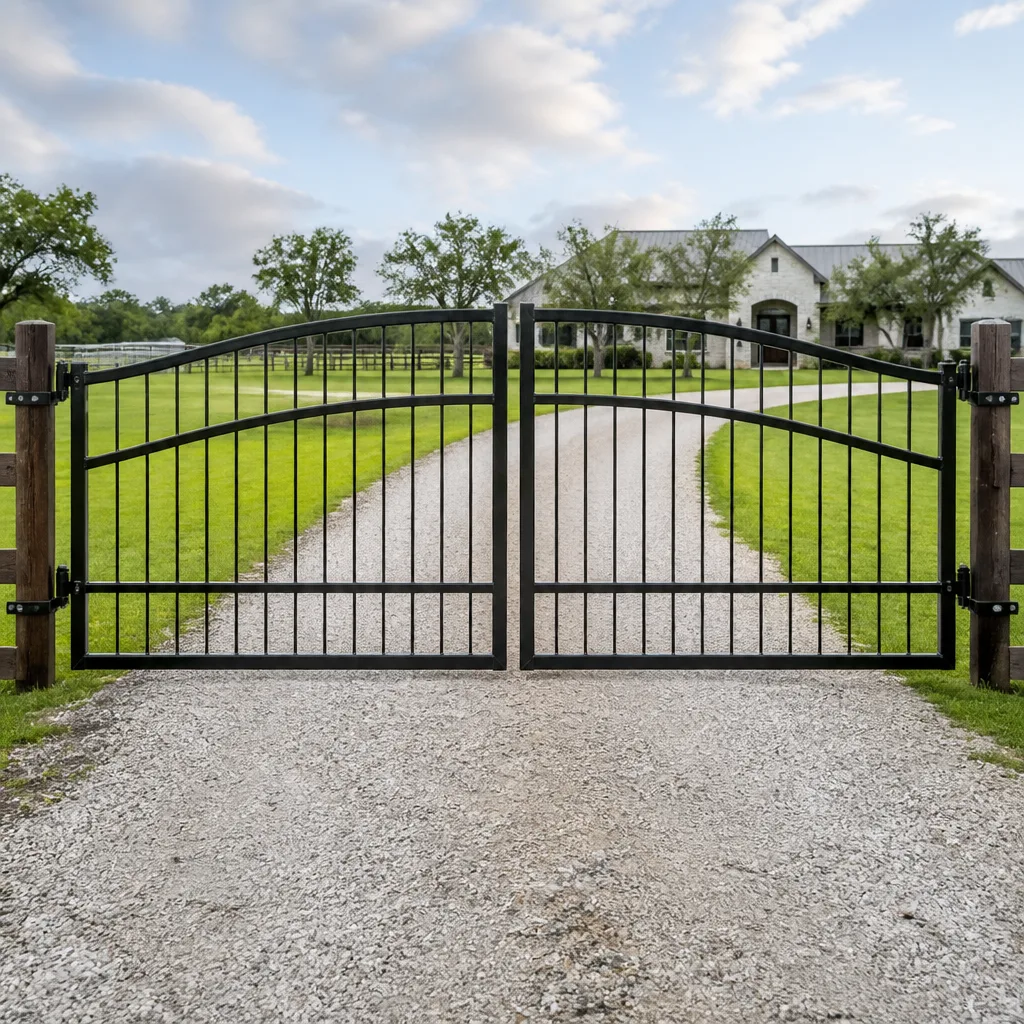
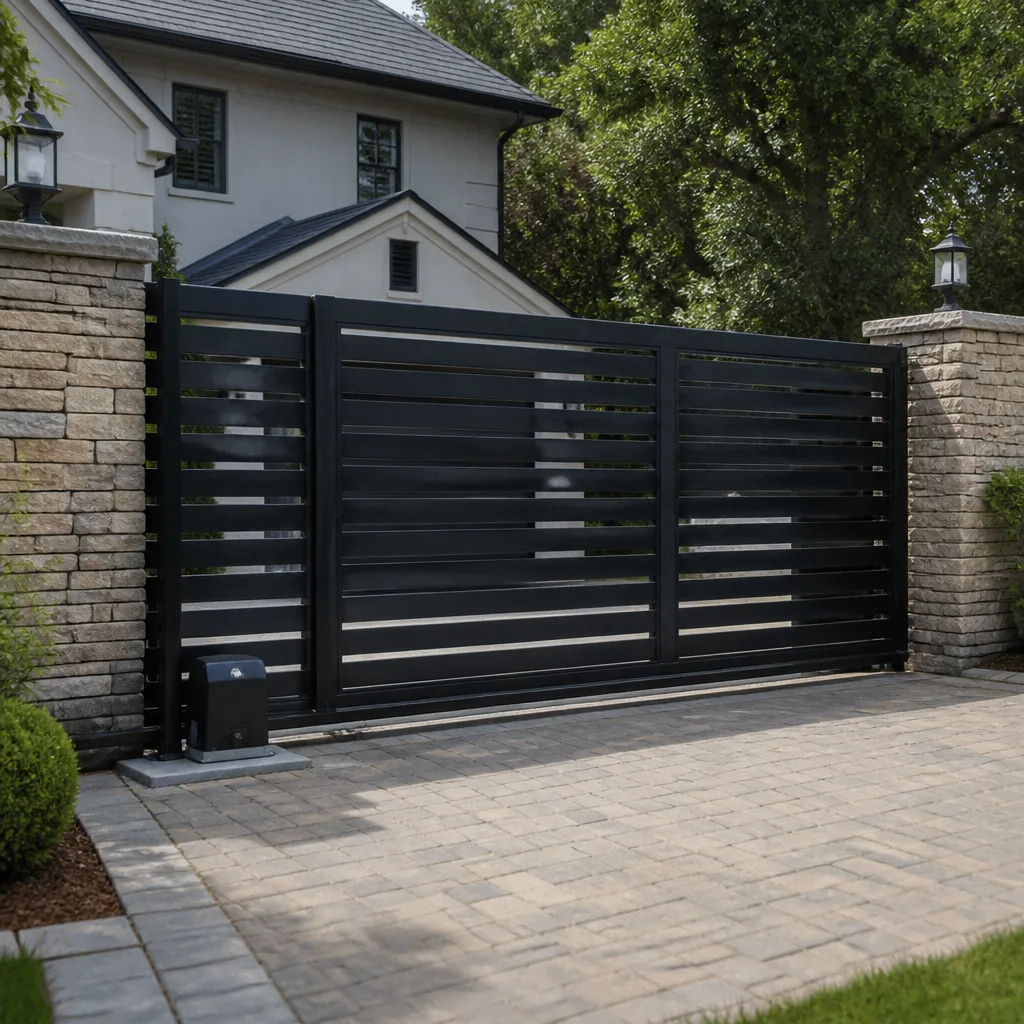
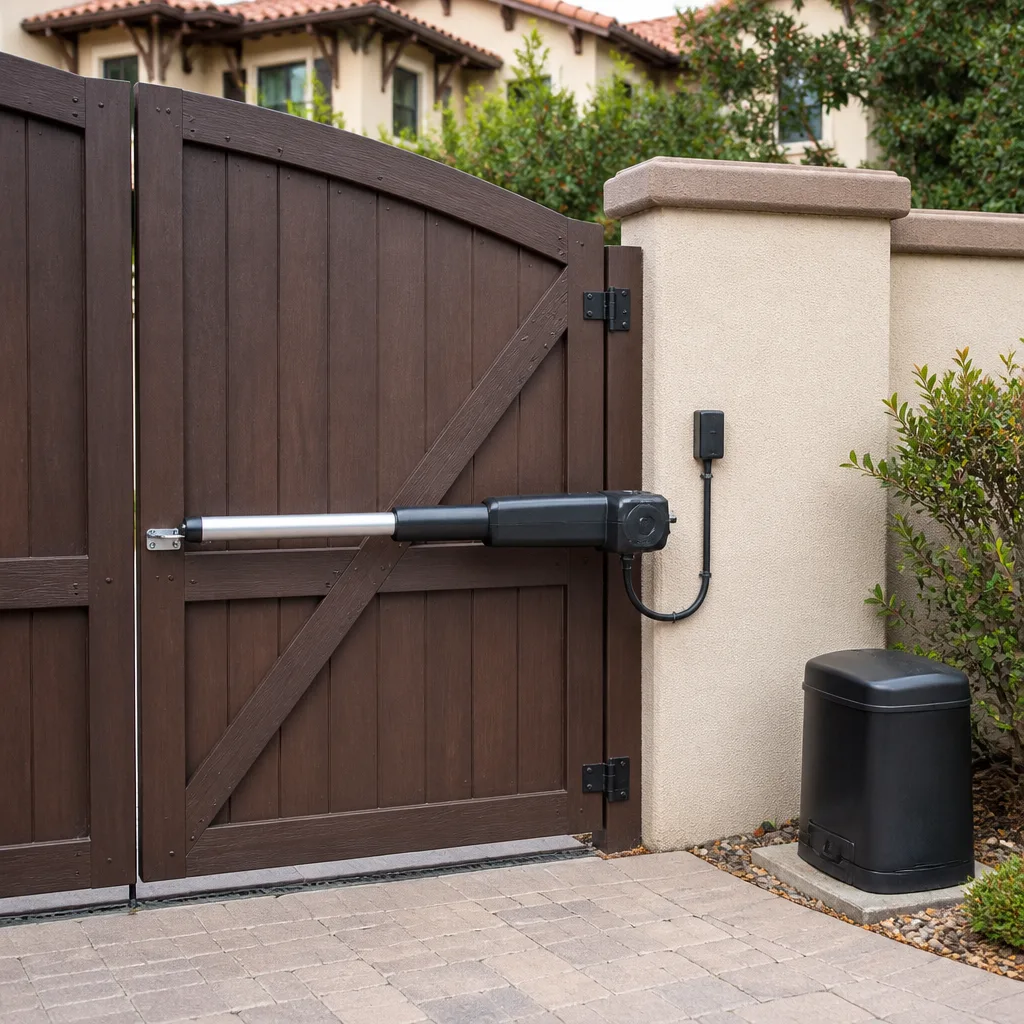
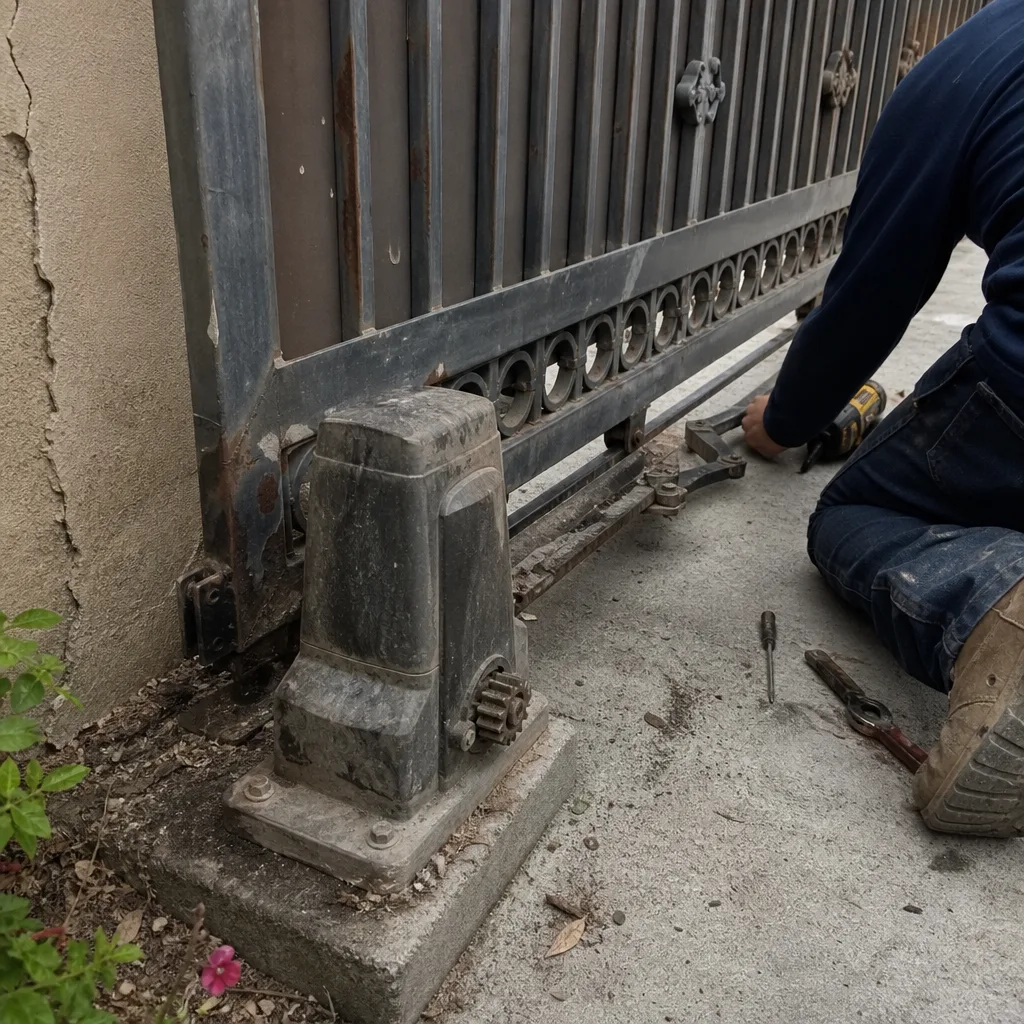 Before
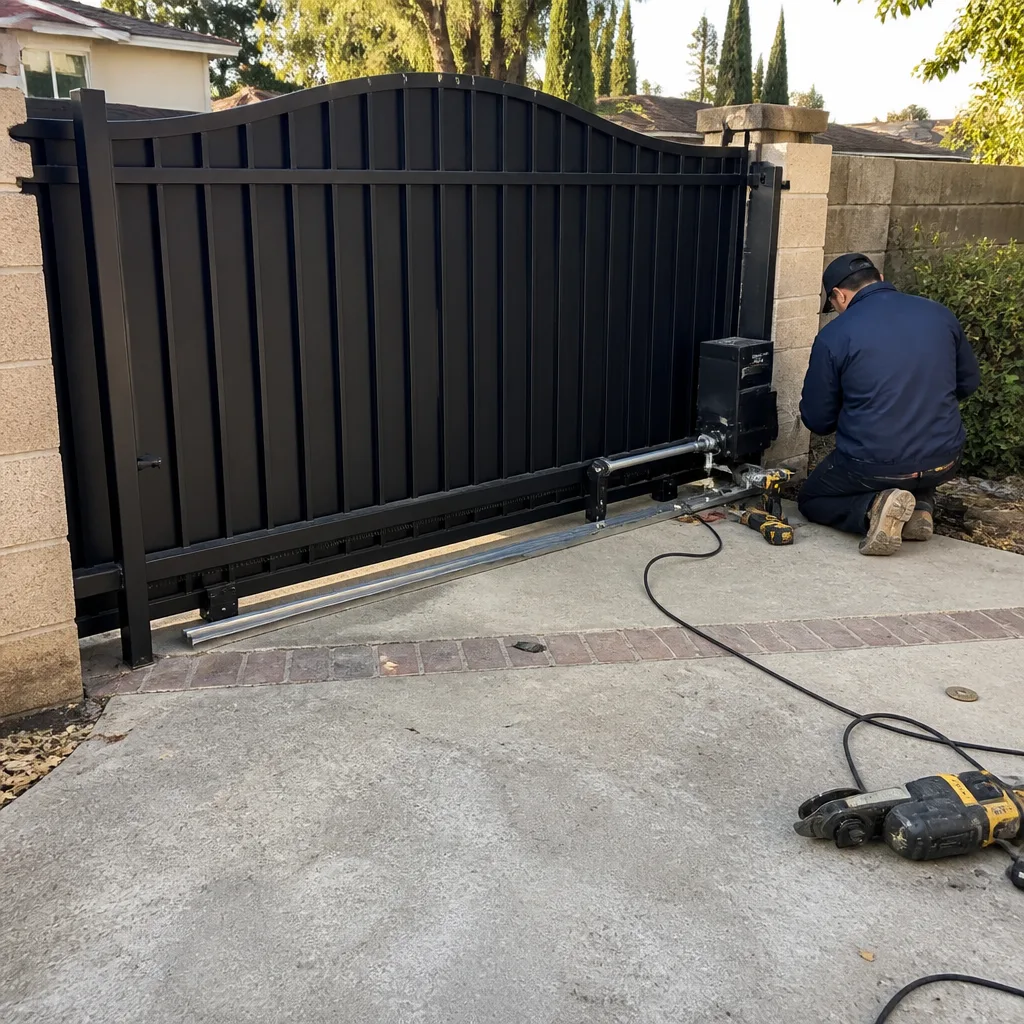 After
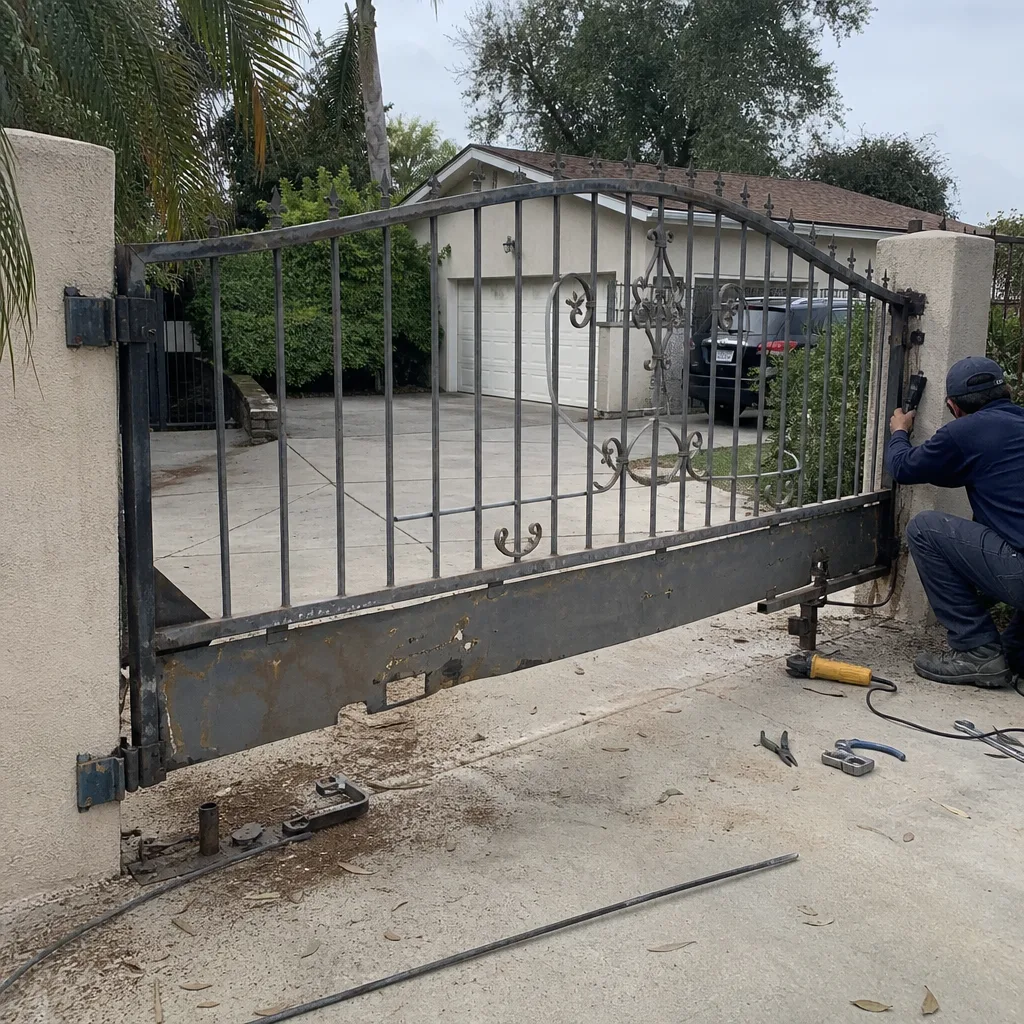 Before
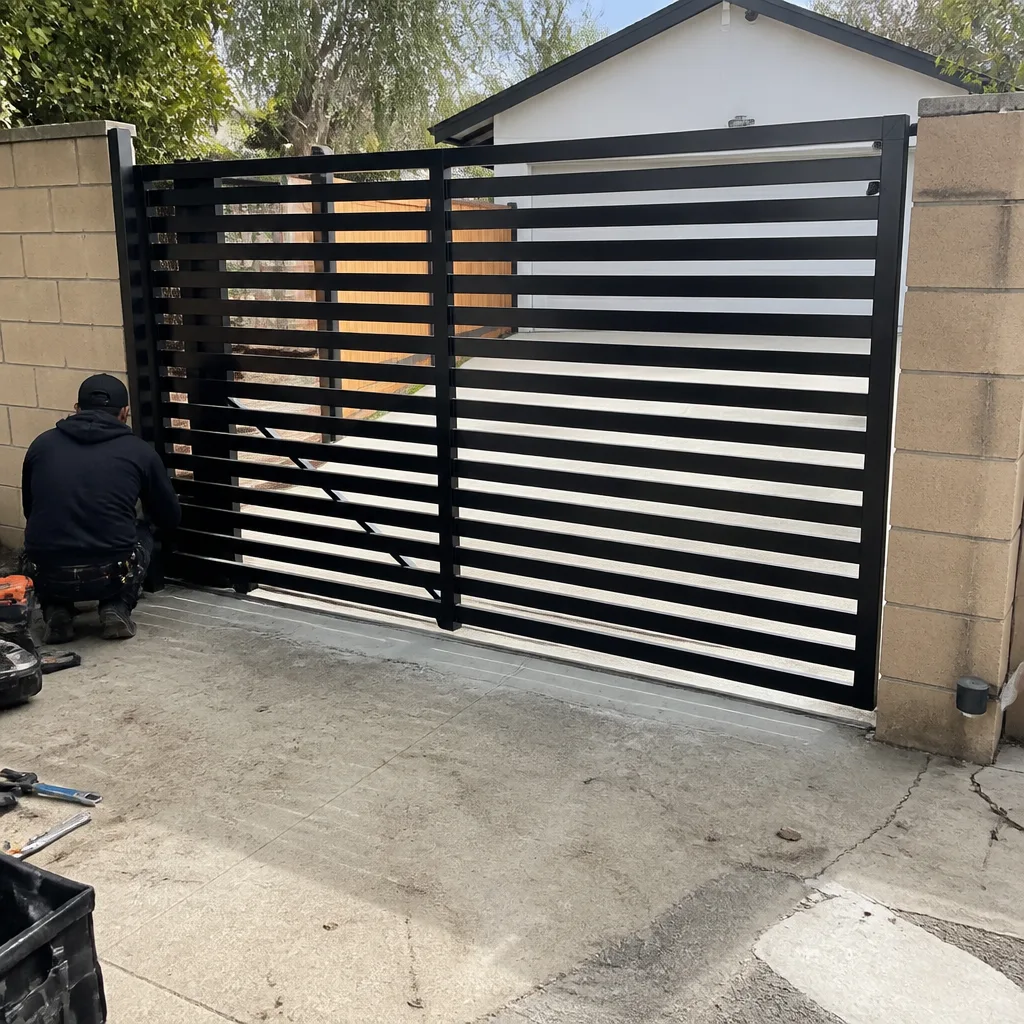 After
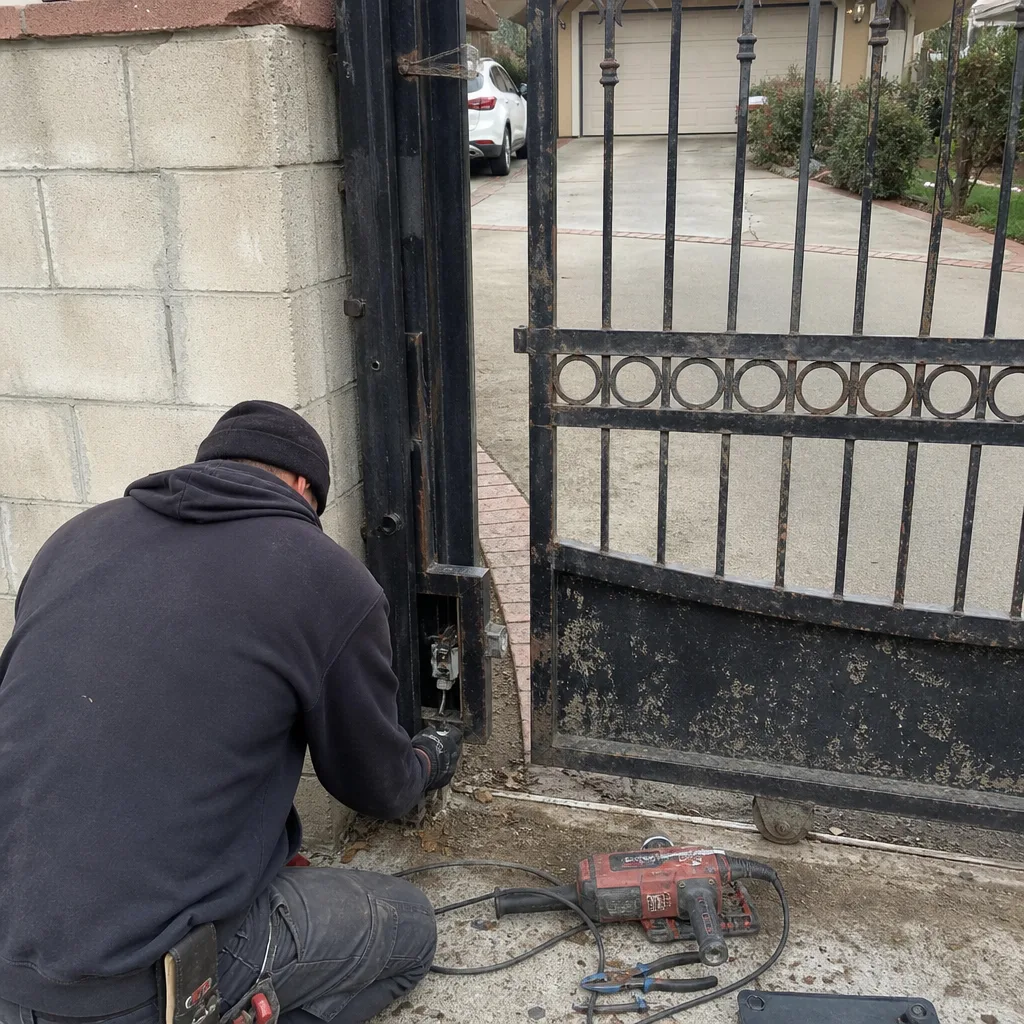 Before
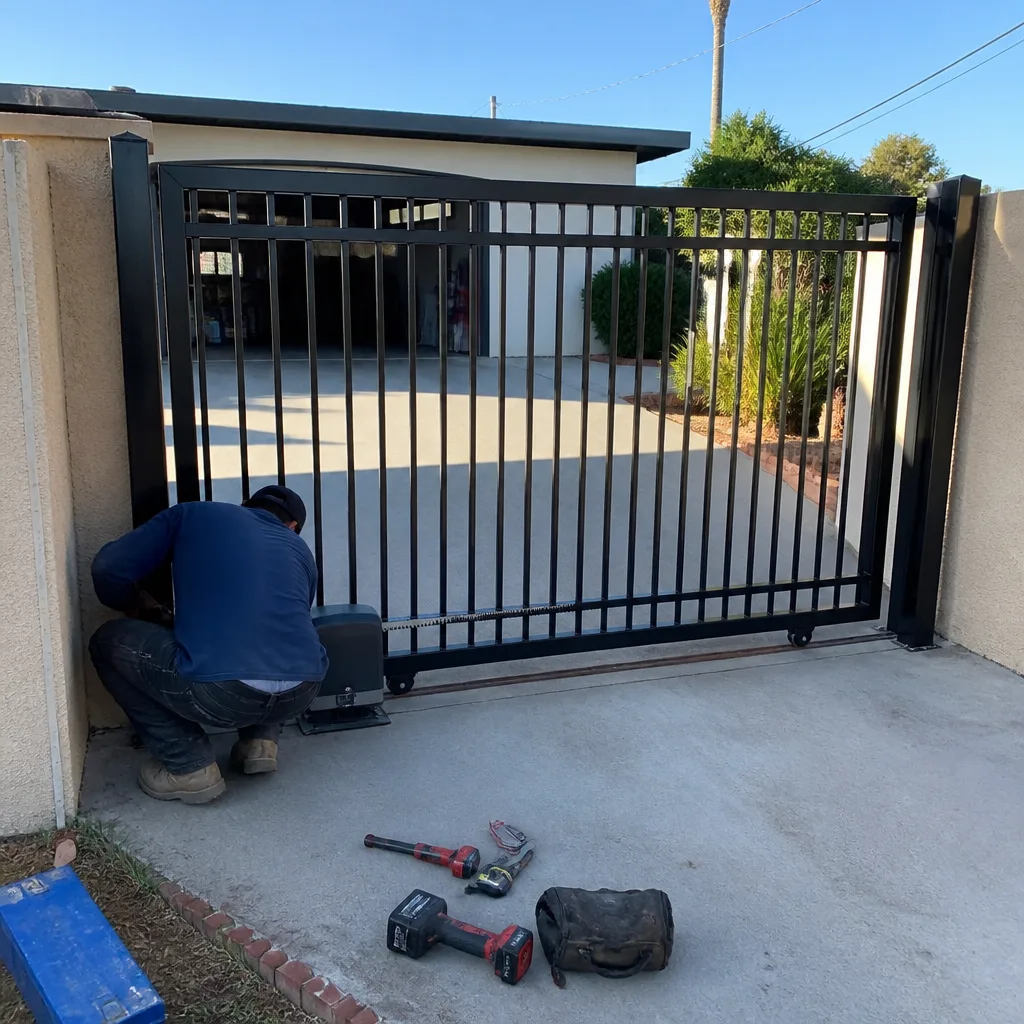 After
Gate Repair Warning Signs: A San Fernando Homeowner’s Reference Guide
Most gate failures don’t happen suddenly. They announce themselves weeks or months in advance, through small sounds and small movements that are easy to dismiss as nothing. A gate that drags an inch lower each month, a motor that pauses half a second longer before engaging, a hinge that creaks only when the temperature drops. Homeowners in San Fernando live with these signs until the morning the gate won’t open at all, and then it’s a different kind of problem entirely. This guide covers the warning signs that matter, what they mean, what they cost to fix, and when to stop watching and start calling.
Quick Answer
The most common gate repair warning signs in San Fernando are a gate that sags or drags on the ground, a motor that hums but doesn’t move the gate, grinding or squealing sounds during operation, hinges with visible rust or play, and a gate that reverses or stops unpredictably. Most of these issues cost between $150 and $400 to fix when caught early, and most can be resolved in a single visit by a qualified gate technician.
Table of Contents
- A Gate That Sags or Drags
- A Motor That Hums But Doesn’t Move
- Grinding, Squealing, or Metal-on-Metal Sounds
- Rust, Corrosion, and Powder Coat Failure
- A Gate That Reverses or Stops Mid-Cycle
- Keypad, Remote, and Access Control Failures
- Worn Wheels, Track Problems, and Foundation Settlement
- Common Mistakes to Avoid
- When to Call a Professional
- Frequently Asked Questions
- The Bottom Line
A Gate That Sags or Drags
This is the warning sign we see most often in San Fernando, and it’s the one homeowners wait longest to address. A gate that sags does not heal itself. Every day it hangs out of level, the weight pulls harder on the hinges, the welds, and the post mounts. The fix gets more expensive the longer it waits.
On a typical 14-foot driveway gate, the entire weight of the leaf, often 300 to 500 pounds for steel, hangs on two or three hinge points. When those hinges wear, the gate drops. You’ll see it as a widening gap at the top hinge and a narrowing gap at the bottom. You’ll hear it as a scrape when the gate passes over a high spot in the driveway. You might feel it as a hesitation when the opener strains to move a gate that’s now dragging its own weight.
What Causes a Gate to Sag?
- Worn hinge pins or bushings: The most common cause. Metal on metal, day after day, with no lubrication, grinds the pin down until there’s visible play.
- Loose post mounts: The bolts holding the hinge plate to the post work loose over years of vibration. The post itself can also shift in the ground.
- Welded joints failing: On older gates, the welds between the frame and the pickets or the hinge plates crack under repeated stress.
- Foundation settlement: San Fernando sits on alluvial soil, and some neighborhoods, particularly older ones near the Pacoima Wash, see more ground movement than others. When the post footing shifts, the gate shifts with it.
What It Costs to Fix
Replacing a set of worn hinges on a standard driveway gate in San Fernando typically runs $180 to $320, including parts and labor. If the post has shifted and needs to be reset in new concrete, that’s a larger job, usually $450 to $700, because the gate has to be removed, the footing re-poured, and the gate re-hung and re-leveled. A gate that’s left sagging for a year or more often needs more than hinges; the frame itself bends, and straightening or reinforcing a bent frame adds another $200 to $400.
The earlier you catch it, the smaller the bill. A hinge replacement is a same-day job in most cases. A post reset takes longer, but it’s still measured in days, not weeks.
A Motor That Hums But Doesn’t Move
When a gate opener hums but the gate doesn’t move, the motor is getting power and trying to work. That’s actually good news in one sense: the control board and power supply are probably fine. The problem is mechanical, and it’s usually one of three things: the capacitor has failed on an AC motor, the drive belt or chain has slipped or broken, or the gearbox has stripped.
We see this a lot with DoorKing and Elite operators in San Fernando, both of which are popular in the area and both of which use gear-driven mechanisms that wear over time. On a DoorKing 9150 or an Elite SL3000, the plastic or composite gears inside the operator are designed to be the sacrificial part. They strip before the motor burns out. That’s a $120 to $200 repair with the right part on hand. Without it, the motor keeps pulling current, overheats, and then you’re replacing the whole operator.
What to Check Before You Call
- Listen carefully: Does the hum come from the operator box, or from the gate itself? A hum from the operator with no movement points to the motor, capacitor, or gearbox. A hum with slight movement, then a stop, points to a physical obstruction or a gate that’s too heavy for the opener.
- Check the gate manually: Use the manual release and try to move the gate by hand. If it moves freely, the problem is in the operator. If it’s stiff or won’t move, the problem is the gate itself, hinges, or wheels.
- Check for debris: In San Fernando’s dry, dusty conditions, the track and the area around the gate collect grit that works its way into moving parts. A small rock wedged in the track can stop a 500-pound gate dead.
We don’t recommend opening the operator housing yourself. The capacitor inside a gate operator stores enough voltage to hurt you even after the power is off, and the high-tension springs on some operators are under significant load. This is a job for a technician who knows the equipment.
Grinding, Squealing, or Metal-on-Metal Sounds
Sound is the earliest warning system a gate has. Every gate makes some noise; the question is whether the noise is new, getting louder, or changing character. A gate that’s been running quietly for ten years and suddenly starts grinding is telling you something specific.
A high-pitched squeal that happens when the gate starts moving usually means the belt or chain is slipping on a pulley or sprocket. A lower grinding sound that happens throughout the cycle usually means the gearbox or the drive gears are worn. A scraping sound that happens only at one point in the travel usually means something is physically dragging, a wheel, a hinge, or the gate leaf itself against the ground or a post.
In our experience, Ghost Controls and Mighty Mule openers, which are common on residential gates in San Fernando, tend to show belt wear earlier than gear wear. The belts are exposed to dust and temperature swings, and they dry out and crack over a few San Fernando summers. A replacement belt is typically $80 to $150 installed. A replacement gearbox on a higher-end operator runs $200 to $400.
The rule of thumb: if the sound is new, don’t wait. Every cycle the gate runs with a worn part, it’s putting wear on the parts around it. A $100 belt replacement becomes a $500 gearbox replacement if it’s ignored long enough.
Rust, Corrosion, and Powder Coat Failure
San Fernando’s climate is gentler on gates than a coastal city’s salt air, but it’s not kind. The Valley heat bakes the powder coat. Summer temperatures over 100 degrees cause the coating to expand and contract, and after enough cycles, hairline cracks appear. Moisture from winter rains and morning dew works into those cracks, and rust starts underneath.
The first signs are small: a pinhole of rust, a bubble under the paint, a patch where the finish looks dull instead of glossy. Left alone, the rust spreads under the coating and eats the steel from the inside out. By the time the coating flakes off in sheets, the metal underneath has already lost a significant amount of its thickness.
What to Look For
- Rust at weld joints and bolt holes: These are the weak points where water collects and where the coating is thinnest.
- Bubbling or blistering in the finish: This means rust is already active underneath.
- White oxidation on aluminum gates: Aluminum doesn’t rust, but it corrodes. The white, chalky residue is aluminum oxide, and while it’s not structurally dangerous by itself, it’s a sign the protective finish is gone.
- Dark stains bleeding from hinges or bolts: Water has gotten inside a joint and is carrying rust out.
The economy move is to catch rust early and have it treated. Sand, prime, and repaint a small area costs $100 to $200 through a qualified welder or gate company. Replace a rusted-through section of steel tubing and you’re looking at $300 to $600, plus a full repaint to match. The math favors early intervention.
For homeowners who want a longer-term solution, we often recommend a full strip and re-powder coat for gates that are structurally sound but cosmetically failing. It’s a bigger upfront cost, typically $800 to $1,500 depending on gate size, but it buys another 10 to 15 years on a gate that would otherwise need replacement.
A Gate That Reverses or Stops Mid-Cycle
Modern gate operators are designed to stop and reverse when they sense resistance. It’s a safety feature; without it, a gate could crush a person or a car. But when a gate starts reversing for no apparent reason, or stopping halfway through its travel, the safety system has usually become too sensitive, or the gate is genuinely encountering resistance.
The most common cause, particularly with FAAC and BFT operators, which are popular on higher-end estate gates in the San Fernando area, is a misaligned or failing safety photo-eye. These are the small sensors mounted on either side of the gate opening. In San Fernando’s dusty conditions, the lenses get coated with dust, and the signal weakens. The operator interprets the weak signal as an obstruction and reverses. Cleaning the lenses fixes it in five minutes, and it costs nothing.
Other causes include:
- Force settings that are too low: If the operator’s obstruction sensitivity is set too high, normal resistance from the gate’s own weight will trigger a stop-and-reverse. This gets adjusted during a service call.
- A gate that’s binding: If the gate has started dragging or the hinges are binding, the operator faces more resistance than it was set up for, and it stops as a safety response.
- Limit switch failure: The limit switches tell the operator where the gate should stop. When they fail, the operator may stop at the wrong point, or not stop at all, which is a more serious problem.
A gate that stops mid-cycle once in a while is annoying. A gate that reverses onto a car, or fails to reverse when a child is in the path, is a genuine safety hazard. If your gate’s behavior has changed, the safety systems need attention, and that’s not a do-it-yourself job. The force adjustments and sensor alignments on modern operators require training and test equipment.
Keypad, Remote, and Access Control Failures
When a gate opens fine from the remote but won’t respond to the keypad, the problem is almost never the gate itself. It’s the access system, and access systems in San Fernando have a particular weak point: direct summer sun.
A wireless keypad mounted on a post or a wall without shade heats up to 130 degrees or more on a Valley July afternoon. The heat breaks down the internal components, the keypad membrane, and in some cases the battery. Keypads in full sun simply don’t last as long as keypads in shade. We’ve replaced keypads on the south-facing side of a house twice as often as identical units on shaded posts.
Access Control Problems and Their Usual Fixes
- Keypad lights up but doesn’t open the gate: The code may have been cleared by a power surge, or the keypad may have lost its programming. Reprogramming is a quick fix; if the keypad won’t hold a code, the internal memory battery has failed and the unit needs replacement, usually $150 to $300.
- Remote works intermittently: Check the battery first, it’s the cheapest fix and the most common cause. If a new battery doesn’t solve it, the remote’s transmitter is failing, or the operator’s receiver is going out. Receivers on older operators are a common failure point.
- Gate opens for one remote but not another: The second remote may have lost its programming, or its internal battery may be dead. Reprogramming a door is a call-out job, typically $75 to $125.
- Nothing works, keypad, remotes, everything: This usually means the operator’s control board has failed, or there’s a power issue at the outlet. A control board replacement runs $250 to $450 on most residential operators.
For homeowners with older access systems, particularly DoorKing telephone-entry systems that were installed twenty or thirty years ago, we sometimes recommend a phased approach: replace the worn components one at a time rather than the whole system at once. A new radio receiver here, a new keypad there, and the system keeps working without a five-figure rebuild.
Worn Wheels, Track Problems, and Foundation Settlement
Sliding gates, the ones that roll sideways across the driveway instead of swinging, depend on a set of steel or nylon wheels riding on a track or a guide rail. When these wheels wear, the gate doesn’t roll smoothly. It grinds, it jumps, it stalls, and it puts extra load on the opener.
The signs of wheel or track trouble are specific: the gate moves unevenly, speeding up and slowing down through its travel; the gate leans to one side; the gate makes a rhythmic bump-bump-bump sound as it moves; the gate scrapes against the ground or the fence line. On sliding gates in San Fernando, we also see issues with the ground track filling with sand and debris during the windy season, which acts like sandpaper on the wheels.
Wheel replacement is a straightforward job. The gate is jacked up, the old wheels are pulled, the new wheels go in, and the gate is adjusted. Most wheel replacements on residential gates run $200 to $350 for the set. Track repair is more involved; if the track has come loose from the concrete or has been bent, the gate has to come off to fix it properly, and that’s a $400 to $800 job.
Foundation settlement is a bigger problem. When the concrete around the gate post, or the track slab itself, shifts, the gate’s geometry changes. You can replace the wheels and adjust the hinges, but if the foundation underneath has moved, the problem will come back. In parts of San Fernando with expansive clay soil, we see more of this than in areas with sandier ground. The permanent fix for a shifted track slab is to have it re-poured, which is a multi-day job that involves removing the gate, demoing the old concrete, and forming and pouring a new slab. It’s not a repair homeowners plan for, but when it’s needed, nothing else works.
Common Mistakes to Avoid
- Ignoring a new sound because the gate still works. Every day a worn part runs, it wears the parts around it. A $100 fix becomes a $500 fix faster than most homeowners expect.
- Lubricating the wrong parts. Spraying WD-40 on hinges or, worse, on the operator’s internal mechanisms, attracts dust and creates a grinding paste. The right lubricants are specific: a dry graphite or silicone for hinges, a dedicated gear grease for gearboxes, and nothing at all for belts.
- Propping a sagging gate up with a block or a wedge. This changes the load path and can bend the frame or break a weld. It’s a temporary fix that creates a permanent problem.
- Replacing the opener when the gate is the problem. If the gate itself is too heavy, misaligned, or binding, a new opener will fail prematurely just like the last one. The gate and the opener need to be matched.
- Buying the cheapest replacement part online. A $40 no-name hinge off a marketplace site will not have the same steel spec or coating as the original. It may fit for a season and fail the next, and the labor to install it twice costs more than doing it once with the right part.
When to Call a Professional
Any gate problem that involves the operator, the springs, the hinges under load, or the access control system is a job for a qualified technician. These components are under tension, under voltage, or both, and the cost of a mistake is a gate that falls on someone or a capacitor that discharges through someone’s hand.
The practical threshold is simple: if the problem is visible and simple, like a remote battery or a dirty photo-eye lens, a homeowner can handle it. If the problem involves opening the operator housing, loosening hinge bolts under load, or welding, call someone who does this work every day. Ironworks Gate Co. offers free estimates in San Fernando, and the price is always quoted and agreed before any work starts. Call (925) 307-8328 and a live person will answer, day or night.
Frequently Asked Questions
Most gate repairs in San Fernando run between $150 and $450, depending on the component. A hinge replacement is typically $180 to $320. A control board runs $250 to $450. A belt replacement is $80 to $150. A full post reset with new concrete is $450 to $700. Larger structural work, like track or foundation repair, runs $800 and up. The best way to get an exact price is to call for a free estimate; the number is (925) 307-8328, and the price quoted is the price you’ll pay, before any work begins.
In most cases, yes. Common repairs like hinge replacement, belt replacement, remote programming, and limit switch adjustment are done in a single visit. The technician is stocked for the jobs we see most often in San Fernando, which means less waiting on parts. For larger structural repairs, like a post reset, the job is scheduled and completed within a few days, not weeks. Call (925) 307-8328 and the person who answers will tell you honestly what the timeline looks like for your specific gate.
We service nine major gate-automation brands: LiftMaster, FAAC, BFT, Linear, Viking, Ghost Controls, DoorKing, Elite, and Mighty Mule. Whatever opener is on your San Fernando driveway, there’s a strong chance we have the training and the parts to fix it on the first visit. If we don’t have a part on hand, we’ll know before we leave your driveway, not after we quote you.
A well-built steel driveway gate, properly installed and maintained, should last 20 to 30 years in San Fernando’s climate. The opener is a different story. Most residential gate openers last 10 to 15 years, less if they’re undersized for the gate or if the gate itself develops problems that put extra strain on the motor. Routine maintenance, an annual tune-up, extends the life of both the gate and the opener.
It depends on the policy. Some home warranty plans cover gate opener repair, but most explicitly exclude the gate structure itself, the track, and the access control components. Homeowners insurance may cover gate damage from a specific event, like a vehicle hitting the gate or a tree falling on it, but it won’t cover wear and tear. When the repair isn’t covered, the senior and veteran 5% discount applies to all of our work, on every job, always.
If the steel is sound, if the hinges and posts are still in good shape, and if the gate meets current San Fernando code requirements for safety, repair is usually the better financial decision. A full gate replacement runs $4,000 to $12,000 or more for a custom steel gate. Repairs, even significant ones, rarely approach that number. The calculus changes if the gate has structurally rusted through in multiple places, or if the opener is obsolete and a modern safety-compliant system won’t retrofit. We give an honest assessment on that call; we’ll tell you if we think your money is better spent on repair or replacement.
The Bottom Line
Gates fail gradually, and the signs are there if you know what to look for. A gate that sags an inch, a motor that hums a half-second too long, a hinge that creaks only in cold weather, these are not mysteries. They’re warnings, and they’re specific. The earlier they’re addressed, the smaller the repair and the lower the bill. In most San Fernando homes, the gate is one of the most heavily used mechanical systems on the property, cycling thousands of times a year, and it deserves the same attention as any other machine that works that hard. When the signs show up, don’t wait for the morning it won’t open. Call a company that specializes in gates, get a straight answer, and get it fixed right the first time.
Written by the team at Ironworks Gate Co.
Learn more about the company and the full scope of gate services at the Ironworks Gate Co. home page.