
Last updated August 25, 2026
Free on-site gate assessment - hinges, posts, and your LiftMaster or Nice gate operator checked before anything is quoted
The assessment is free and the quote is the invoice.
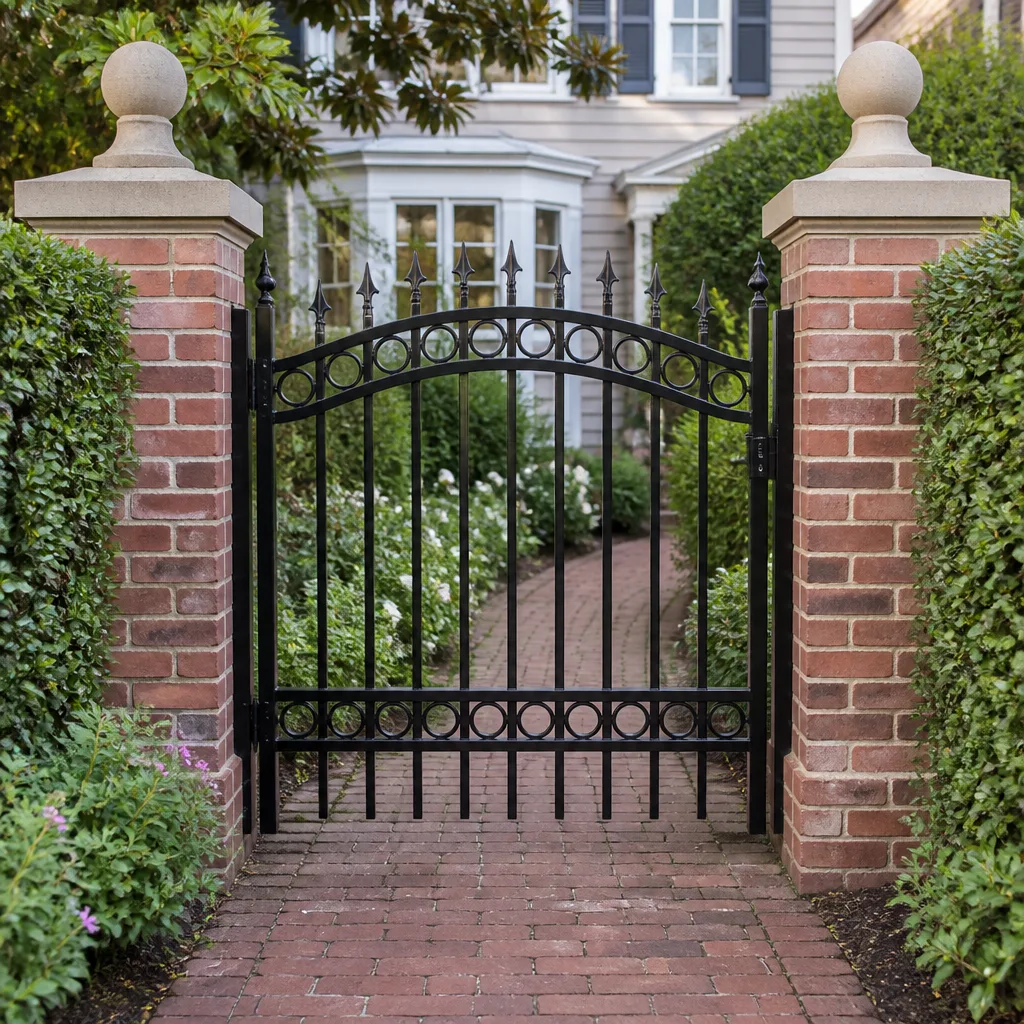
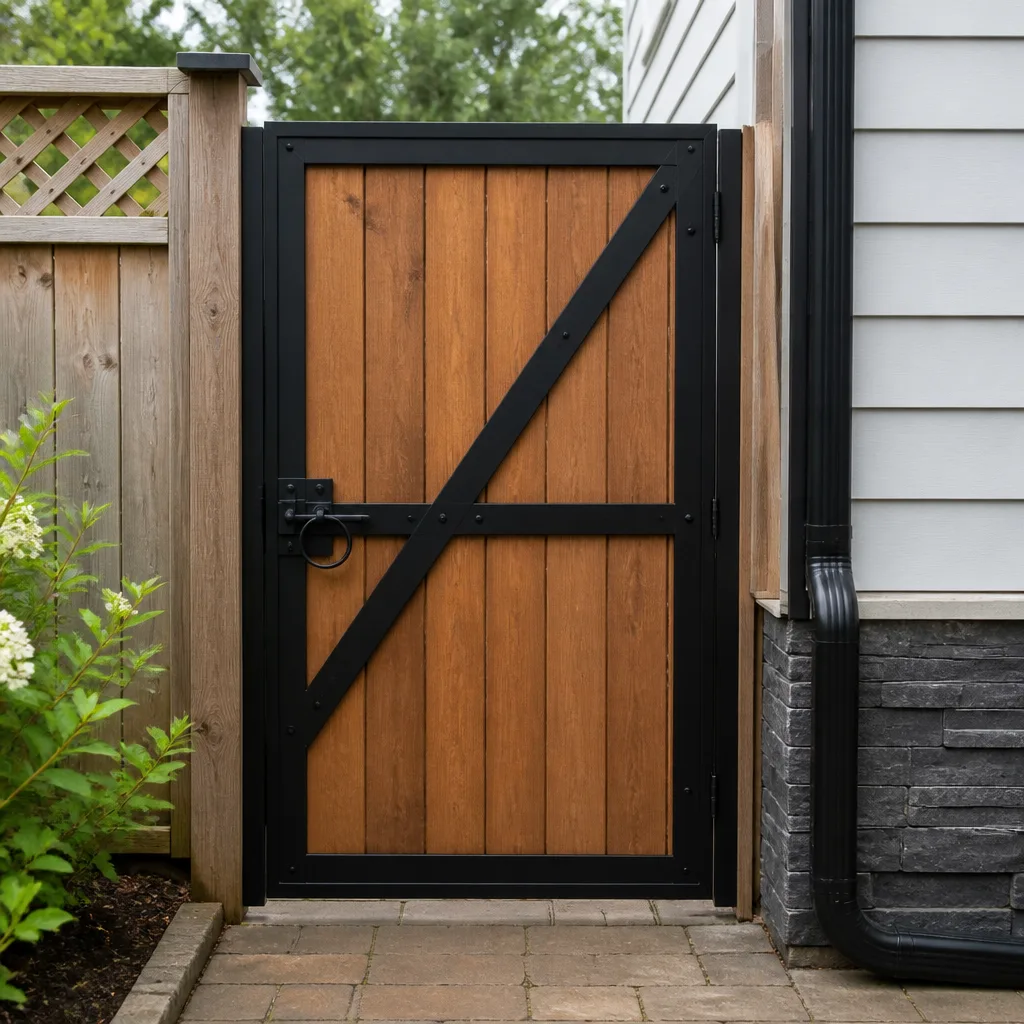
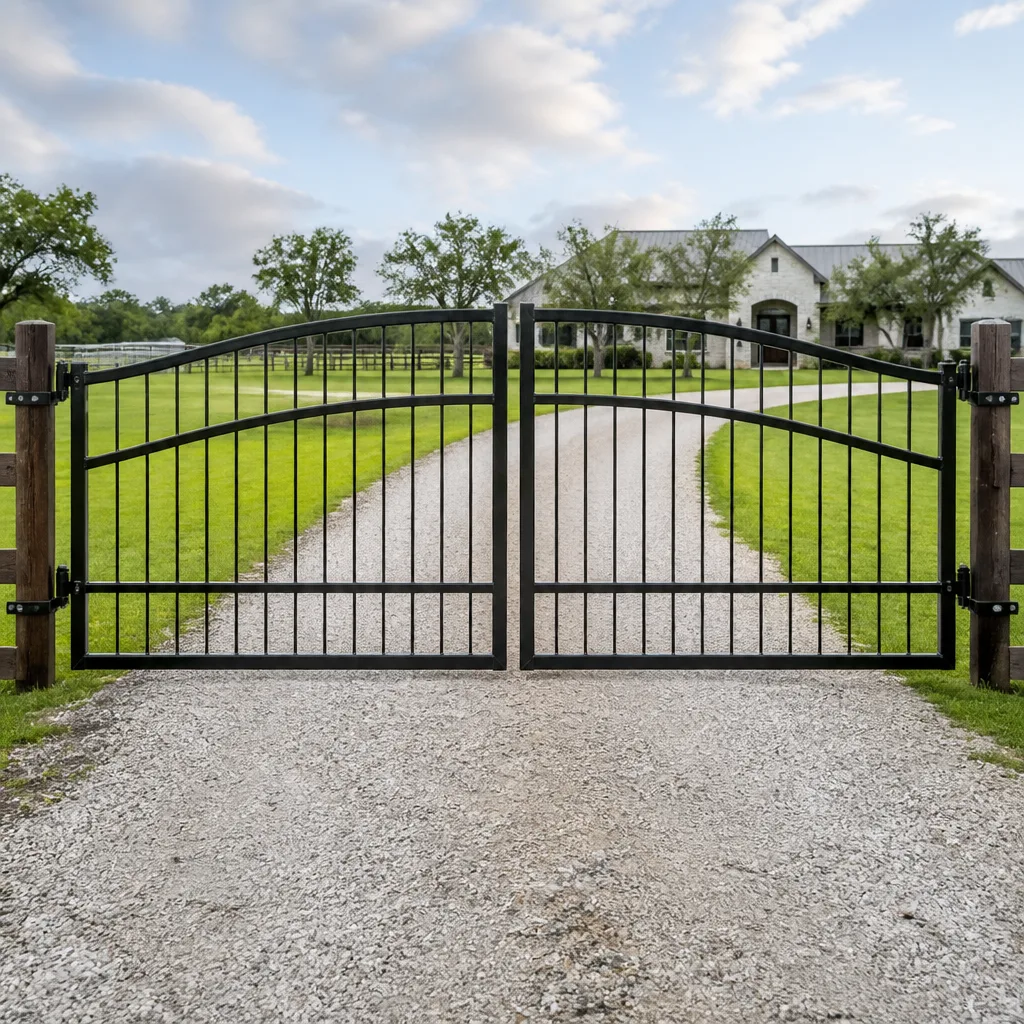
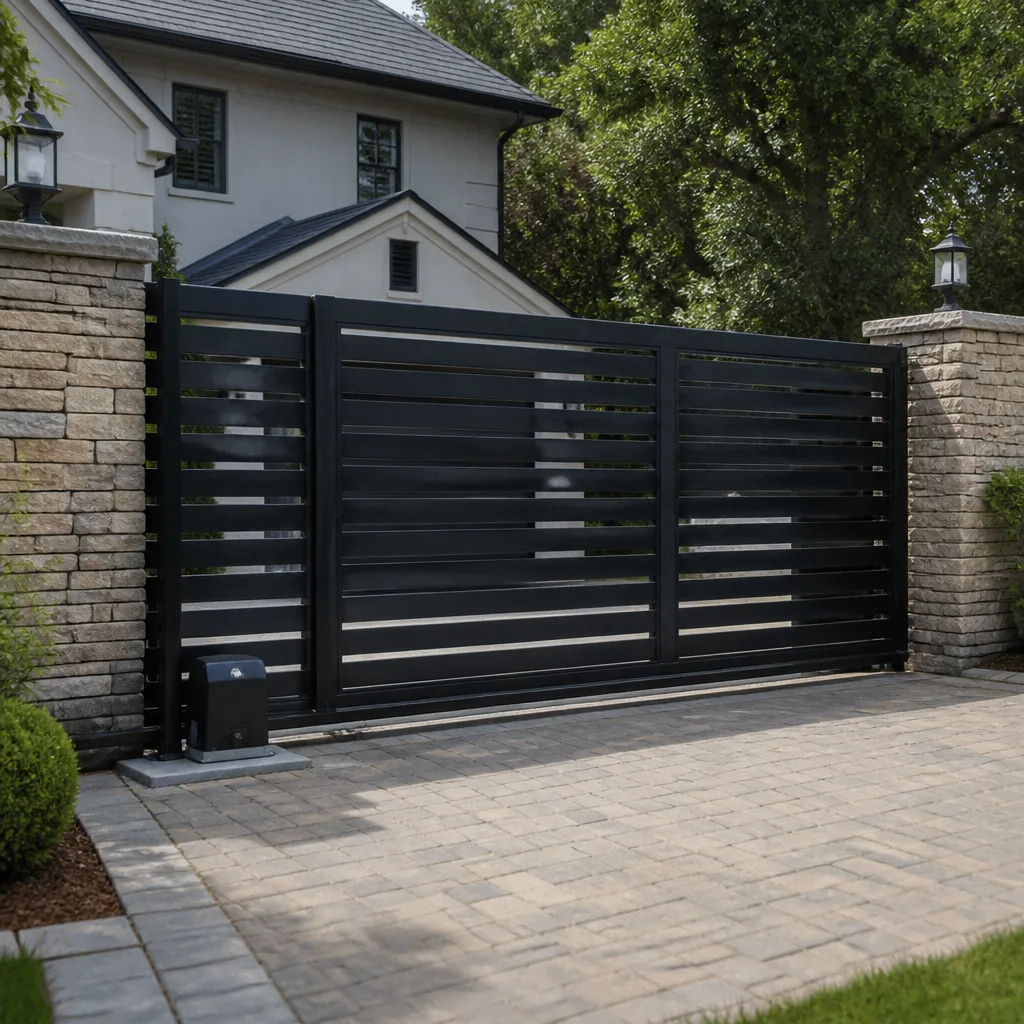
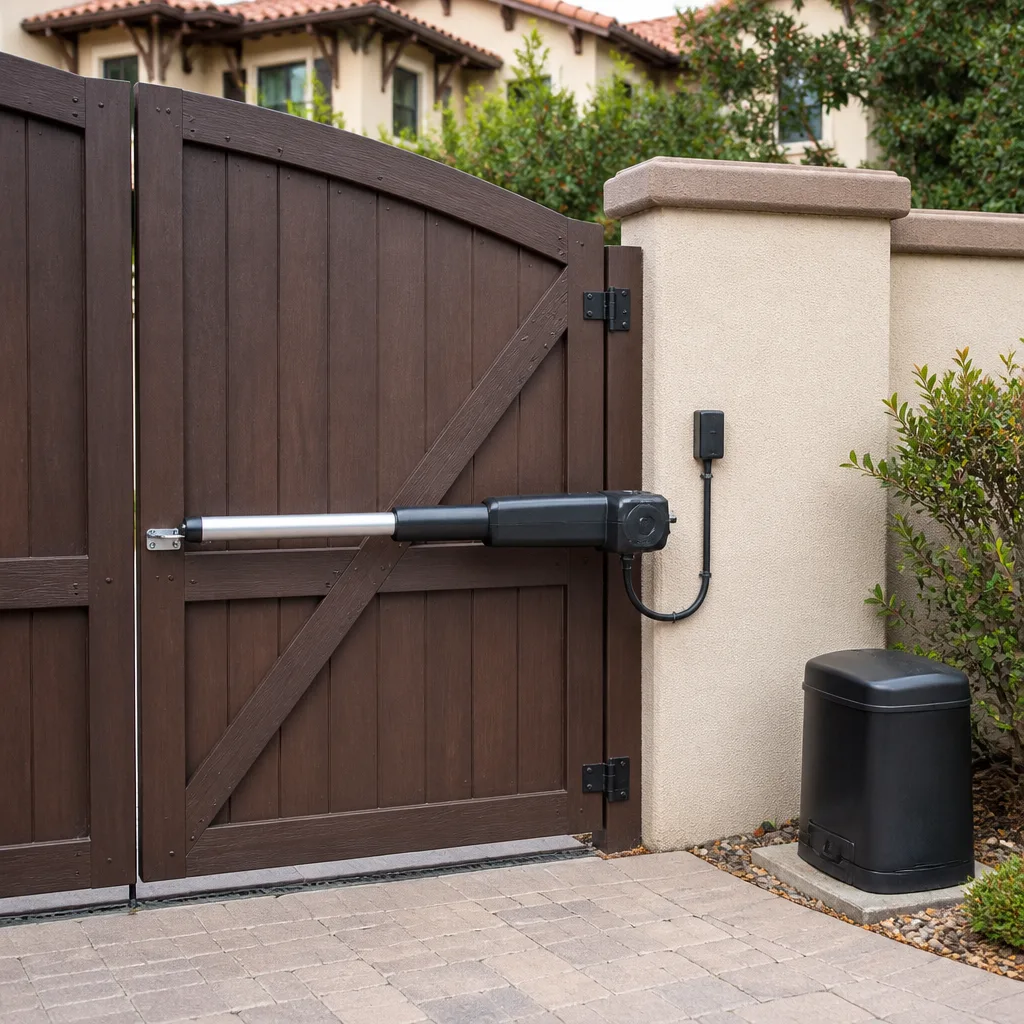
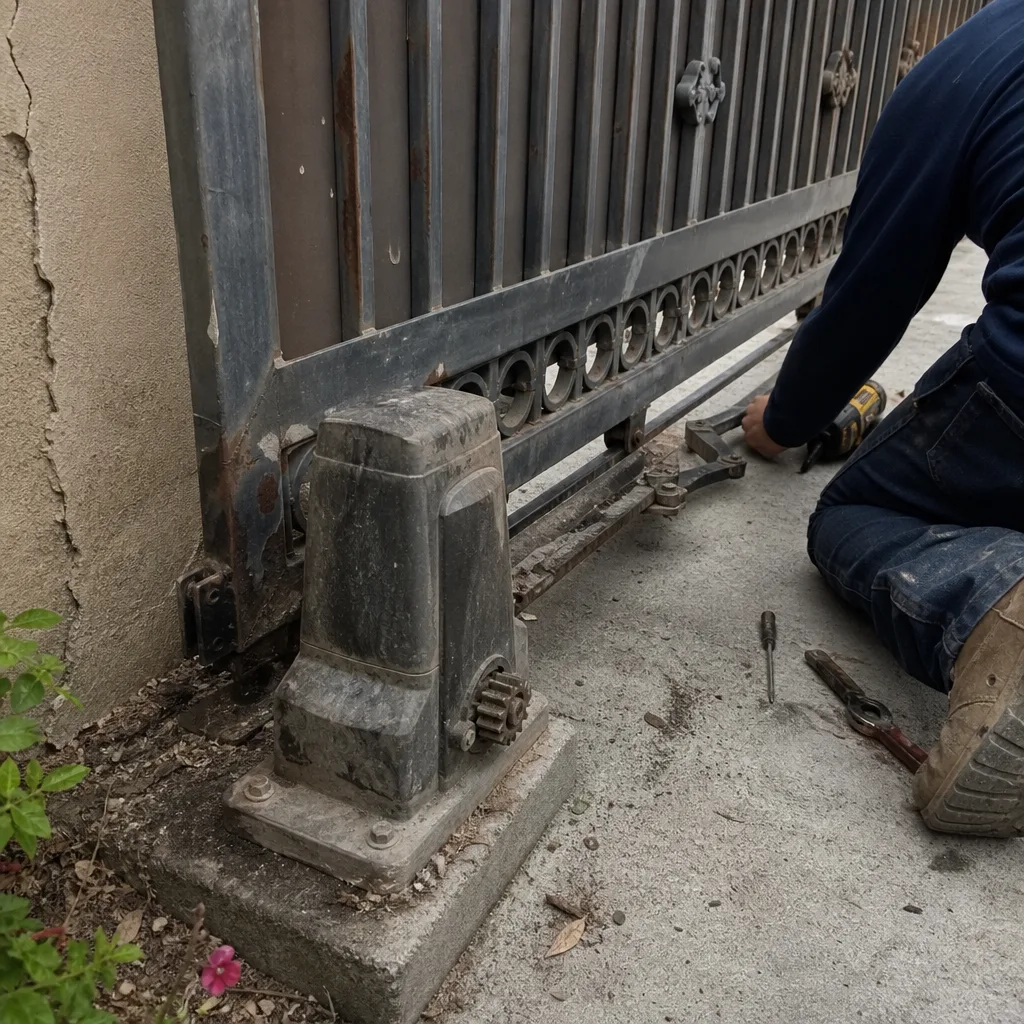 Before
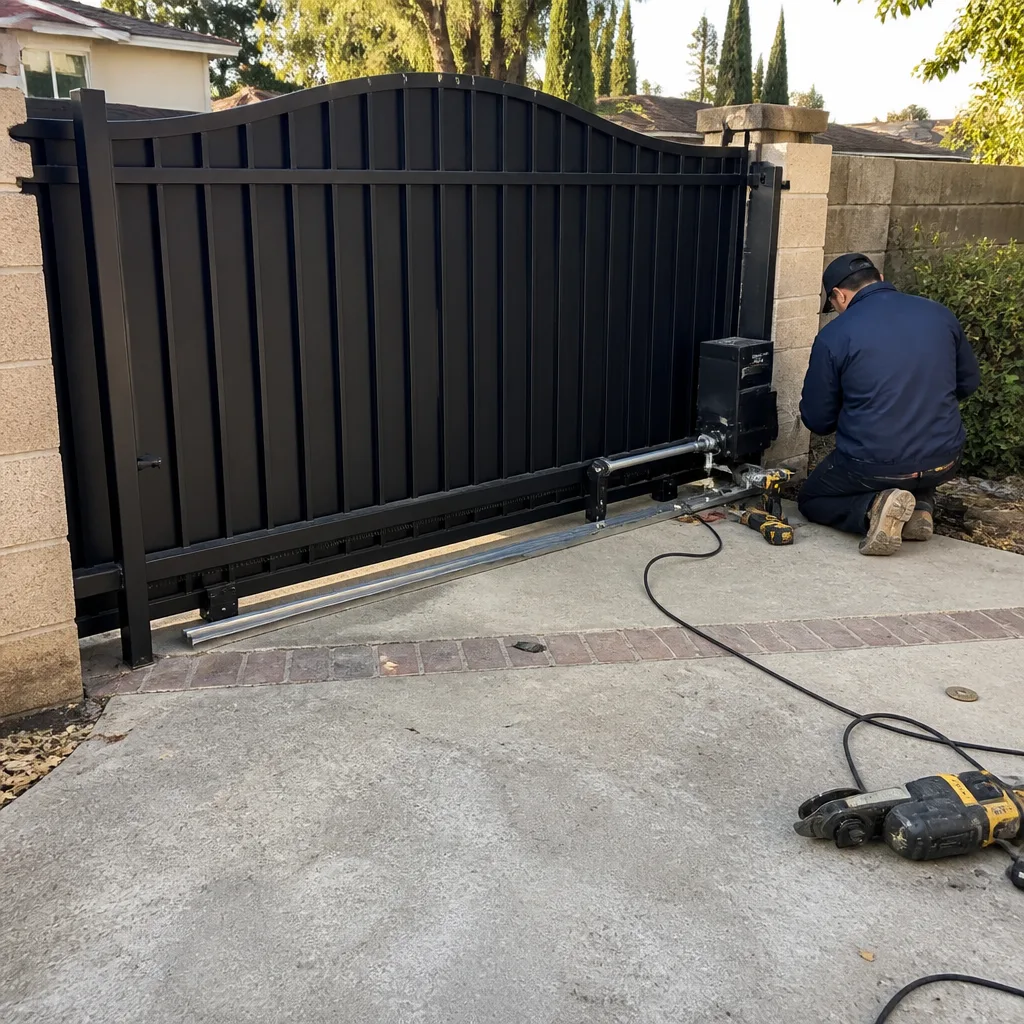 After
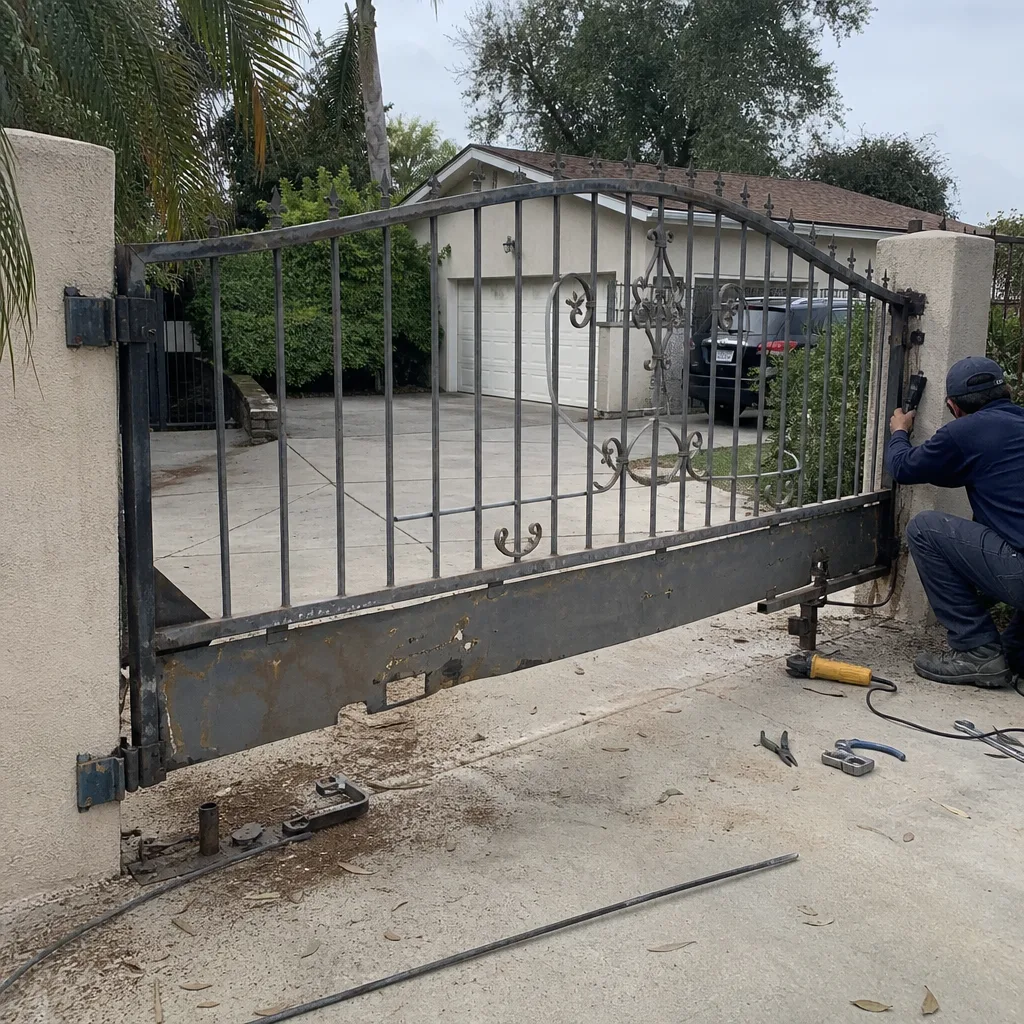 Before
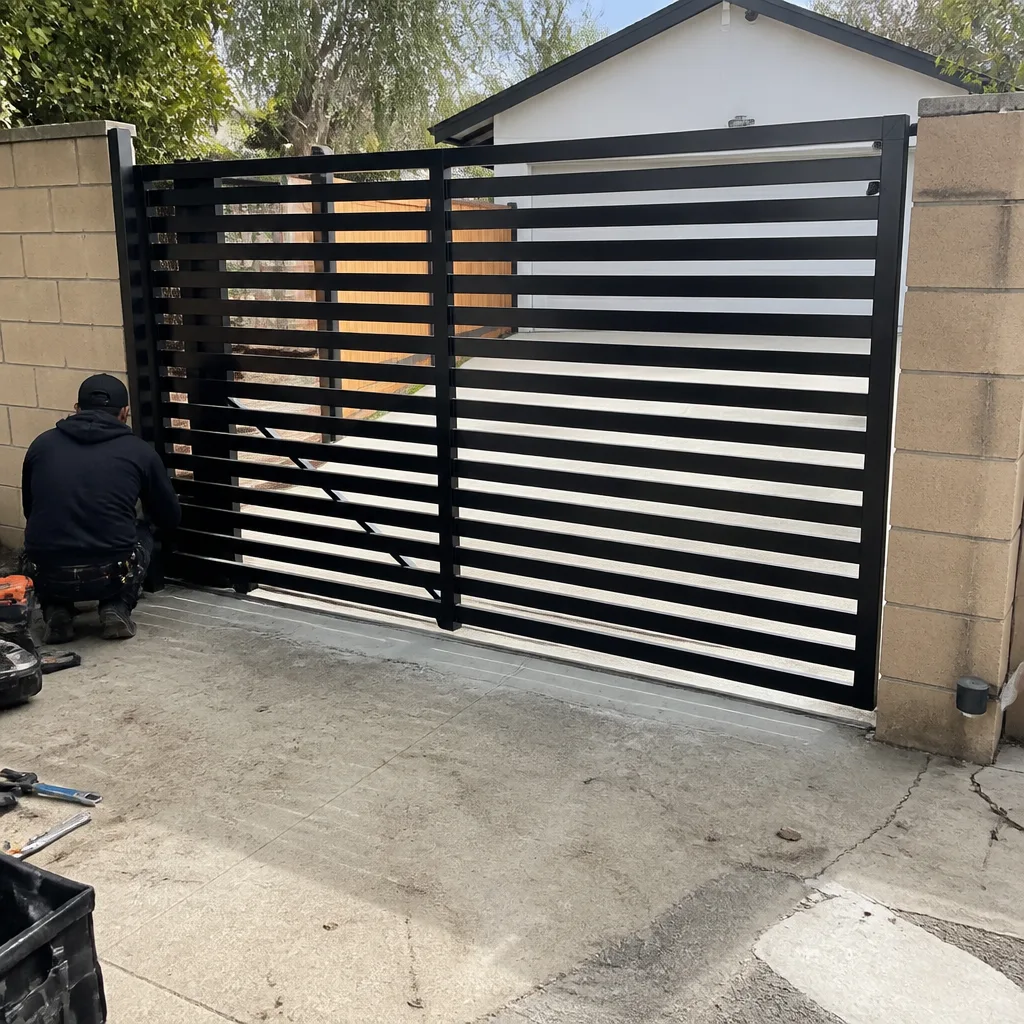 After
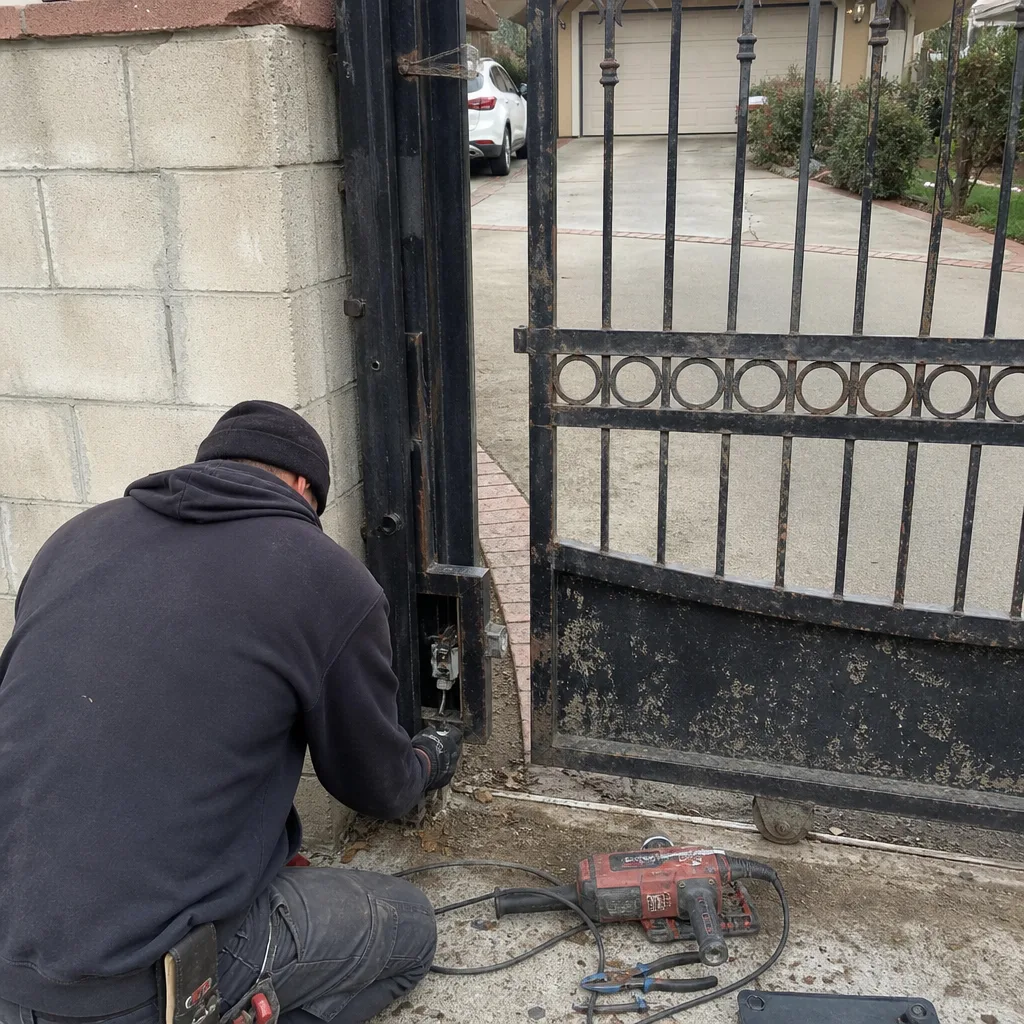 Before
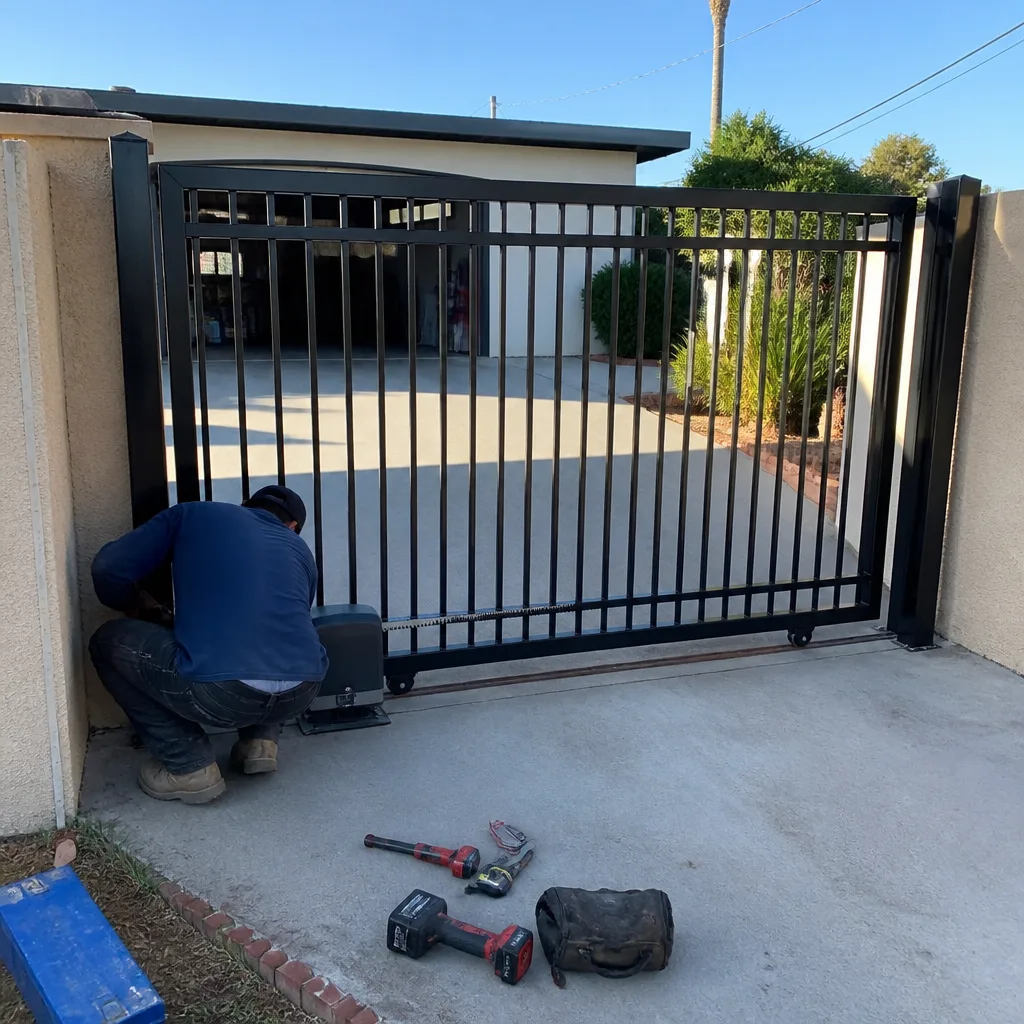 After
The Complete Guide to Gate Repair in San Fernando
Most homeowners in San Fernando don’t think about their driveway gate until the morning it refuses to open. That’s the moment the gate stops being a convenience and becomes a wall between you and your day. A gate that won’t budge isn’t just frustrating, it’s a security problem, a safety hazard, and, if you force it, a fast way to turn a $200 repair into a $2,000 replacement. This guide covers what actually goes wrong with San Fernando gates, what repairs cost in this market, how to spot trouble before it strands you, and when to stop troubleshooting and call someone who fixes gates for a living.
Quick Answer
Gate repair in San Fernando typically runs $180 to $650 depending on the problem, with most single-component fixes like hinge realignment, wheel replacement, or limit-switch adjustments completed in one visit. The most common failures we see are worn hinge bearings on heavy wrought-iron gates, solar panel output collapse on opener systems, and misaligned safety photo eyes caused by shifting concrete. If your gate moves at all but grinds, drags, or reverses unexpectedly, stop using it and get a written diagnosis before the damage spreads to the motor or the gate frame.
Table of Contents
- How Gates Fail in San Fernando: The Five Failure Modes
- What Gate Repair Actually Costs in San Fernando
- What You Can Check Yourself vs. What Needs a Technician
- Gate Opener Brands We Service and What Breaks on Each
- How San Fernando’s Climate Affects Gate Hardware and Electronics
- Preventative Maintenance: The $89 Tune-Up That Prevents $900 Repairs
- How to Choose a Gate Repair Company You Won’t Regret
- What Counts as a Real Gate Emergency (and What Can Wait)
How Gates Fail in San Fernando: The Five Failure Modes
In four decades of gate work, we’ve seen nearly every failure a gate can suffer, and they almost all fall into one of five categories. Knowing which one you’re dealing with tells you whether you need a welder, an electrician, or a new part entirely.
1. Mechanical Wear: The Hinges, Wheels, and Track
Gates are heavy. A typical wrought-iron driveway gate in a San Fernando neighborhood like Sylmar or Mission Hills weighs between 400 and 900 pounds, and all of that weight hangs on two or three hinge pins roughly the diameter of a nickel. Every time the gate cycles, those pins grind against their bushings. After ten or fifteen years, the holes wallow out, the gate sags, and the latch stops lining up. On rolling gates, the same principle applies to the wheels and the v-track they ride on. A wheel with a seized bearing will flat-spot and drag, forcing the opener motor to work twice as hard until it burns out.
2. Opener Motor and Gearbox Failure
The opener is the most expensive single component on any automated gate, and the most common cause of its death is not age but load. When the gate binds from a worn hinge or a warped rail, the motor pulls more amps to compensate. Run that way long enough and either the electrolytic capacitor fails, the gearbox strips, or the motor windings cook themselves. We replace motors on every major brand, including Ghost Controls and Mighty Mule units on smaller residential gates, and DoorKing and Elite operators on larger estate entrances.
3. Electrical and Sensing Problems
Automated gates run on low-voltage control circuits that are vulnerable to moisture ingress, insect nests, and simple corrosion. Limit switches that tell the gate where to stop go out of adjustment. Safety photo eyes get bumped out of alignment or coated with dust and spider webs. Loop detectors buried in the driveway stop sensing a car’s metal mass. Each of these produces a distinct symptom: the gate stops short, reverses for no reason, or refuses to close at all.
4. Access Control Failures
Keypads, remote receivers, intercom modules, and vehicle transmitters fail most often from weather exposure and age. A keypad membrane that gets baked by San Fernando’s summer sun for five years will crack and let moisture inside. A remote receiver antenna that corrodes will lose range until the remote only works from ten feet away. The fix is usually simple and inexpensive, but diagnosing which layer of the access system failed takes experience.
5. Structural Damage and Ground Shift
San Fernando sits in a seismically active valley with expansive clay soils that shrink in summer and swell in winter. Gate posts set in concrete heave and tilt. A gate that closed perfectly in July may drag on its striker plate by February. This is a repair category all its own because the fix often requires resetting posts, re-welding the frame, or cutting and re-hanging the gate leaf. It’s also the category where forcing the gate to work causes the most expensive secondary damage.
What Gate Repair Actually Costs in San Fernando
Gate repair pricing in San Fernando is driven by three things: the cost of the part, the time to access it, and whether welding or concrete work is involved. Here are the ranges we quote most often for this specific market.
| Repair Type | Typical Range in San Fernando | What’s Included |
|---|---|---|
| Hinge replacement or realignment | $180 - $420 | New bearings or weld-in hinges, gate re-hang, latch adjustment |
| Rolling gate wheel or track repair | $220 - $550 | Wheel replacement, track straightening or splicing, gate re-level |
| Opener motor replacement | $450 - $900 | New motor or complete operator head, reprogramming, travel limits set |
| Limit switch or photo eye repair | $150 - $350 | Part replacement or realignment, safety circuit verification |
| Keypad or receiver replacement | $160 - $380 | New unit, programming, remote pairing |
| Post reset or gate frame welding | $350 - $1,200+ | Depends on post size, concrete work, and extent of weld repair |
| Full automation retrofit (new opener, arms, sensors) | $1,800 - $4,500 | Operator, safety edges, photo eyes, keypad, two remotes |
Every price we quote is settled before a single bolt gets turned. No open-ended labor, no surprise surcharge. If the scope changes during the job, we stop and re-quote before continuing. That’s how we’ve done it, and it’s the only way we know to keep a customer’s trust.
Two standing offers apply to almost every repair in San Fernando: $50 off any repair over $250, and a permanent 5% discount for seniors and veterans. Mention either when you call.
What You Can Check Yourself vs. What Needs a Technician
Some gate problems have simple causes that a homeowner can identify in five minutes without touching a tool. Others involve stored energy, high amperage, or heavy components that can hurt you badly. Here’s where we draw the line.
What to Check Yourself
- Listen for the motor running. If you press the remote and hear a hum or click from the control box but the gate doesn’t move, the operator is trying. The problem is likely mechanical resistance or a stripped gear. If you hear nothing, check the breaker and the power switch before calling.
- Look at the photo eyes. Most safety sensors have a small LED. If both aren’t solidly lit, one is misaligned or dirty. Wipe the lenses with a dry cloth and see if the gate closes properly.
- Check for visible sag or drag marks. Walk the length of the gate and look at the gap along the bottom rail. If it’s visibly lower on one end, or if there are scrape marks on the concrete, the gate is sagging and every cycle is doing damage.
- Test the manual release. Every operator has a disconnect that lets you swing or slide the gate by hand. With the power off, release it and push the gate through its full travel. If it binds or catches at any point, the gate itself needs mechanical attention before the motor does.
What to Leave to a Professional
Do not attempt to repair or adjust torsion springs, extension springs with stored tension, or any spring under load on a gate or its operator. A gate spring stores enough energy to break fingers or worse if it releases while you’re working on it. The same caution applies to high-tension cables on counterweight systems. Any repair involving the opener’s internal capacitor should also be left alone. Capacitors hold a charge even after the power is cut and can deliver a serious shock.
If your gate is heavy enough to require two hands to move manually, you should not be replacing its hinges, cutting its posts, or re-welding its frame without a service truck full of the right equipment. We’ve repaired more than a few homeowner attempts that ended with a gate on the ground and a bent post.
Gate Opener Brands We Service and What Breaks on Each
Not all openers are created alike, and neither are their failure patterns. We’re trained and equipped on nine major brands, which means the correct fix happens on the first visit no matter what’s bolted to your driveway. Here’s what we see most on the brands common in San Fernando.
Ghost Controls and Mighty Mule
These are the most common openers on single-family residential gates under 16 feet. The most frequent failure is the control board, followed by the linear actuator arm. The good news: parts are widely available and repairs are usually under $400. The bad news: these units are not built for heavy daily cycling, and a gate that’s even slightly out of alignment will shorten actuator life dramatically.
DoorKing and Elite
These are commercial-grade operators you’ll find on larger estate gates and any gate that cycles more than 30 times a day. DoorKing units are known for their robust gearboxes, and Elite for its hydraulic operator line. The most common failures here are limit switch drift and chain or belt wear after years of service. These operators are worth rebuilding rather than replacing in almost every case.
LiftMaster, FAAC, BFT, Linear, and Viking
Each of these brands has its own personality. FAAC and BFT are Italian-built hydraulic and electromechanical units with precise, expensive internal components that reward proper maintenance and punish neglect. Linear and Viking are workhorses with common failure points at the transformer and the remote receiver. LiftMaster units suffer most from gear wear and circuit board failure after power surges. The common thread: every brand fails faster when the gate itself is fighting the operator.
How San Fernando’s Climate Affects Gate Hardware and Electronics
San Fernando’s climate does specific, predictable things to gate equipment, and understanding them helps you spot problems early. The San Fernando Valley sees summer temperatures routinely above 95°F, with direct sun on metal surfaces pushing gate surface temperatures past 140°F. That heat does three things.
First, it bakes the electrolytic capacitors inside opener circuit boards. Capacitors are rated for a maximum operating temperature, and every degree over that rating shortens their life. A control box mounted in full sun is effectively cooking its own electronics. We recommend shade shields or relocated control boxes for gates with west-facing alignment.
Second, the expansion and contraction cycle between hot days and cool nights loosens every fastener on the gate. Bolts back out, hinges shift, and gate frames that were square at installation slowly rack out of alignment. This is why an annual tightening and alignment check prevents so many expensive failures.
Third, San Fernando’s rainy season, brief as it is, brings the one thing electronics hate most: water. Low spots in the driveway pool water around post bases. Control boxes with degraded gaskets take on moisture. Underground conduit joints leak into the low-voltage wiring. The result is corrosion that builds silently until the day the system shorts. For solar-powered openers, the long dry spells between rains coat the panels with dust, reducing output below the battery’s charging threshold and killing batteries prematurely.
Preventative Maintenance: The $89 Tune-Up That Prevents $900 Repairs
The most cost-effective gate repair in San Fernando is the one you never need. We offer a seasonal tune-up for $89 that addresses the exact failure modes listed above before they turn into breakdowns.
Here’s what the tune-up covers:
- Complete mechanical inspection: hinge pins, wheel bearings, track condition, gate frame squareness, and post stability.
- Lubrication of all moving parts with the correct grease for the load and exposure.
- Opener diagnostics: motor amp draw, limit switch function, safety edge and photo eye operation, remote receiver range.
- Access control check: keypad function, battery condition in transmitters, intercom or telephone entry verification.
- Tightening of every accessible fastener on the gate, hinges, operator mount, and posts.
- Written condition report with any recommendations, prioritized by urgency and quoted in writing before any additional work is authorized.
- Is gate work all you do? A specialist sees hundreds of failed hinges, smoked motors, and glitchy control boards every year. A generalist sees a few. The diagnosis difference shows up in parts costs and repeat visits.
- What brands are you trained on? If the answer is “all of them,” ask for specifics. There are real differences between programming a Ghost Controls board and a DoorKing controller.
- What happens if the repair doesn’t hold? A written guarantee with a specific duration and a simple process beats a verbal promise every time. Our standard is a Done Right Promise: if it’s not right, we come back and make it right. No paperwork, no arguing.
- Who is actually coming to my house? Background-checked, uniformed technicians should be the baseline, not the exception. The person at your gate controls access to your property.
- Is the price fixed before work starts? If the answer is anything other than a clear yes, keep looking. A square deal means the number you approve is the number you pay.
Homeowners who get this done twice a year, once before summer heat and once after the winter rains, rarely experience emergency breakdowns. The $89 pays for itself the first time a loose hinge is caught before it destroys a $500 opener gearbox.
How to Choose a Gate Repair Company You Won’t Regret
The San Fernando gate repair market includes one-truck handymen, general fencing companies, and a small number of dedicated gate specialists. Each has its place, but when your gate controls access to your home, the stakes are higher than a crooked fence board.
Ask These Questions Before You Book
We tell every potential customer the same thing: get three quotes if you want. Then compare not just the price but the warranty, the brand expertise, and whether a live person answered the phone when you called. At Ironworks Gate Co. home we answer the phone 24 hours a day with a human being, not a voicemail tree. That matters at 6:30 in the morning when your gate won’t open and you need to leave for work.
What Counts as a Real Gate Emergency (and What Can Wait)
Most gate repairs in San Fernando are not emergencies. A gate that opens slowly, a remote that works intermittently, a keypad that needs new batteries, these can wait for a scheduled appointment. But three situations justify an immediate call.
First: the gate is stuck open or closed and you cannot safely secure your property. A gate frozen open is an invitation to anyone watching the house. A gate frozen closed may trap a vehicle inside when you need to leave for a medical or family emergency. Both are legitimate same-day problems.
Second: the gate moves but won’t stop, or reverses erratically. This is a safety sensor failure, and a moving gate without working safety edges is a serious injury risk to children, pets, and visitors. Disable the opener immediately and call for service.
Third: you hear grinding, snapping, or a deep pop followed by the gate leaning or dropping. That sound is a hinge or a structural member failing. A gate falling off its hinges can kill. Turn off the power to the opener, keep everyone away, and get a professional out quickly.
If you’re in any doubt, call. A live person answers 24 hours a day, 7 days a week, and a quick phone diagnosis costs nothing. We’d rather tell you it can wait than have you ignore something that can’t.
Common Mistakes to Avoid
- Forcing a gate that’s fighting back. If you have to push hard, the problem is mechanical, and every forced cycle transfers that stress to the motor. You’re turning a hinge repair into a motor replacement.
- Ignoring a sagging gate because it still opens. Sag is the first symptom of hinge failure. Wait long enough and the gate frame itself racks, requiring welding that costs four times what hinge work would have.
- Replacing the opener when the gate was the problem all along. We see this weekly: someone installs a brand-new $800 operator on a gate that binds, and six months later the new opener is dead. Fix the mechanics first.
- Using spray lubricant on everything that moves. WD-40 is not gate grease. The wrong lubricant attracts dust, dries out, and leaves moving parts unprotected. Use the correct grease or let a professional do it during a tune-up.
- Skipping the safety sensor check after a repair. Any repair that touches the gate’s travel path requires re-verifying the safety edges and photo eyes. A properly repaired gate that isn’t safety-verified is a liability waiting to happen.
- Buying the cheapest replacement part online. Generic actuator arms and no-name control boards have shorter lives and inconsistent tolerances. The savings evaporate when the part fails in eight months and destroys what it was connected to.
- Waiting for “the next thing to go wrong” before calling. Gate failures compound. A worn hinge stresses the motor. A struggling motor stresses the control board. Small problems become system failures through neglect.
When to Call a Professional
Call a gate professional when the problem involves any spring under tension, any electrical component inside the control box, any structural issue with the gate frame or posts, or any repair you cannot complete with hand tools and a clear understanding of what you’re fixing. Gates are heavy machines with stored energy in their springs, potential energy in their weight, and live current in their controls. All three can hurt you. If your gate has a safety system and it’s not functioning, that’s not optional maintenance, it’s a hazard. Ironworks Gate Co. offers free estimates in San Fernando, call (925) 307-8328, and we’ll give you a written diagnosis and a fixed price before any work begins.
Frequently Asked Questions
Gate repair in San Fernando typically costs between $180 and $650 for common mechanical and electrical repairs, with full opener replacement running $450 to $900 and structural repairs ranging from $350 to $1,200 or more. Your price depends on the part, the access, and whether welding or concrete work is involved. Call (925) 307-8328 for an exact quote, estimates are free and the price you approve is the price you pay.
Yes, most gate repairs in San Fernando are completed in a single same-day visit, and we answer the phone 24 hours a day to schedule emergency service when a gate is stuck or a safety system has failed. A live person takes every call, not a voicemail system. We will be there when we say.
Yes, we’re trained and equipped on Ghost Controls, Mighty Mule, DoorKing, Elite, LiftMaster, FAAC, BFT, Linear, and Viking, so the correct fix happens on the first visit regardless of what’s on your driveway. Ghost Controls units are common in San Fernando and we stock the parts to repair them quickly.
A full installation includes the gate itself (or rework of your existing gate), an operator matched to the gate’s weight and cycle rate, safety photo eyes and edges, a keypad, two remotes, and complete programming and testing. We also handle the full electrical run to the gate. Free written estimates are available, call (925) 307-8328 to schedule a site visit.
Yes, we handle the full low-voltage electrical run, conduit, safety photo eyes, safety edges, loop detectors, and all control wiring for gate automation in San Fernando. We don’t subcontract the electrical work, and every installation is tested to verify the safety systems work before we leave.
Sagging gates can almost always be repaired by replacing the hinge bearings, re-welding the hinge points, or resetting the gate leaf, and repair costs a fraction of replacement in most San Fernando homes. The exception is a frame so rusted or cracked it’s no longer structurally sound. A written diagnosis from a free estimate will tell you definitively.
The Bottom Line
Gate repair in San Fernando is predictable when you understand the five ways gates fail: mechanical wear, motor strain, electrical faults, access control aging, and ground movement from the Valley’s expanding clay soil. Most repairs cost $180 to $650 and are completed in one visit, but the price climbs fast when a small problem is ignored long enough to damage the operator or the gate frame. The smart money goes to seasonal maintenance, $89 twice a year, and to repairs done right the first time by someone who stands behind the work in writing. That’s the job we’ve been doing.
Written by the team at Ironworks Gate Co.