
Last updated August 25, 2026
Free on-site gate assessment - hinges, posts, and your LiftMaster or Nice gate operator checked before anything is quoted
The assessment is free and the quote is the invoice.
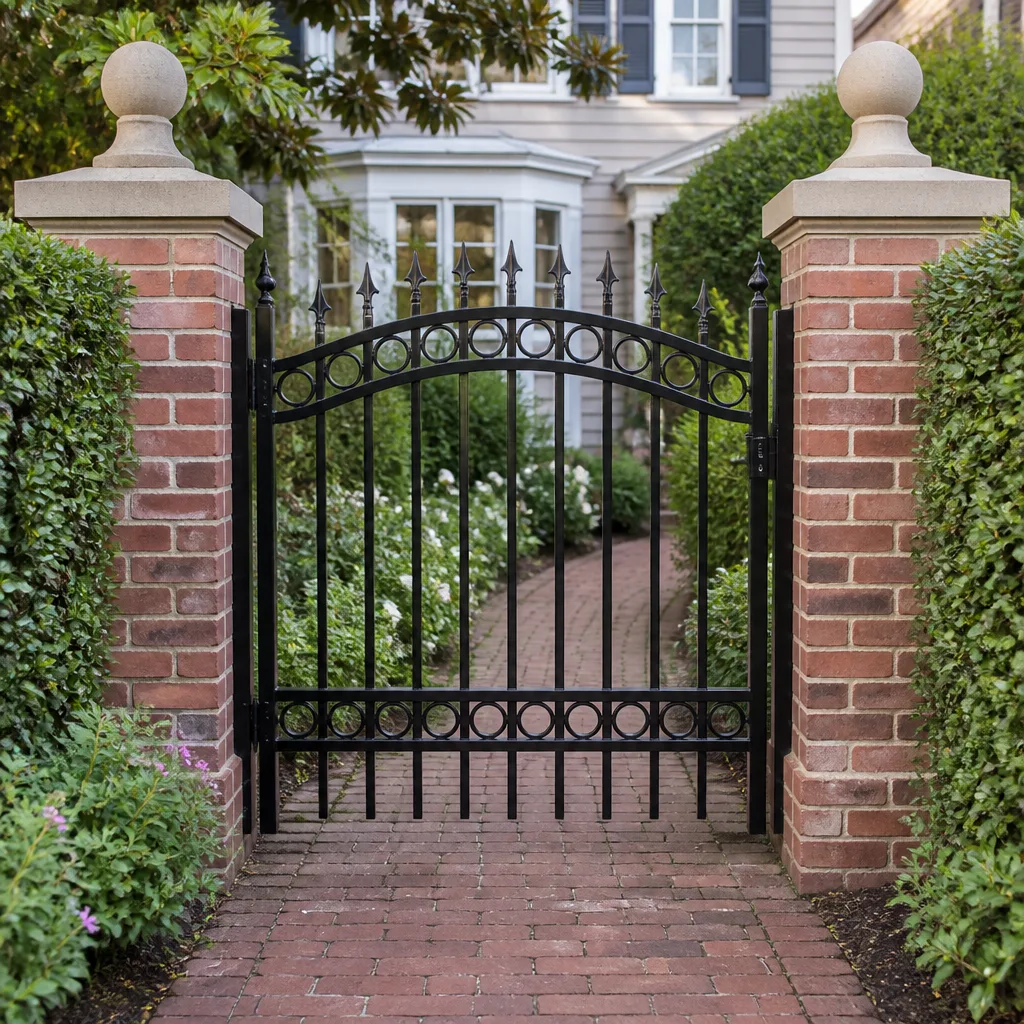
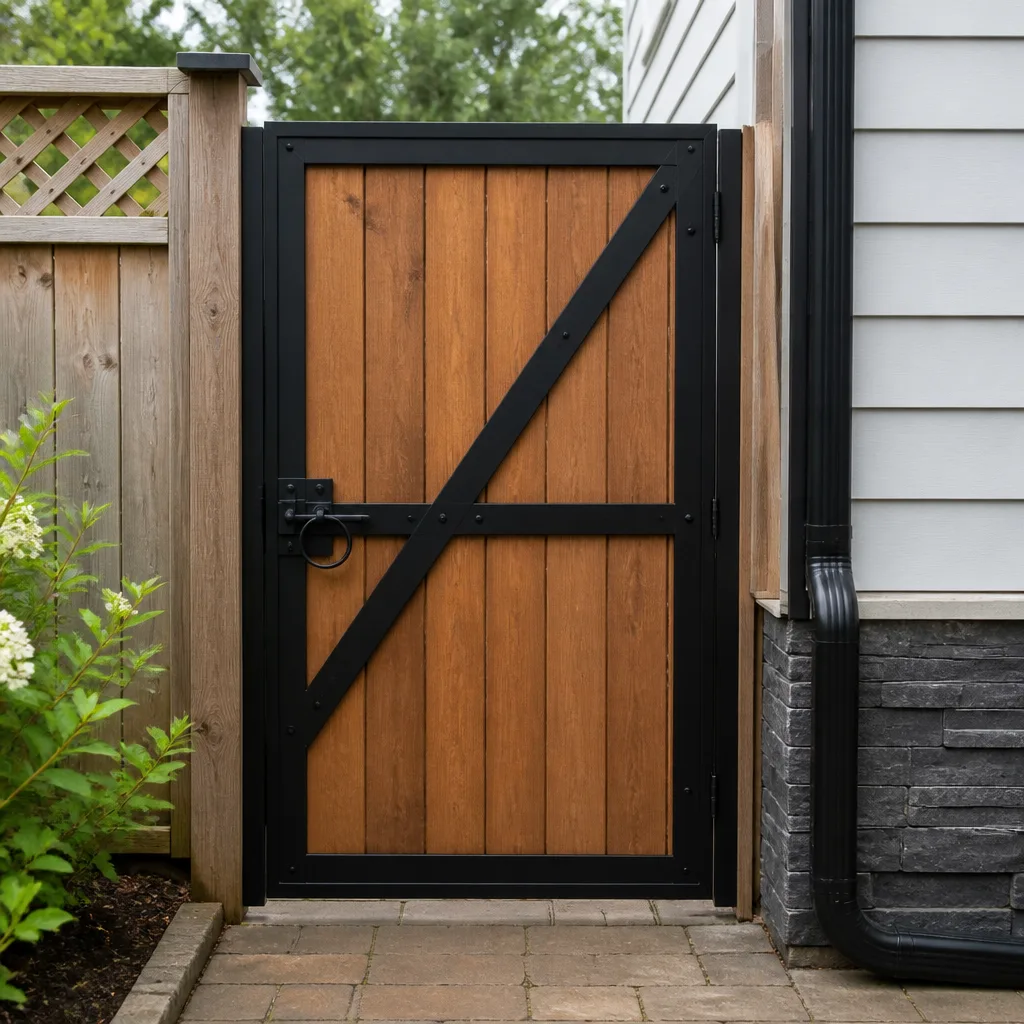
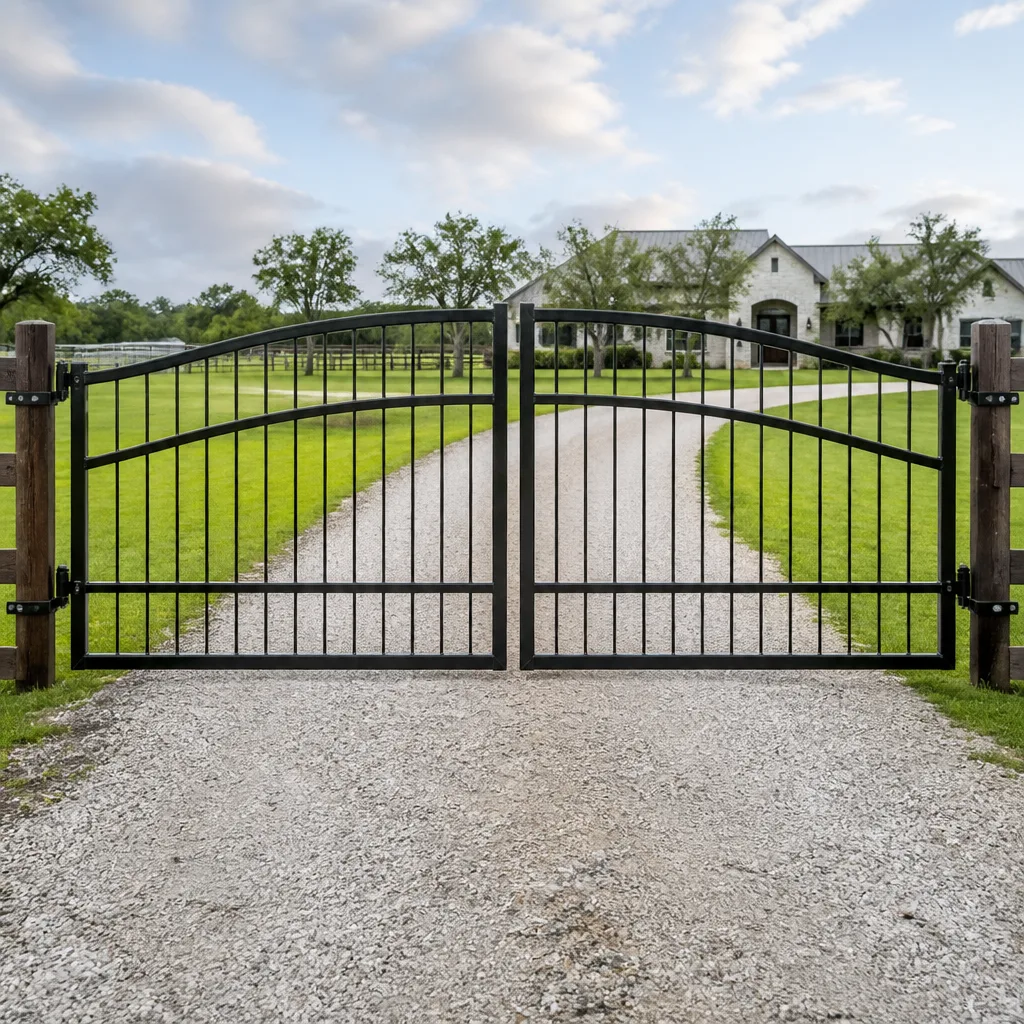
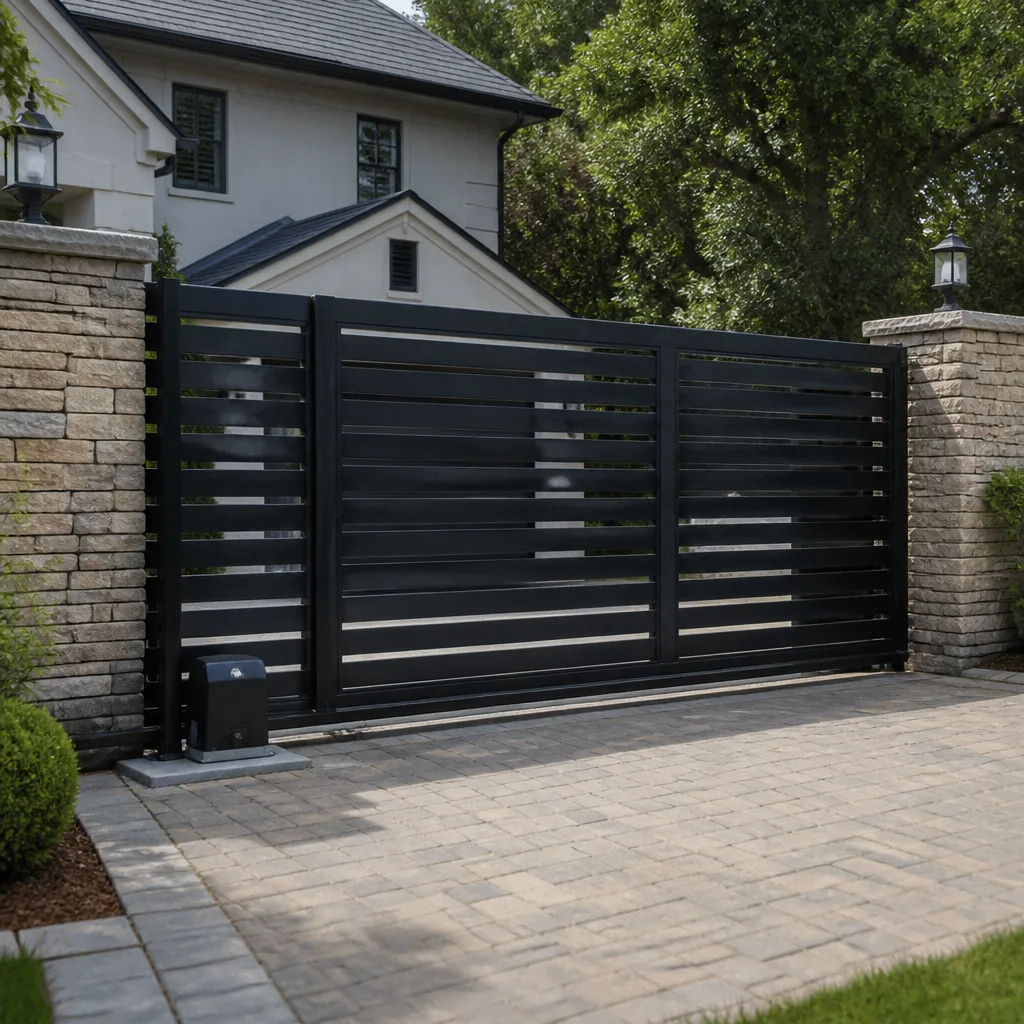
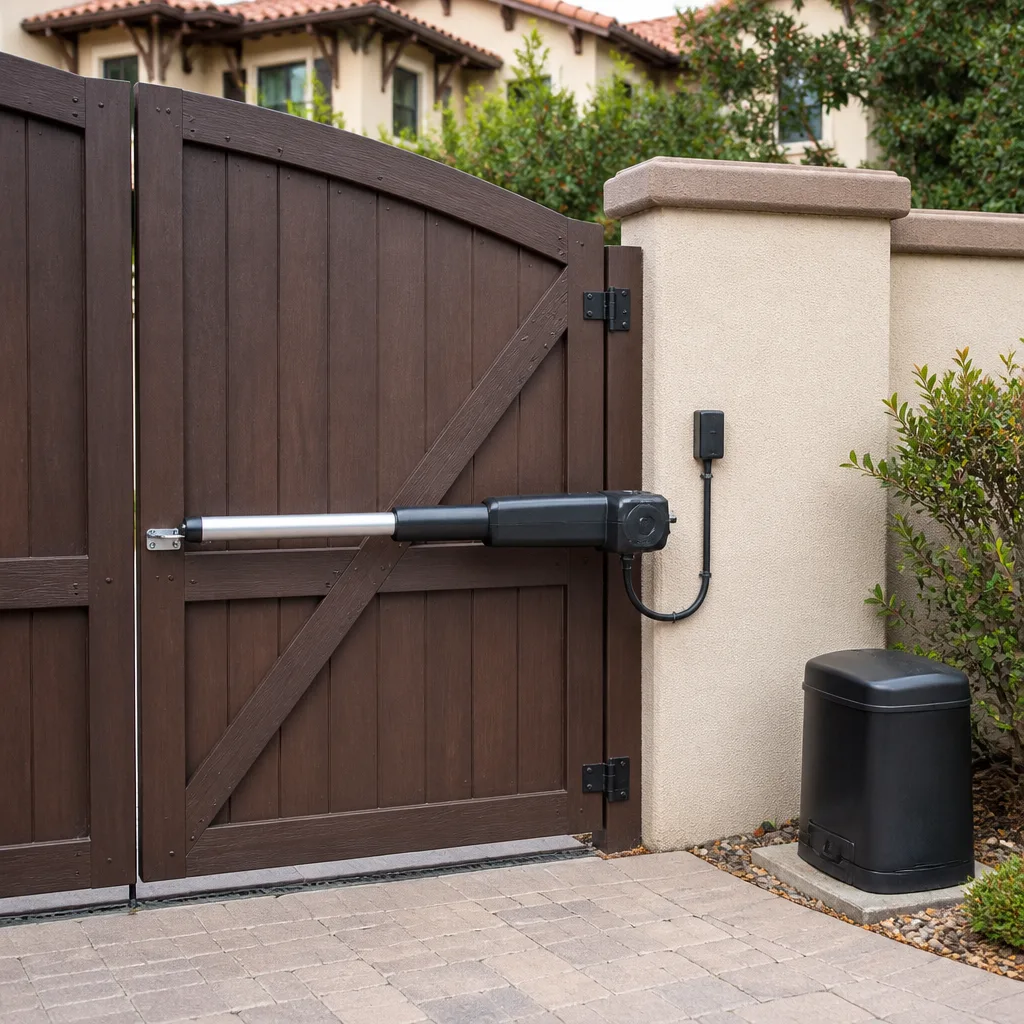
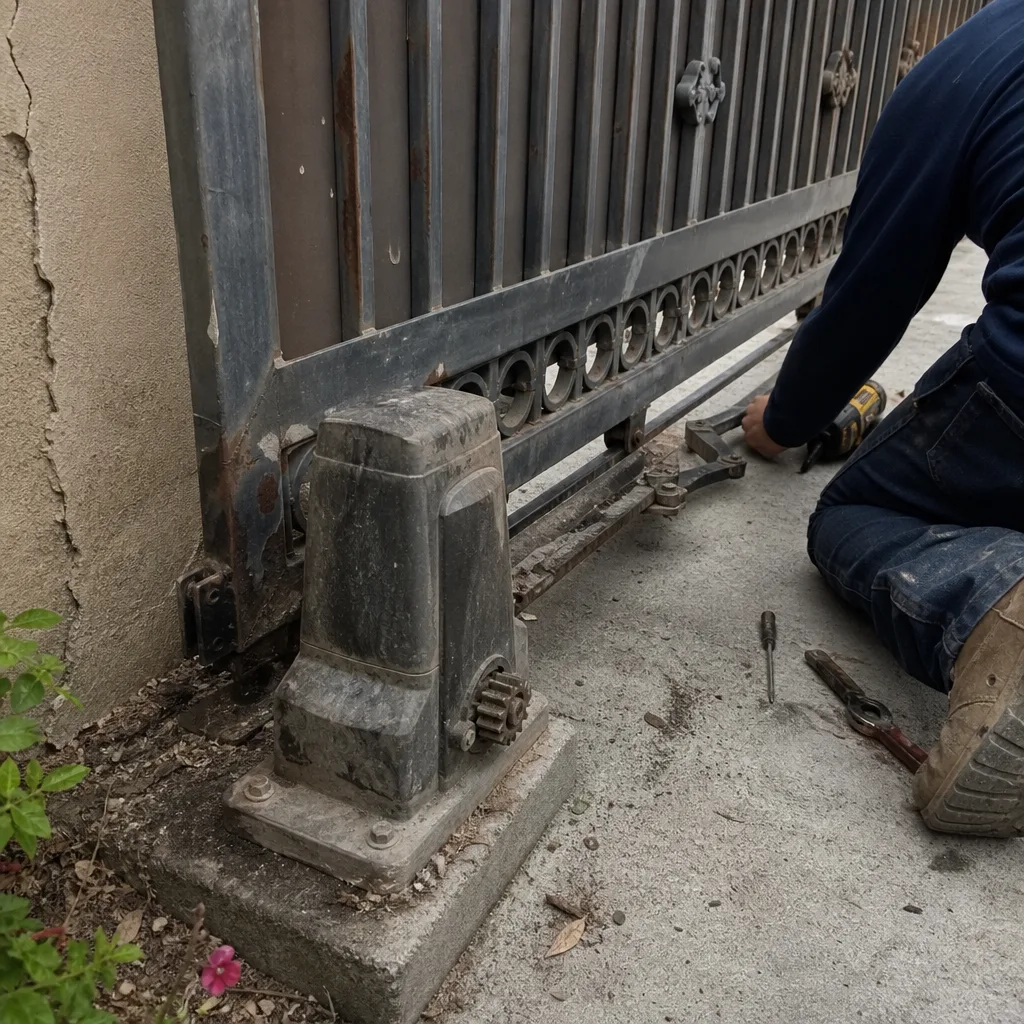 Before
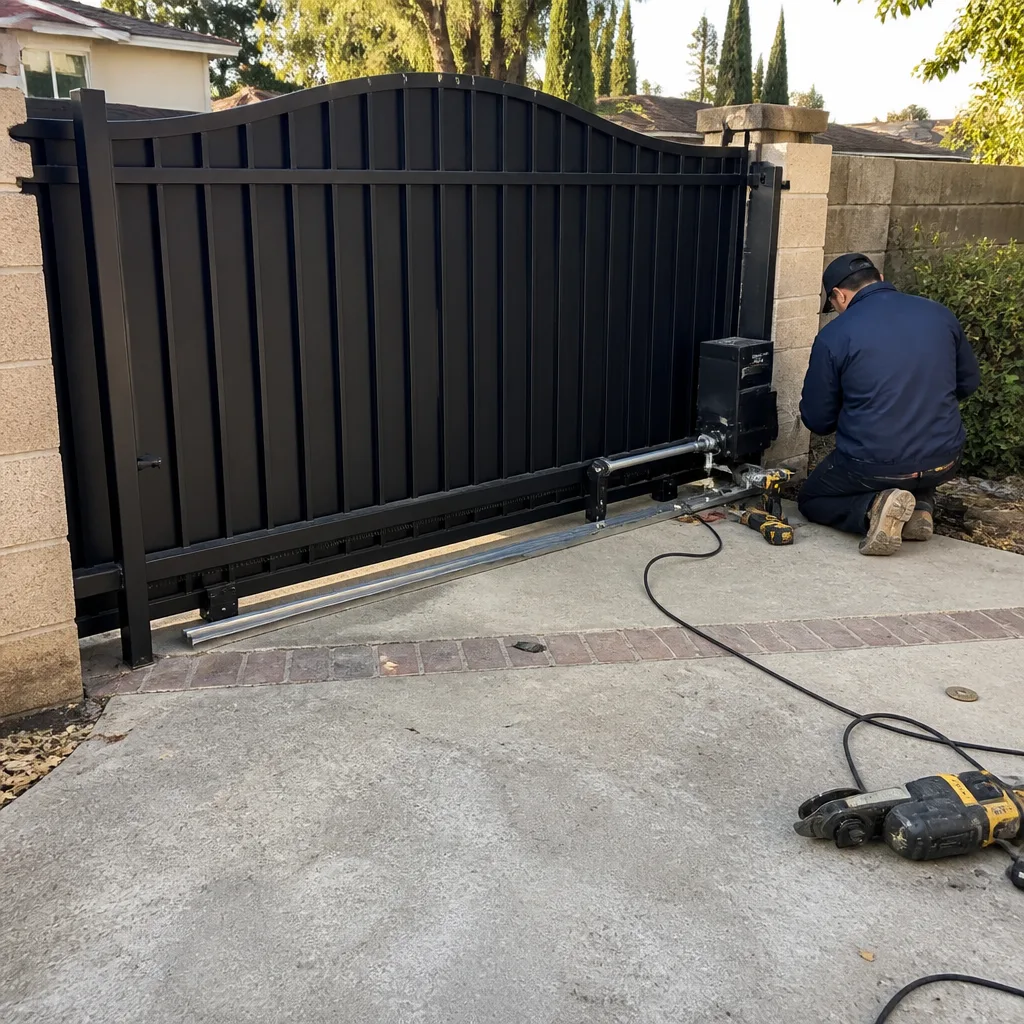 After
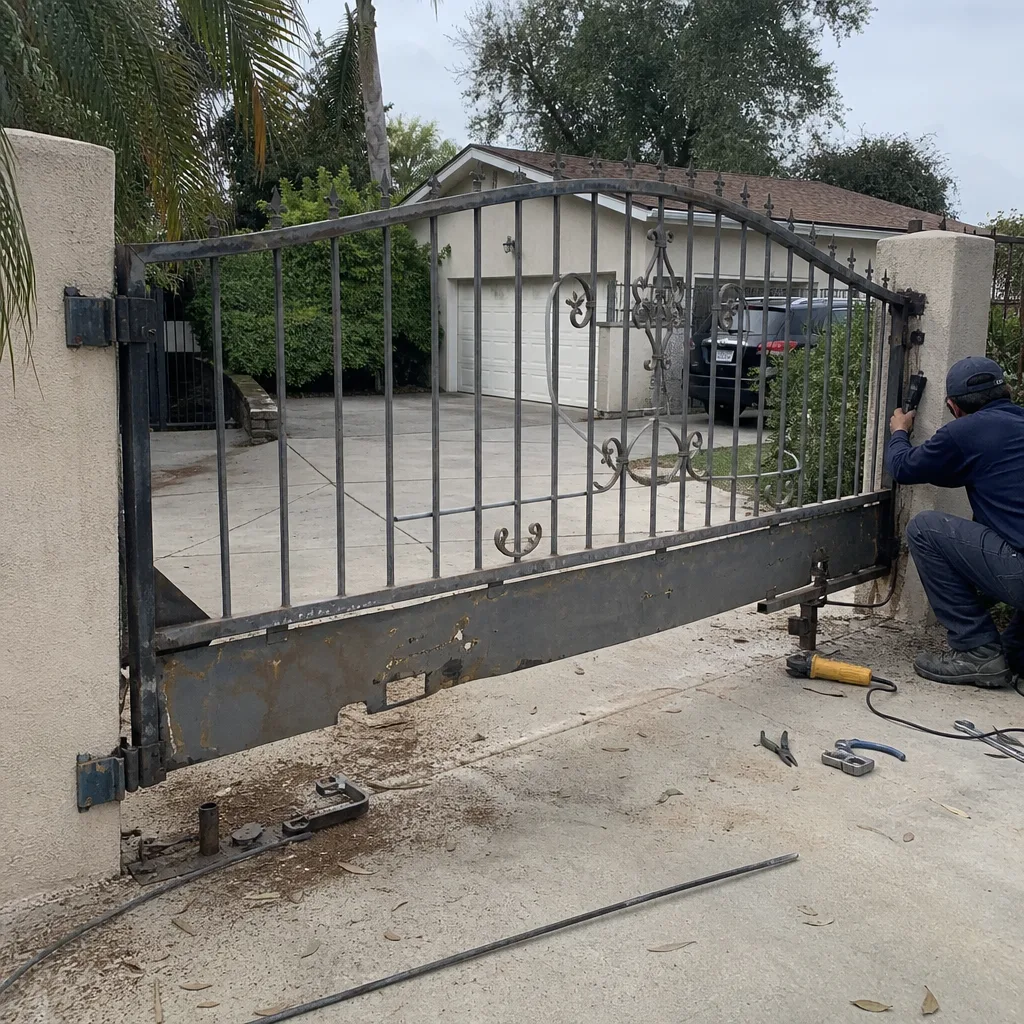 Before
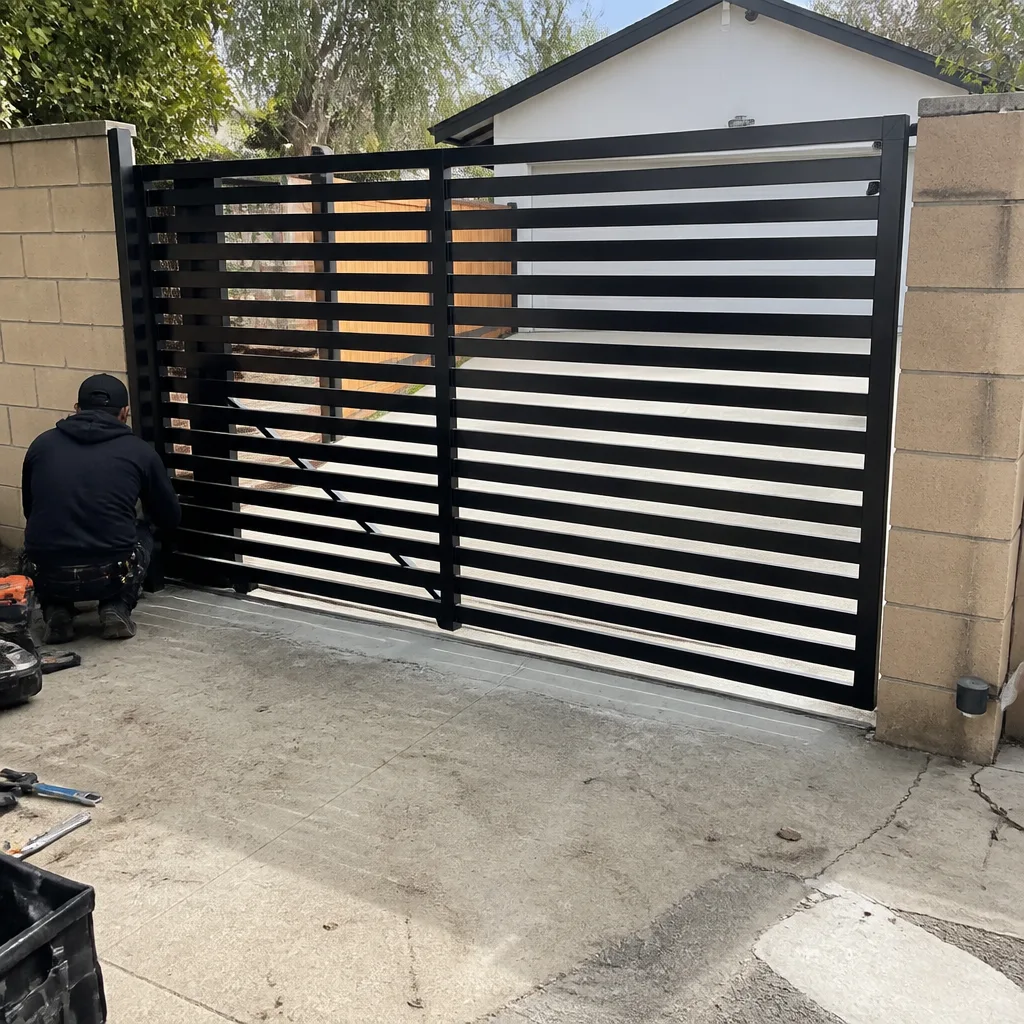 After
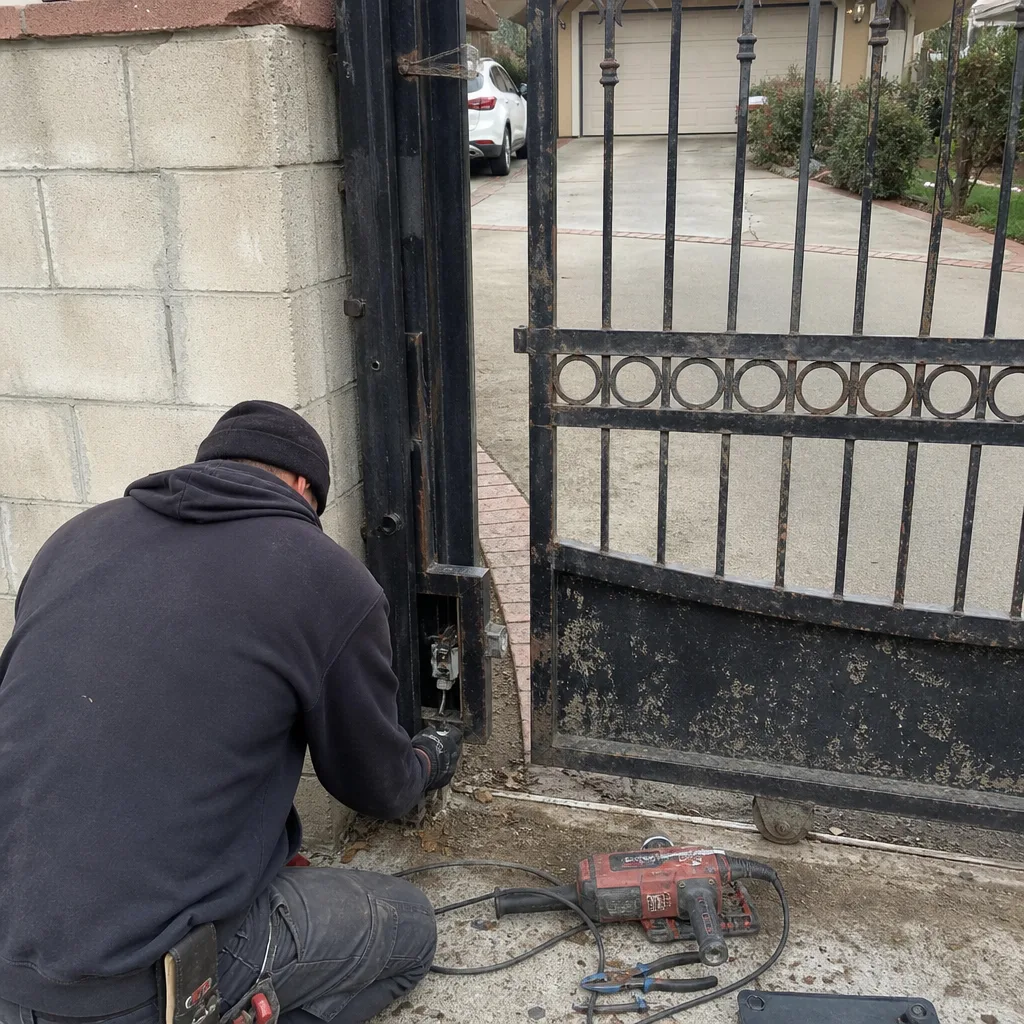 Before
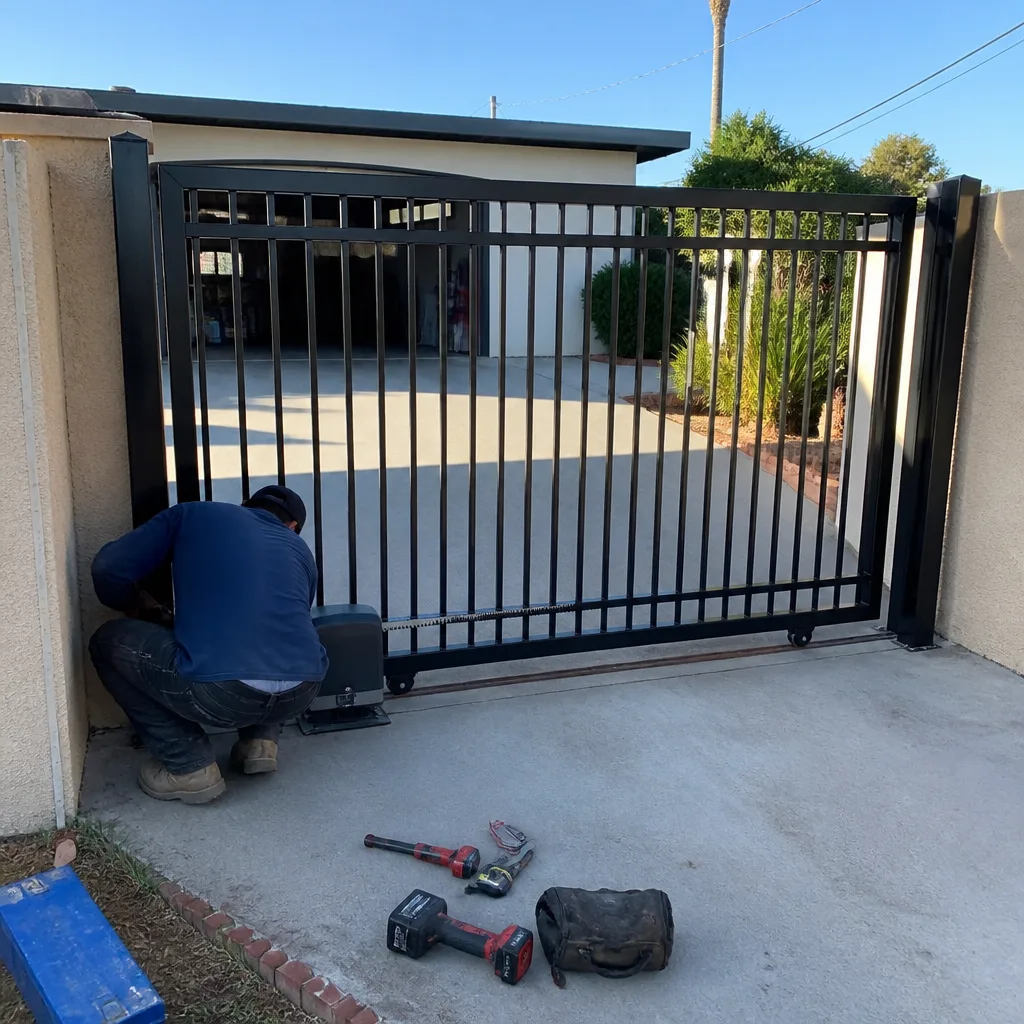 After
DIY vs Professional Gate Repair: The San Fernando Homeowner’s Decision Guide
Here’s something most San Fernando homeowners don’t realize until they’re standing in the driveway staring at a sagging gate: the repair that looks simple at 9 a.m. is rarely simple by 2 p.m. A gate is a welded steel structure under constant tension, moving on hinges that bear hundreds of pounds through every open-and-close cycle, often wired to a motor that didn’t come with a user-serviceable diagram. This guide walks you through what’s genuinely doable with basic tools, what quietly goes wrong when a gate is patched instead of repaired, and how to tell the difference before you’ve spent a Saturday and a tank of gas on a fix that lasts three weeks.
Quick Answer
For lubrication, cleaning, basic alignment checks, and remote or keypad battery replacement, a careful homeowner can handle the work. For anything involving gate springs, welded joints, hinge replacement, motor or control board diagnosis, or a gate that has come off its track, a professional repair is the safer and usually cheaper choice in the long run. Most San Fernando homeowners we serve save money by calling early rather than after a partial fix makes the original problem worse.
Key Takeaways
- DIY is realistic for cleaning, lubrication, battery swaps, and visual inspections only.
- Gate springs and torsion systems store enough energy to cause serious injury - this is not a hand-tool job.
- San Fernando’s summer heat and dry-season dust accelerate wear on rollers, hinges, and motor capacitors.
- A professional repair done once typically costs less than two or three DIY attempts that fail.
- Ironworks Gate Co. has served San Fernando homeowners and stands behind every job with a written Done Right Promise.
Table of Contents
- What You Can Realistically Fix Yourself
- What You Should Not Touch - and Why
- The Real Cost Comparison: DIY vs Professional
- How San Fernando’s Climate Changes the Math
- When the Motor Is the Problem
- Safety First: What Actually Goes Wrong
- Signs Your Gate Is Past a Simple Fix
- How to Choose a Pro in San Fernando
What You Can Realistically Fix Yourself
Let’s start with work that genuinely belongs in the homeowner’s column. These tasks require no special tools beyond a socket set, a can of lubricant, and about an hour of daylight. They will not put you in danger, and they will not void a warranty or make a small problem bigger.
1. Cleaning and lubricating the track and rollers
San Fernando’s dry summers put a fine layer of dust on everything, and gate tracks collect it fastest. When a sliding gate starts to sound like it’s dragging a bag of gravel, the fix is often as simple as clearing debris from the track and lubricating the rollers. Use a silicone-based lubricant, not WD-40, which is a solvent and will strip what little lubrication remains. Wipe the track clean first, then apply lubricant sparingly. Do this twice a year, in April and October, and you’ll extend the life of both rollers and motor.
2. Replacing remote and keypad batteries
This is the most common non-problem we get called about. A gate that won’t open from the remote is usually a dead remote battery, not a dead motor. Open the remote, note the battery type, and replace it. The same goes for a keypad that works intermittently. If the gate opens from a button inside the garage but not from the remote, that’s almost always the battery or a lost transmitter code, not a gate failure.
3. Visual inspections
Once every few months, stand back and look at the gate. Does it sit level when closed? Are the gaps even on both sides? Do the hinges look straight? Is the gate’s movement smooth from start to finish, or does it hitch partway? You don’t need to fix what you see - just noticing it early is the entire point. A hinge that is starting to sag caught in month one is a $180 fix. The same hinge ignored for a year becomes a gate that has to be lifted back onto its post and re-welded, and that starts around $600.
4. Tightening visible bolts
Gate hardware vibrates loose over time. A socket wrench and ten minutes can address most accessible bolts on the gate frame, hinge plates, and latch assembly. Use the wrench by hand; do not over-torque with an impact driver. If a bolt spins without tightening, the hole has stripped and that is a professional repair, not a longer wrench problem.
What You Should Not Touch - and Why
Some gate systems are dangerous in ways that aren’t obvious from the outside. The two we warn homeowners about most seriously are springs and welded joints.
Gate springs and torsion assemblies. A gate spring can be under several hundred pounds of tension even when the gate is sitting still. If that spring lets go while you’re working on it, it moves fast enough to break bone. This is not an exaggeration and it’s not a caution we offer lightly. In our 42 years serving San Fernando, we’ve seen the aftermath of DIY spring work exactly once - and once was enough. Replacing or adjusting a gate spring is a professional job, full stop. The same applies to the torsion rod on a counterweighted gate.
Welded joints and cracked frame members. A cracked weld looks like a line of rust or a hairline split in the paint. What it actually is: the point where the gate’s structural integrity has already failed and the remaining metal is carrying weight it was never designed to carry. Repairing this properly means grinding out the crack, re-welding, and refinishing, not just laying a new bead over the old surface. Done wrong, the gate can fail catastrophically while opening or closing, which means property damage at minimum and injury at worst.
Motor and control board diagnosis. Gate automation systems - the openers made by Ghost Controls, DoorKing, Elite, and Mighty Mule, among others - are not interchangeable. A control board from one brand will not reliably talk to the motor from another, and sometimes not even between models of the same brand. Without a multimeter and the right diagnostic sequence for the specific board in your driveway, you’re guessing. Guessing on a $400 control board is not a DIY strategy; it’s a gamble with your own money.
The Real Cost Comparison: DIY vs Professional
Let’s put numbers on this, because the DIY-versus-pro decision usually comes down to money, and the honest math is not what most people expect.
The first rule we tell every San Fernando homeowner: the DIY cost is not the cost of the part. It’s the cost of the part plus the cost of the time, the cost of the tools you buy and may never use again, and the cost of making the original problem worse before you call us.
Typical San Fernando gate repair costs
| Repair Type | Typical DIY Cost | Typical Professional Cost | What You’re Actually Paying For |
|---|---|---|---|
| Remote / keypad battery | $5-$15 | $45-$80 (service call) | DIY makes sense here. |
| Hinge replacement (single) | $30-$60 in parts | $180-$320 | Alignment, load rating, and welding, not just bolts. |
| Spring replacement | $40-$80 in parts | $250-$450 | The danger premium is real. This is not a hand-tool job. |
| Control board replacement | $150-$400 (board alone) | $350-$650 (board + labor) | Correct diagnosis. A misdiagnosed board is money burned. |
| Track realignment (sliding gate) | $0-$40 (shims, concrete anchors) | $200-$400 | The gate must be lifted, reset, and tested under load. |
| Welded crack repair | Not realistically DIY | $200-$600 | Grinding, welding, and refinishing so the crack doesn’t return. |
Notice the pattern: the more expensive the professional repair, the less realistic the DIY version. The cheap fixes are cheap to do yourself. The expensive fixes are expensive precisely because they require skill, specialized tools, and judgment that comes from doing this every day for decades.
The hidden DIY costs nobody budgets for
- Time. A hinge replacement that takes our technician 45 minutes because he has done it a thousand times will take a first-timer all day, including two trips to the hardware store. What is your Saturday worth?
- Tools. A proper gate repair often requires a welder, a spring compression tool, a multimeter, or a lift - none of which most homeowners own, and all of which cost more than the repair itself to buy.
- The failed fix. This is the line item that flips the math. We regularly arrive at San Fernando homes where the homeowner spent $70 on parts, six hours on labor, and still has a gate that won’t close. The professional repair now costs the same as it would have originally, and the $70 and the six hours are gone forever.
- Damage from the failed fix. A gate that comes off its track once can bend the track, crack a roller bracket, or strip the motor’s gearbox. The original $200 problem becomes a $700 problem.
How San Fernando’s Climate Changes the Math
San Fernando sits in the northeast corner of the San Fernando Valley, where summer temperatures routinely pass 95 degrees and the dry season runs from May through November. That climate shapes gate failure in ways a homeowner in Pasadena or Ventura might never see.
Heat expands metal. A gate that closes perfectly in the morning can bind against its post by mid-afternoon, when the steel has absorbed hours of direct sun. This is why our team in San Fernando gets a cluster of calls every July and August: gates that were fine in spring suddenly won’t latch or won’t close all the way. The fix is usually a hinge adjustment or a latch reposition - but the homeowner who doesn’t understand thermal expansion will keep forcing the gate, and forcing it bends things.
Dust is abrasive. The dry months coat tracks, rollers, and motor housings in fine particulate that works its way into every moving surface. What looks like a worn-out roller is often a roller that’s been grinding in a paste of dust and old grease for six months. This is why our annual tune-up recommendations for San Fernando homeowners are more aggressive than they’d be for the coastal communities: twice-yearly lubrication is not optional here, it’s what keeps a gate alive.
Sun degrades plastic and rubber. Remote housings, keypad covers, wire insulation, and weather seals all break down faster in sustained UV exposure. A cracked seal on a motor housing lets dust in, which accelerates bearing wear. A faded keypad cover lets water in during the brief winter rains, which shorts the board. These are small failures with compounding consequences.
The takeaway for the San Fernando homeowner: your maintenance schedule should be built around the Valley’s climate, not generic advice. Lubricate in April and October. Check seals in June. Watch for heat binding in August. That is the difference between a gate that lasts twenty years and one that’s being replaced after eight.
When the Motor Is the Problem
Most gate failures we see in San Fernando are mechanical - hinges, rollers, springs, tracks. But the second-largest category is the operator: the motor and the control board that make an automatic gate automatic. And this is where the DIY conversation gets tricky, because every manufacturer does things a little differently.
We’re trained and equipped on nine major gate-automation brands, including Ghost Controls, DoorKing, Elite, and Mighty Mule. That breadth matters, because a control board diagnostic sequence that works on a DoorKing will not work on a Ghost Controls unit, and the average homeowner has no way to know which one they’re looking at, let alone how to test it. The result is that a lot of DIY motor “repairs” are actually parts replacements driven by guesswork.
Here’s the pattern we see repeatedly: the gate won’t open. The homeowner replaces the remote battery - no change. Replaces the remotes entirely - no change. Replaces the control board - no change, because the actual problem was a failed limit switch or a stripped gear in the motor itself. Now they’ve spent $250 on a board they didn’t need and the gate still won’t move. A professional diagnostic visit would have identified the real fault in under an hour.
That’s not a criticism of homeowners. It’s just the reality of a product category where the manufacturer’s wiring diagram assumes you already know what you’re looking for. A motor that hums but doesn’t move is a different failure than a motor that doesn’t hum at all, which is different from a motor that works on remote but not on keypad. Each of those points to a different part, and diagnosing correctly is the entire skill.
Safety First: What Actually Goes Wrong
We’ve touched on springs and tension systems, but let’s be direct about the full picture of gate repair injuries, because this is the part of the conversation people skip.
- Spring release. A gate spring under tension that fails while someone is working on it can break hands, arms, and facial bones. This is the most common serious injury in gate repair, and it happens to homeowners who underestimate the load. If your gate has a tension spring or a torsion bar, do not attempt to service it.
- Crush injuries. A gate that weighs 400 to 800 pounds does not forgive a hand or foot in the wrong place. The force required to hold a misbehaving gate open while adjusting a hinge is often more than one person can safely manage. Gates slip. Jack stands tip. Hands go where they shouldn’t.
- Electrical shock. Gate motors run on household current, and the wiring is often in outdoor junction boxes that have been exposed to San Fernando sun and rain for years. A corroded wire is not visible until the box is opened.
- Fall risks. Working on a tall estate gate often means working from a ladder on uneven driveway surfaces, sometimes in direct sun. Most gate injuries we hear about happen not from the gate itself, but from the improvised setup around it.
The professional standard exists for a reason. Our technicians carry the right tools, the right lifting equipment, and the right respect for the stored energy in every gate they touch. The work gets done without anyone getting hurt, and that’s worth the price of the service call by itself.
Signs Your Gate Is Past a Simple Fix
Some gates tell you they’re failing before they actually do. The trick is listening. Here are the signs we tell San Fernando homeowners to watch for, and what they mean.
- The gate scrapes the ground when it opens. This means the hinges are sagging or the post has shifted. Lubrication won’t fix it. Ignored, the gate will eventually gouge the driveway or fail to open at all.
- The gate moves in jerks instead of smoothly. Likely a failing roller, a binding track, or a motor gear wearing out. The jerking motion puts stress on every other component, so a small failure becomes a big one.
- The gate reverses direction for no reason. This is a safety sensor fault or an obstruction-detection setting that’s out of adjustment. It’s not a quirk; it’s the system telling you something is wrong.
- The motor sounds different. A grinding noise, a high-pitched whine, or a motor that sounds like it’s working harder than it used to is a warning. Motors don’t get better on their own.
- Rust streaks at joints or welds. Rust at a welded joint means water has penetrated the joint and the steel is oxidizing from inside. Surface rust is cosmetic; joint rust is structural.
- The gate won’t stay closed or latched. The latch or the limit switches have fallen out of adjustment. For an automatic gate, this is also a security issue: a gate that reads as closed when it isn’t actually closed defeats the point of the gate.
Any single one of these signs is a reason to call. Several of them together is a reason to call this week rather than next month. The repair is almost always less expensive when caught early - and the gate tells you it’s failing long before it actually stops.
How to Choose a Pro in San Fernando
If you’ve decided the job needs a professional, the next decision is which one. San Fernando has plenty of general handymen and one-truck operations that will “take a look” at a gate. The question is what you’re actually buying.
- Ask what they specialize in. A gate is not a fence panel. It is a moving, load-bearing structure with a motor and a control system. A company that also does gutters, painting, and light fixtures is not a gate specialist. We do one thing: driveway and estate gates. That focus is the entire difference.
- Ask about automation brands. If the company can’t name the brands they’re certified on, walk away. We’re trained and equipped on nine: LiftMaster, FAAC, BFT, Linear, Viking, Ghost Controls, DoorKing, Elite, and Mighty Mule. That means the technician who shows up already knows your opener, whatever it is.
- Ask about the guarantee. Every job done by Ironworks Gate Co. carries a written Done Right Promise. If it’s not right, we come back and make it right. No paperwork, no arguing. That’s the standard we’ve held for over 42 years, and it’s the standard a homeowner in San Fernando should expect from anyone touching their gate.
- Get the price before the work starts. A square deal means the price is quoted and agreed before a single bolt is turned. No surprises on the bill. If a contractor won’t put the number in writing before starting, keep looking.
Common Mistakes to Avoid
- Lubricating a failing hinge instead of replacing it. Lubricant reduces friction, but it doesn’t restore metal that’s already worn. A noisy hinge is a worn hinge. The noise comes back within days, and the wear continues while you feel productive.
- Using WD-40 on gate parts. WD-40 is a solvent, not a lubricant. It cleans and strips, then evaporates. Use a silicone or lithium-based lubricant for rollers, hinges, and tracks. This single mistake shortens component life more than any other homeowner habit we see in San Fernando.
- Ignoring the thermal expansion cycle. A gate that only jams on hot afternoons is not “fixed” because it works in the morning. The heat cycle is real, and the underlying alignment issue is still there. Fix the alignment, and the gate works all day.
- Replacing parts one at a time on a guess. Remote battery, then remote, then control board, then motor - each step costs money and none of them address the actual fault. A proper diagnostic is cheaper than three wrong guesses.
- Forcing a gate that’s stuck. Pushing a misaligned gate through its track bends the track. Releasing a stuck spring without proper tools is dangerous. If the gate won’t move with normal force, stop and call.
- Hiring on price alone. The cheapest gate repair in San Fernando is sometimes a handyman who will be gone before the problem recurs. A proper repair costs less than a proper repair plus the failed cheap one.
- Deferring maintenance on an older gate. A 20-year-old gate is not failing because it’s old; it’s failing because nobody has maintained it. Gates that get twice-yearly lubrication and annual inspections routinely last 30 years or more in this climate.
When to Call a Professional
Call when the gate involves springs, welds, heavy lifting, or any electrical component you can’t identify with certainty. Call when the gate is binding, scraping, sagging, or making new sounds. Call when it won’t close properly, because a gate that doesn’t close is a gate that isn’t doing its job. And call early, because a gate repair caught in its first month is almost always a short visit and a modest bill.
Ironworks Gate Co. offers free estimates to homeowners throughout San Fernando - call (925) 307-8328 and a live person answers, 24 hours a day, 7 days a week. We’ll tell you honestly whether the job is worth doing yourself or worth hiring us for. That honesty is part of the deal.
Frequently Asked Questions
Most gate repairs in San Fernando run between $180 and $650 depending on the component and the extent of the damage. A single hinge replacement typically costs $180-$320, while a spring replacement runs $250-$450 and a control board replacement $350-$650. The best way to get an exact number is to call (925) 307-8328 - estimates are free and never come with pressure.
No. Gate springs are under dangerously high tension and can cause serious injury if they fail while being handled. This is a professional-only repair, and it’s exactly the kind of job where the cost of the service call is the cost of not being injured.
San Fernando summers push temperatures well past 95 degrees, and the steel in your gate expands measurably in that heat. If the gate binds against its post or won’t latch in the afternoon but works fine in the morning, the hinges or latch need realignment, not lubrication. Fixing the alignment resolves the heat binding for good.
Twice a year - April and October. That schedule matches the San Fernando climate: lubricate and inspect before the summer heat and the brief winter rain. A professional seasonal tune-up is available for $89, and it’s the single best way to keep a gate running for decades.
We service nine major automation brands, including Ghost Controls, DoorKing, Elite, and Mighty Mule. If your opener is from any of those manufacturers, we can diagnose and repair it correctly on the first visit - no guessing, no trial-and-error with parts.
Yes. Every estimate is free, and every job includes a written Done Right Promise. The price is always quoted and agreed before any work starts, so there are no surprises on the bill. Call (925) 307-8328 any time - a live person answers, day or night.
The Bottom Line
The DIY-versus-professional question for a San Fernando gate is not really about pride or self-reliance. It’s about which column the failure falls into: maintenance, or repair. Maintenance is yours - clean it, lubricate it, change the batteries, watch for the early signs. Repair is ours. The springs, the welds, the motors, the track work: those are skilled, dangerous, and unforgiving of guesswork. A homeowner who maintains a gate well will rarely face a major repair. And when one comes, the smart move is to call someone who does this every day, fixes it once, and stands behind the work in writing.
Written by the team at Ironworks Gate Co.
Ready to get your gate working right? Call (925) 307-8328 for a free estimate. We’ll give you a straight answer, an upfront price, and a written Done Right Promise on every job.