
Last updated August 25, 2026
Free on-site gate assessment - hinges, posts, and your LiftMaster or Nice gate operator checked before anything is quoted
The assessment is free and the quote is the invoice.
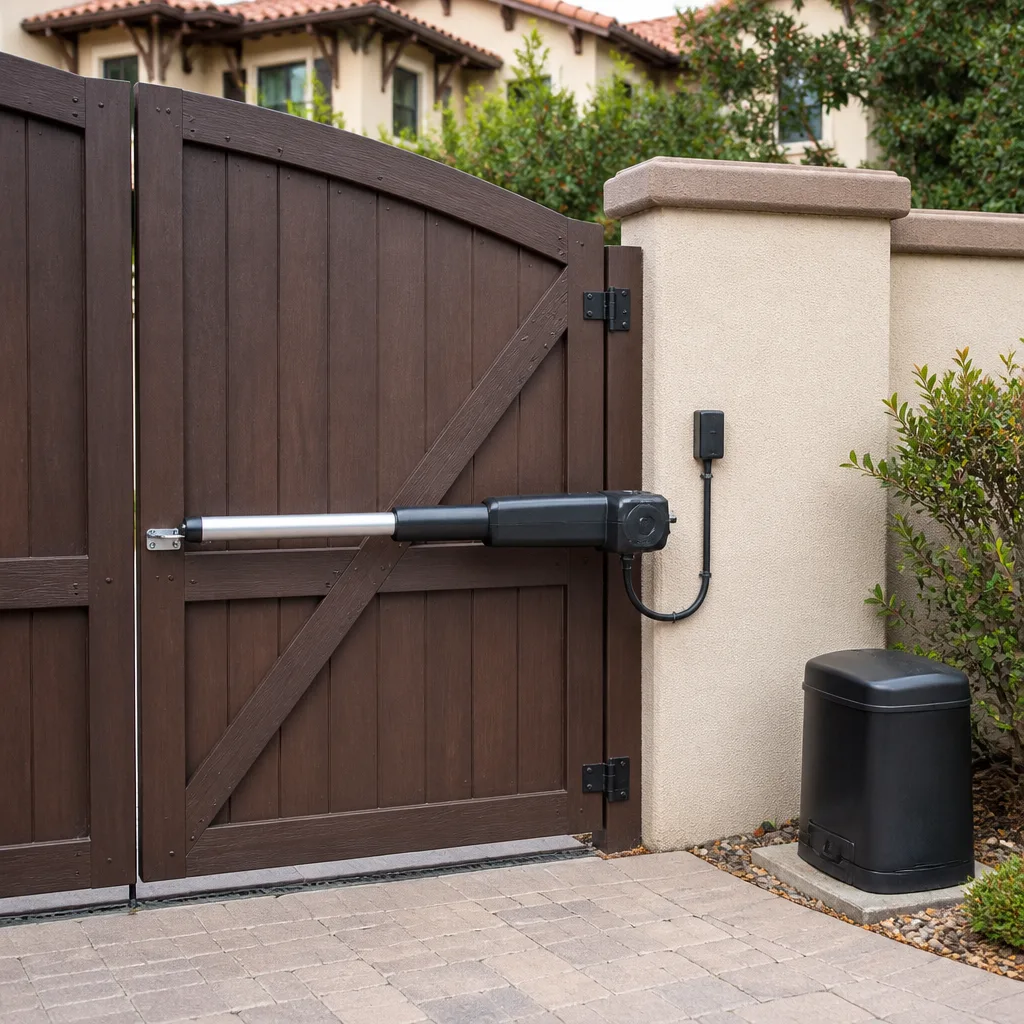
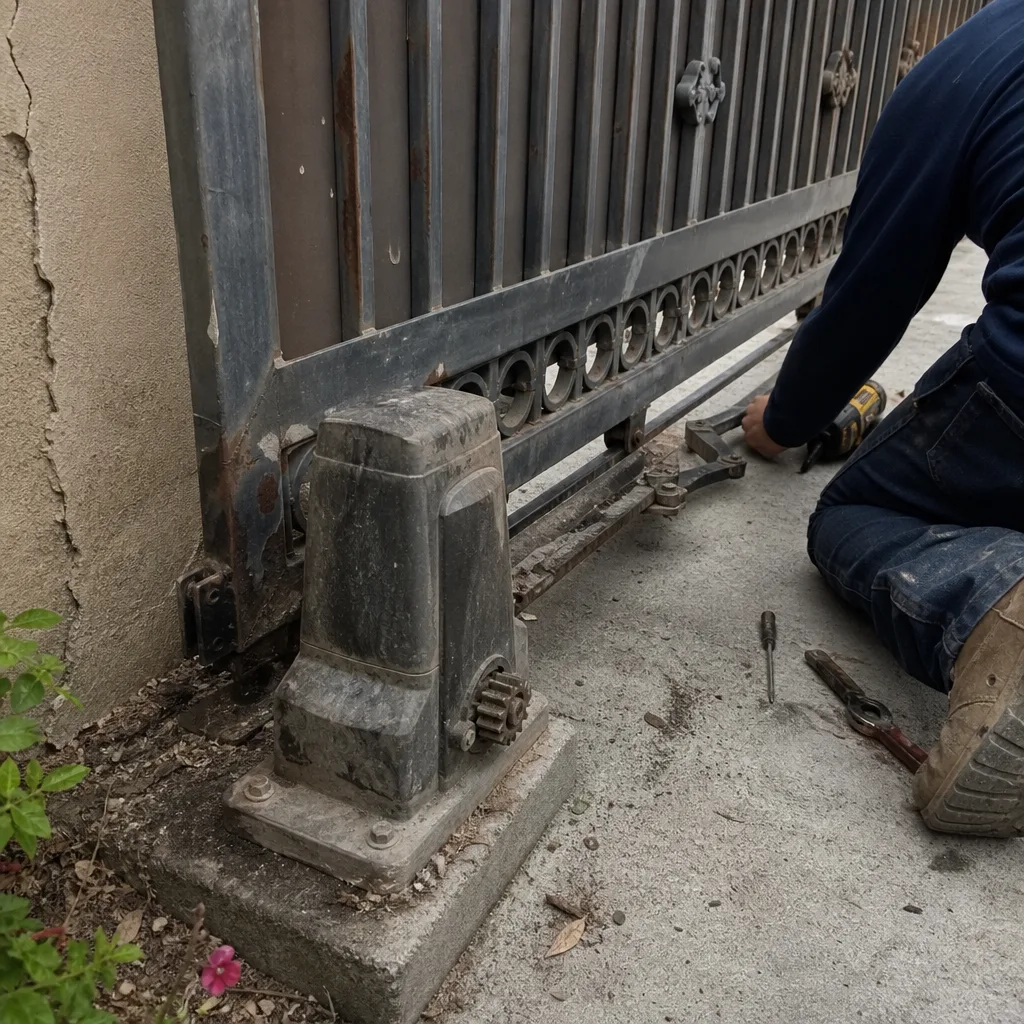 Before
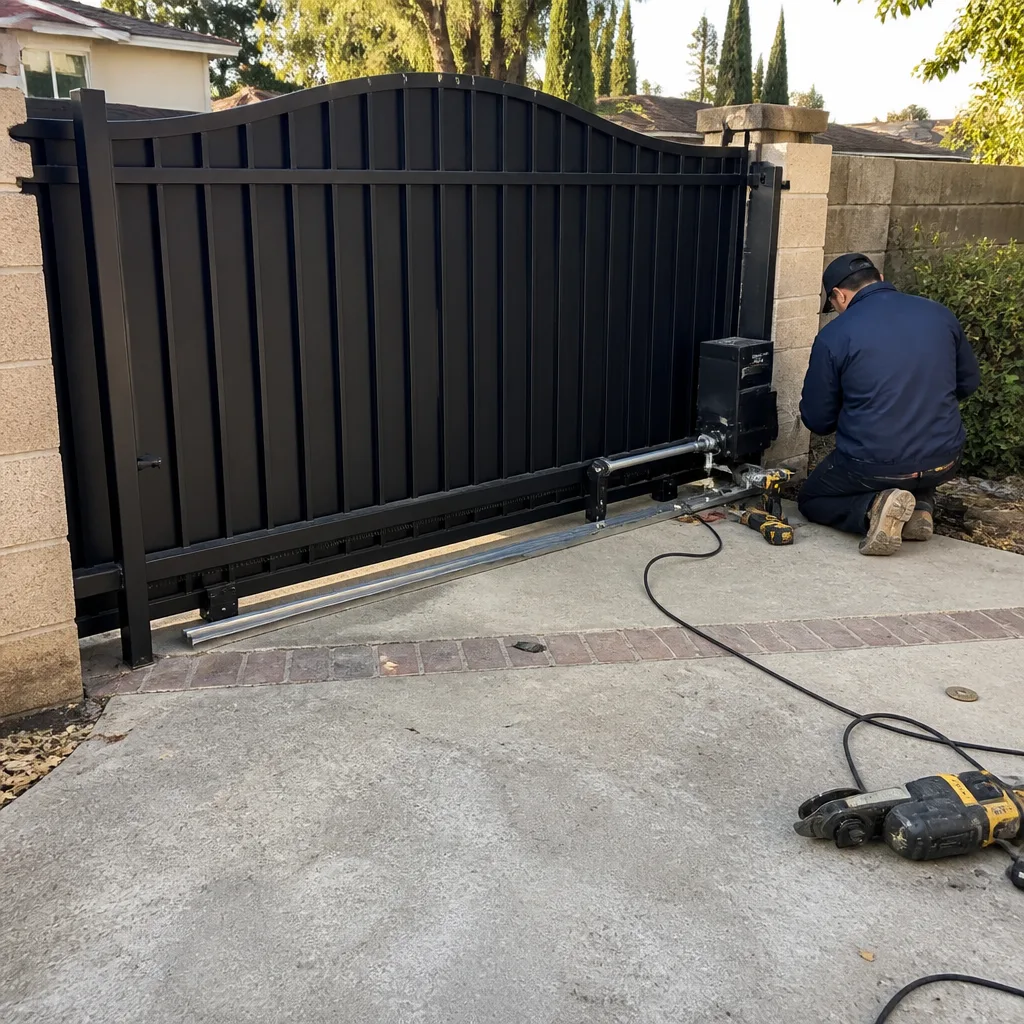 After
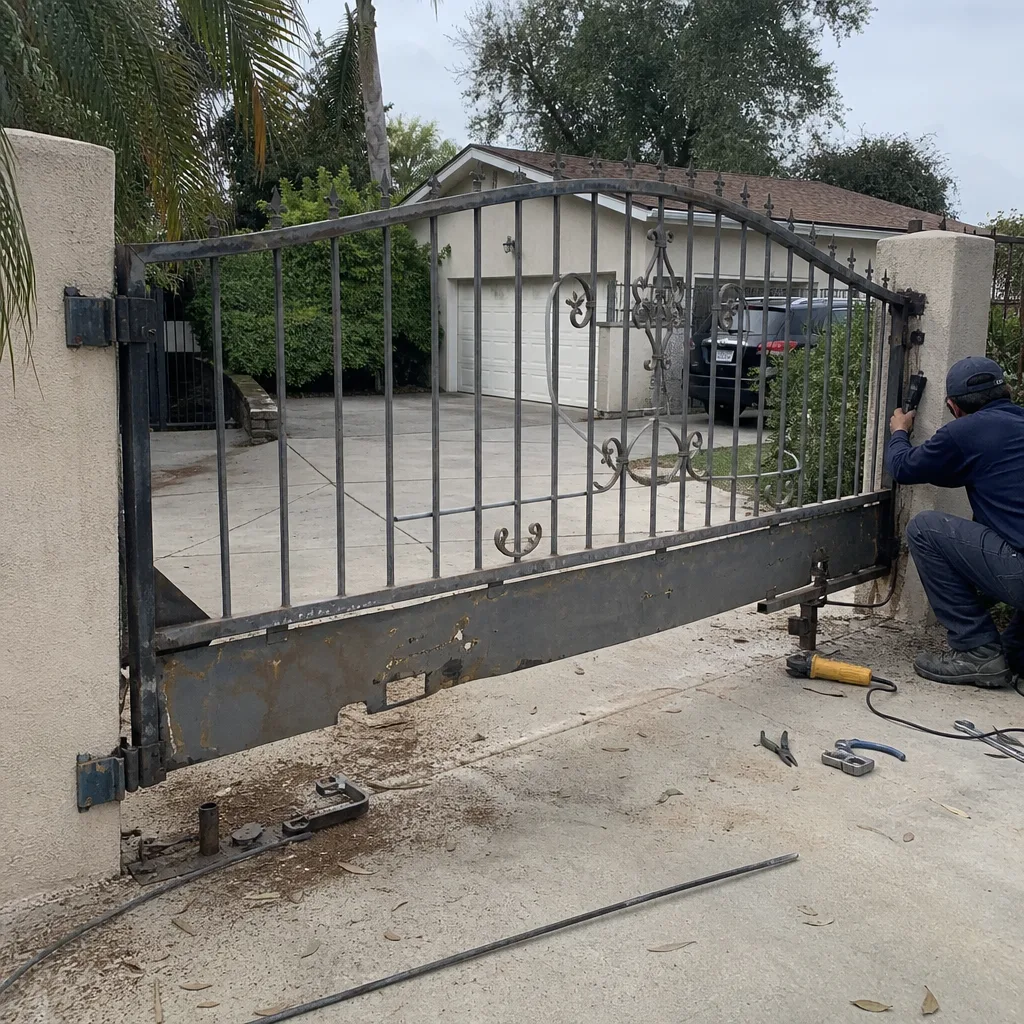 Before
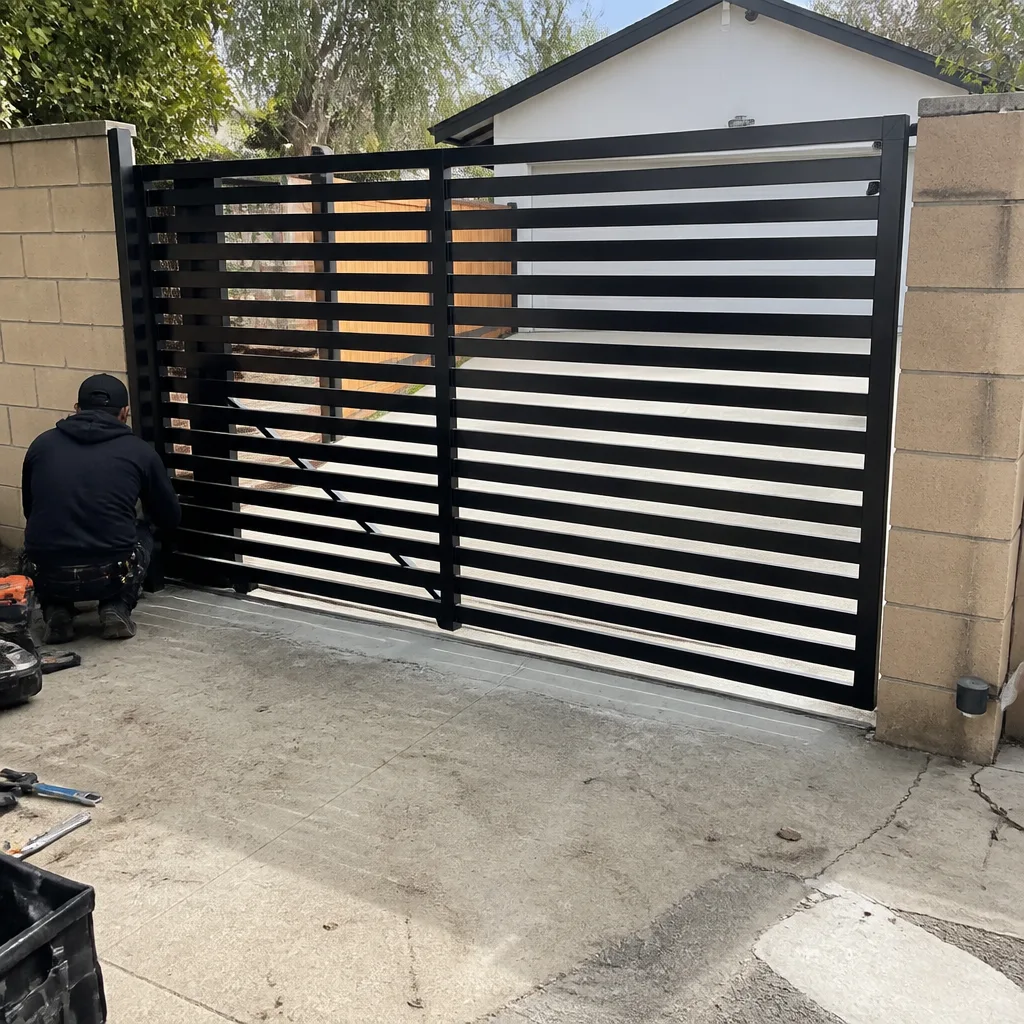 After
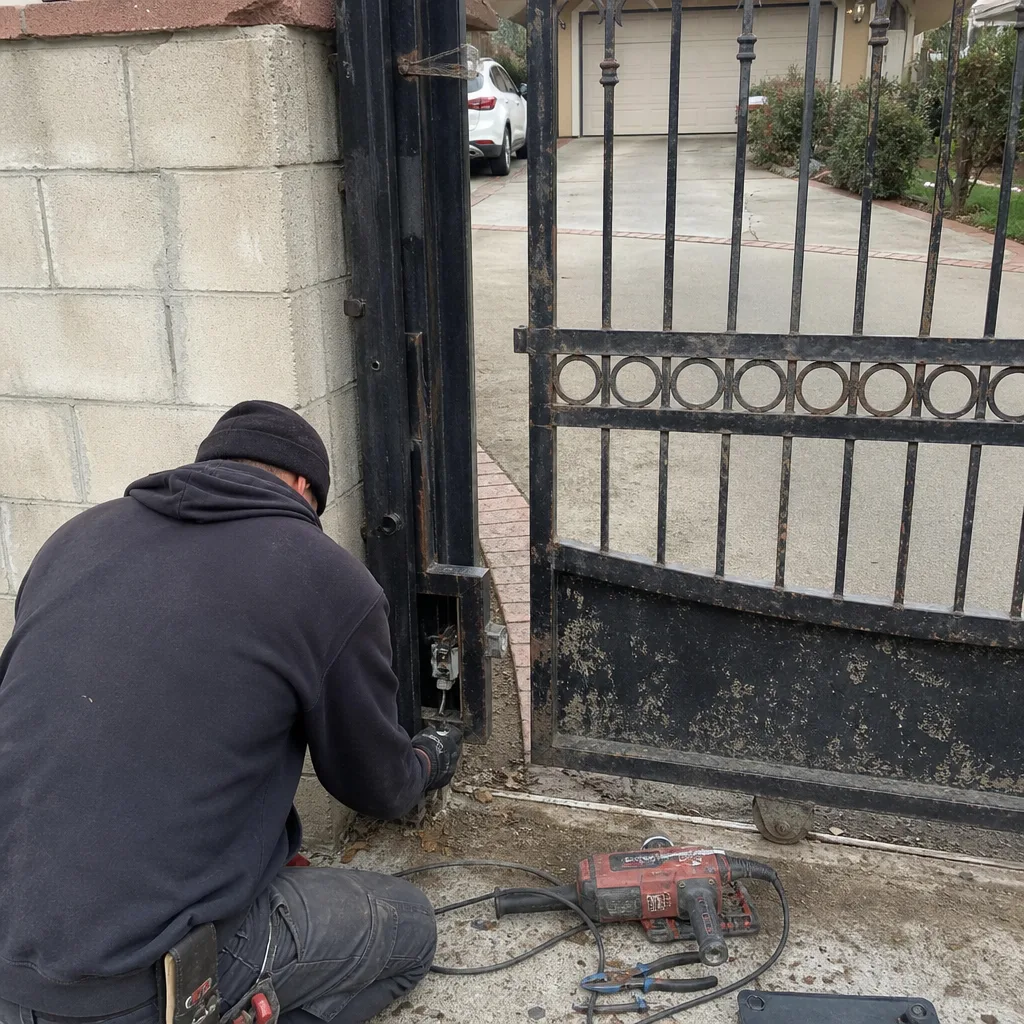 Before
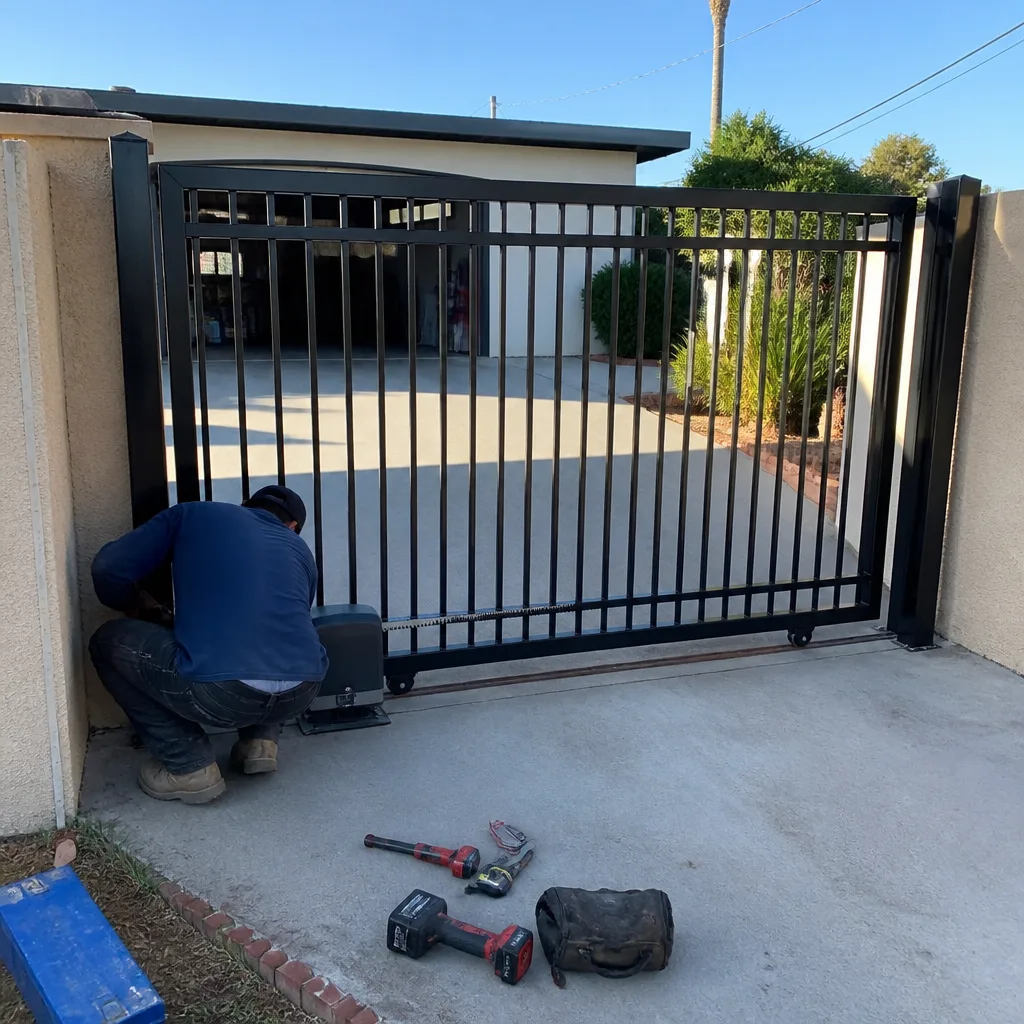 After
Gate Repair Maintenance Checklist for San Fernando Homeowners
Most gate failures in San Fernando don’t start with a broken motor. They start with neglect that went unnoticed for six months, then eighteen, then three years. A hinge that binds slightly today becomes a sagging, dragging gate that burns out a $600 opener by next spring. The sun here does not forgive. The dust that blows down from the foothills gets into every bearing and limit switch. The temperature swings, mild as they are, still expand and contract steel and aluminum through thousands of cycles a year. This guide is what we’d hand a homeowner in San Fernando who wants to keep their gate working for another twenty years. You’ll learn what to check monthly, what to inspect seasonally, what you can handle yourself, and what will send you to the hospital if you try. One mention up front: we’ve been repairing and rebuilding gates in San Fernando since the 1980s, and the checklist below reflects what we’ve pulled out of the ground and off the hinges in this city, not a generic national template.
Quick Answer
A proper gate maintenance checklist for San Fernando homeowners comes down to five routines: a monthly visual and listening check, a quarterly lubrication and cleaning pass, a twice-yearly bolt and alignment inspection, an annual opener and safety-edge test, and a professional tune-up every 12 to 24 months. Most homeowners can handle the first two. The last three are where a trained gate technician earns his keep, because that is where the expensive failures hide.
Table of Contents
- The Monthly Checklist: Ten Minutes That Save a Motor
- How San Fernando’s Climate Works Against Your Gate
- What to Lubricate, What to Leave Alone, and What to Clean
- The Twice-Yearly Deep Inspection: Bolts, Alignment, and Wear
- Opener and Safety-Edge Maintenance: What Actually Prevents Failures
- Welding, Rust, and Structural Repairs: When Cleaning Isn’t Enough
- What a Professional Gate Tune-Up Includes in San Fernando
- Common Mistakes to Avoid
- When to Call a Professional
- Frequently Asked Questions
- The Bottom Line
The Monthly Checklist: Ten Minutes That Save a Motor
The most valuable maintenance habit is also the least technical. Walk the gate once a month while it opens and closes. Not a deep inspection, not a wrench in hand, just your eyes and your ears and ten unhurried minutes. We’ve seen this habit catch failing bearings, dragging wheels, and dying capacitors months before they would have stranded a car in the driveway, and every one of those catches was made by a homeowner who simply paid attention. Here is the routine we recommend, in order:
- Open and close the gate fully while standing beside it. Listen for any new sound. A smooth gate hums. A gate that is developing a problem grinds, squeals, pops, or makes a rhythmic click that wasn’t there before.
- Watch the gate as it travels. It should move at an even speed from start to finish. If it hesitates, shudders, speeds up, or slows down partway through the cycle, that is a signal, not a quirk.
- Check the gate for level. Sight down the top rail with the gate closed. A gate that has started to sag will show a visible downward slope toward the latch side. Six months of sag is a hinge and alignment job. Eighteen months of sag is a burned-out opener and a bent rail.
- Clear debris from the track and the gate’s path. San Fernando’s dry-season winds deposit leaves, plastic bags, and dirt against the track every week. A track obstruction is the single most common cause of false safety reversals we see in this area.
- Pull the manual release and move the gate by hand. It should move with reasonable effort and no binding. This is also the best test of whether the gate is still balanced. If you can’t move it without straining, something is binding, and the motor has been working against that bind every single day.
- Check for new rust, cracks, or loose bolts. Look at the hinges, the wheel brackets, the post bases, and any welded joint. Surface rust you can address. Cracks you cannot.
The monthly pass does not need to be perfect. It needs to be consistent. Most of the catastrophic failures we repair in San Fernando didn’t happen suddenly. They were shouting for months and no one was listening.
How San Fernando’s Climate Works Against Your Gate
San Fernando sits at the northern edge of the San Fernando Valley, in a band that runs hot and dry through the summer and cool and damp through the winter nights. From a gate’s perspective, the city throws three specific problems at it that a coastal gate never faces. Understanding these is the difference between maintaining a gate for ten years and replacing one in eight.
Dust and grit. The winds that sweep down the canyons in the fall carry fine sediment that works its way into every bearing, hinge pin, guide roller, and limit switch on the gate. This dust acts as an abrasive, turning a lubricated bearing into a slow grinder. We regularly see gates in the Mission Boulevard and San Fernando Road corridors with bearing surfaces polished thin by twenty years of valley dust. The answer is not more lubrication, which simply makes a grinding paste, but frequent cleaning of the exposed wear surfaces before lubrication is applied. This is the single most San Fernando-specific maintenance habit we can recommend.
Temperature swings. A San Fernando summer afternoon pushes past 90 degrees, and a winter night drops into the 40s. That is a 50-degree swing across a steel gate that is thirty feet of welded metal. Steel expands when hot and contracts when cold. Over years, this constant movement works bolts loose, opens hairline cracks in welds, and shifts the alignment of a gate by fractions of an inch that add up. Your twice-yearly inspection is timed to catch this cycle, once after the summer heat has done its work and once after the winter cool has settled everything back down.
Morning moisture and corrosion. The coastal influence that reaches San Fernando means many mornings bring heavy dew, especially in the fall and winter. Dew settles on the gate, runs into hinge joints, and sits where two pieces of metal meet. In a hotter dry climate, that moisture would evaporate before it mattered. Here, it spends hours in contact with the steel. That is why untreated iron gates in San Fernando develop hinge rust and frozen pivot points faster than most homeowners expect. The fix is simple and covered in the next section.
What to Lubricate, What to Leave Alone, and What to Clean
Lubrication is the one maintenance task every homeowner tries, and it is the one task we see done wrong more than any other. The wrong product in the wrong place shortens a component’s life. Here is the honest version.
What to lubricate, and with what:
- Hinge pins and pivot points: A heavy-duty white lithium grease or a dedicated hinge lubricant works well. Apply a small amount, cycle the gate a few times, and wipe away the excess. Excess grease catches dust, and dust turns grease into grinding compound.
- Wheel bearings and guide rollers: A light machine oil or a dry graphite lubricant is appropriate here. Graphite is particularly good in San Fernando’s dust because it does not create a sticky surface that holds grit.
- Chain drives: If you have a chain-driven opener, apply a light coating of chain lubricant to the chain while the gate is moving slowly. Do not soak it. Do not use grease.
- Latch and lock mechanisms: A spray graphite or light oil into the lock cylinder and the latch mechanism keeps them working smoothly through the temperature swings.
What to leave alone:
- Rubber safety edges and photo-eye lenses: These need cleaning, not lubrication. Solvents or oils will degrade the rubber and cloud the plastic lenses.
- The circuit board and limit switches inside the opener housing: If these need attention, that is a technician’s job. Oil and electronics do not mix, and the inside of an opener housing is not a place for a homeowner’s spray can.
- Nylon and plastic drive gears: Many modern openers from brands like DoorKing and Elite use nylon gears inside the gearbox for quieter operation. These are permanently lubricated at the factory and should not see additional grease.
What to clean, every quarter:
- Photo-eye lenses: a soft cloth, no solvent.
- Safety edges: wipe with mild soap and water, nothing harsher.
- The track: sweep it out, remove debris, and check for pitting or wear.
- The opener housing exterior: dust and spider webs trap heat, and heat kills capacitors.
Most gate hinges and pivots benefit from lubrication every three to four months. In the dustiest parts of San Fernando, near the equestrian properties and the open lots that face the canyons, every two to three months is more realistic. You’ll know you’re on the right schedule when the exposed metal around the hinge stays shiny and the gate opens without a sound.
The Twice-Yearly Deep Inspection: Bolts, Alignment, and Wear
Twice a year, set aside an afternoon and go over the gate the way a technician would. Early spring and late fall are the best times in San Fernando, after the major seasonal temperature swings. Here is a numbered pass, from foundation to latch:
- Every bolt and nut on the gate and posts. Use a wrench, not your fingers. The temperature cycling we described earlier works bolts loose on a surprisingly predictable schedule. Tighten everything that has a head. If a bolt spins and won’t tighten, the hole has wallowed out and the repair just became more involved. That is not a homeowner fix.
- Hinge wear. Lift the gate slightly with a pry bar and watch the hinge pins. If the pin moves more than a fraction of an inch inside the bushing, the bushing or the pin is worn and should be replaced before the wear transmits to the hinge leaf or the post.
- Gate alignment. With the gate closed, check the gap between the gate and the posts on both sides. It should be even. Check the gap under the gate across its full width. It should be even. An uneven gap means the gate has shifted, and a shifted gate drags, binds, and strains the opener.
- Wheel and track condition. If the gate rolls on wheels, check for flat spots, worn treads, and wobble. Run your hand along the track to feel for pitting or deformation. A wheel with a flat spot stops rolling and starts dragging, and a dragging wheel overloads the opener.
- Welded joints. Look carefully at every weld on the gate frame, especially where vertical pickets meet horizontal rails and where the frame meets the hinge plates. Hairline cracks in a weld start small and grow through thermal cycling and vibration. A crack you can see today is a crack a welder can repair this week, or a crack that will fail entirely in some future month when the gate is under load.
- Electrical and low-voltage connections. Look at the wiring from the opener to the keypad, the photo eyes, and the safety edges. In San Fernando, ants are a surprising problem in low-voltage electrical boxes. They nest, they short connections, and they die. If you see ant trails near your opener, that is worth addressing.
- The posts themselves. Push firmly against each post. A post that rocks is a post that is no longer anchored solidly enough to hold the gate true. This is not an adjustment. It is a repair.
This seasonal pass should take most homeowners about ninety minutes the first time and forty-five minutes once they know their own gate. The value is in the trend line. A hinge that is fine in March and loose in September is a hinge that needs addressing. A bolt that has to be retightened every single time is a bolt that has already failed in its job.
Opener and Safety-Edge Maintenance: What Actually Prevents Failures
The opener is the part of the gate most homeowners fear and the part that actually needs the least routine attention from them. Most modern gate openers, including the Ghost Controls, Mighty Mule, and DoorKing units common on San Fernando driveways, are sealed units designed to run for years without internal adjustment. What they need from you is modest: keep the housing clean, keep the wiring dry, and test the safety features regularly. The testing matters more than the cleaning, and here is why.
Safety-edge and photo-eye testing. The safety edge is the rubber strip along the leading edge of the gate. The photo eyes are the small sensors mounted near the ground on either side of the gate opening. Their job is to stop and reverse the gate when something is in the path. In California, UL 325 compliance requires these devices to function correctly, and gate openers will typically run through a self-test on every cycle. But self-tests catch electrical failures, not alignment drift. Test the photo eyes manually once a month by placing an object in the beam while the gate closes. Test the safety edge by pressing on the strip while the gate is closing. If either test fails, stop using the automatic opener and call for service the same day. A gate that does not reverse under pressure is not something to live with.
Battery backup. Many newer openers include a battery backup that keeps the gate working through a power outage. In San Fernando, where high winds and heat waves produce scattered outages, this battery is worth maintaining. Most batteries last two to three years, and most failures we see are batteries that were never replaced. If your opener has a battery and the gate is more than three years old, ask a technician to load-test the battery during your next tune-up.
Capacitors. The capacitors inside an opener hold the starting charge the motor needs. Heat is the enemy of capacitors, and San Fernando heat is relentless. A capacitor that fails will usually warn you first: the motor will hum for a second before it starts, or the gate will open slightly slower than it did a month ago. Do not wait for the failure. If the gate sounds labored on start, that is a service call before it becomes an emergency.
The opener is not a hobby project. When it comes to the motor, the board, the limit switches, and the high-tension cables that counterbalance the gate, the honest maintenance advice is this: inspect what you can see, test the safety systems, and leave the inside of the housing to someone who is trained and equipped for it. The coiled springs and cables under a gate carry enough tension to cause serious injury, and that is not language we use casually.
Welding, Rust, and Structural Repairs: When Cleaning Isn’t Enough
Every gate in San Fernando eventually faces the same two structural enemies: rust and fatigue. Rust is the oxidation of the steel, accelerated by morning dew and the salts that travel inland with the coastal air. Fatigue is the gradual cracking of welds and metal under years of repeated stress. Both are repairable. Neither is a maintenance task you can do with a spray can.
Rust treatment. Light surface rust on a painted steel gate is manageable. Wire-brush the rust back to bare metal, treat the area with a rust converter, prime, and repaint with a paint matched to the original. This is the extent of what most homeowners should attempt. Rust that has pitted the metal, rust that flakes away in layers, rust around hinge plates and weld joints, that is structural rust, and it requires assessment by someone who works with metal every day. In San Fernando, the worst rust we see is always at the bottom rail near the ground, where sprinklers hit the gate every morning. If your irrigation sprays the gate, adjust the heads. That single change adds years to a steel gate.
Weld repairs. A cracked weld on a gate frame is not a cosmetic issue. The crack means the frame is flexing, and the flexing means the opener is working against movement the gate was not designed to make. Weld repairs on a driveway gate require cleaning the area, grinding a bevel into the crack, and laying a proper weld. This is not a job for a homeowner with a borrowed welder. A gate that fails at a weld can drop its full weight in a single moment, and gates weigh hundreds of pounds. We’ll say this plainly: we would rather repair a cracked weld next week than respond to a dropped gate next year.
The full scope of structural work, from rust repair and welding to hinge replacement and post resetting, is part of what we handle through our Ironworks Gate Co. home services. It is also the kind of work where a second opinion is worth having, and we offer a free second opinion on any written estimate.
What a Professional Gate Tune-Up Includes in San Fernando
We run an $89 seasonal tune-up, and the list of what happens during that visit is worth understanding even if you choose a different company. A proper tune-up is not a quick visual once-over. Here is the scope we consider non-negotiable, in the order we perform it:
- Full cycle the gate and record opener current draw in both directions. Elevated current draw is the earliest reliable sign of a drag, a bind, or a motor fighting something.
- Inspect and tighten all mounting bolts, hinge bolts, wheel brackets, and post fasteners.
- Lubricate every hinge, pivot, and roller with the correct product for the component and the dust conditions at that specific house.
- Test and adjust the safety features, including the photo eyes, the safety edge, and the auto-reverse sensitivity. This includes a physical test, not just an electrical one.
- Check and adjust the limit switches so the gate opens to the correct position and closes fully without slamming.
- Inspect the drive system, whether it’s a chain, belt, or hydraulic ram, for wear and proper tension.
- Check the condition of all low-voltage wiring at the keypad, the telephone entry system, the loop detector, and any other access device.
- Assess structural wear: hinge pin movement, sag, weld condition, rust, and post stability. We tell the homeowner what we found, in plain language, with an honest recommendation on what needs attention now and what can wait.
We’ve tuned gates in every neighborhood in San Fernando, from the older homes near San Fernando High School to the newer developments off Glenoaks Boulevard. The gates differ. The tune-up doesn’t. A gate that gets this service every year or two is a gate that rarely needs us for anything else.
Common Mistakes to Avoid
- Ignoring a new sound. A gate that has changed its sound has changed something mechanical. The grind, the squeak, the rattle, each has a specific cause, and each is cheaper to fix the week it appears. By month three, the cheap fix is gone.
- Over-lubricating. More grease is not better. Excess lubricant attracts San Fernando dust, creates an abrasive paste, and accelerates the wear it was meant to prevent. A thin coating, wiped clean, is the whole secret.
- Adjusting the opener force yourself. When a gate starts reversing for no reason, the temptation is to crank up the opener force so it pushes through. In California, this is a direct violation of UL 325, and it turns the gate from a safety-compliant system into a several-hundred-pound hazard. The problem is not the force setting. The problem is whatever made the gate bind, and that is what needs fixing.
- Never checking the manual release. The manual release is the emergency exit for your gate. If the power fails and the release is rusted shut because it has never been pulled, you are climbing the gate or cutting the chain. Test it every few months, and spray a little lubricant into the mechanism when you do.
- Painting over rust. Paint does not stop rust. It hides it while it grows underneath. The rust has to come off first, down to bare metal. If you spend an afternoon repainting without wire-brushing first, you’ve spent an afternoon buying yourself six months.
- Spraying the opener housing with the garden hose. Opener housings are weather-resistant, not waterproof. A pressure washer directed at the housing is a very fast way to fill the electronics with water. Wipe the exterior. Do not wash it.
- Letting the sprinklers hit the gate. This is the most preventable cause of rust we see in San Fernando. The bottom rail of a gate that gets hit by sprinklers every morning will rust through years before a dry gate. Adjust the spray pattern so the gate stays dry.
When to Call a Professional
Some maintenance tasks are right for a homeowner. Others aren’t, and the line is usually drawn at safety or structural work. Call a professional if the gate is sagging enough to drag, if you find a crack in a weld or a post that rocks, if the safety edge or photo eyes fail a manual test, if the opener hums without turning, or if the gate has dropped off a hinge or come off its track. These are not adjustment calls. They are repair calls, and they need someone who does this work every week. The coiled springs and high-tension cables on many gates carry enough stored energy to cause serious injury, and no maintenance checklist should ever include them. Ironworks Gate Co. offers free estimates in San Fernando. Call (925) 307-8328, and a real person will answer, any hour of any day.
Frequently Asked Questions
Every three to four months is the right cadence for most San Fernando properties, with every two to three months being more appropriate for gates exposed to heavy dust, like those near open canyon lots or unpaved shoulder roads. Use a light lubricant and wipe away the excess so the dust has nothing to stick to. If your gate still squeaks after lubrication, the noise isn’t a lubrication problem. Call us for a look.
Our seasonal tune-up is $89, and that is a flat rate you’ll know before we schedule. Individual repairs like a hinge replacement or a welding job are quoted before any work begins, so there are no surprises on the bill. We also offer $50 off any repair over $250 and a permanent 5% senior and veteran discount. Call (925) 307-8328 for an exact quote on your gate.
You can and should keep the opener housing clean, the wiring dry, and the safety features tested monthly. The inside of the housing, the board, the limit switches, and the high-tension components are not homeowner territory. Those are the parts where a mistake is expensive or dangerous. Our technicians are trained and equipped on nine opener brands, including Ghost Controls, DoorKing, Elite, and Mighty Mule, so the correct fix happens on the first visit.
The single most common problem we see is dust and grit wearing out hinge pins and rollers, followed closely by rust from sprinkler overspray and morning dew. Both are predictable, both are preventable, and both are far cheaper to address during a seasonal tune-up than during a breakdown. A gate that gets attention twice a year rarely fails without warning.
Spring and fall are the best times, after the extreme temperature swings have worked their way through the metal and before the next season’s dust and rain arrive. Early spring catches the winter’s dew-related rust while it is still surface rust. Late fall catches the summer’s heat expansion before winter moisture settles in. Either is better than waiting for a symptom.
Yes. Estimates are free, and we provide a written second opinion on any estimate you’ve received from another company at no charge. The price we quote is the price we do the work for, settled before a single bolt is turned. Call (925) 307-8328 and ask for Victor.
The Bottom Line
A gate is a mechanical system, and every mechanical system has a maintenance schedule. In San Fernando, that schedule is shaped by dust, temperature swings, and morning moisture. The homeowner who walks the gate once a month, lubricates quarterly, inspects twice a year, and tests the safety edges will likely never see a catastrophic failure. The homeowner who waits for a symptom will know us on a first-name basis. We would rather be your tune-up company than your emergency repair company, and the $89 seasonal tune-up is the way that happens. The gate you maintain is the gate that outlasts the house around it. The gate you ignore is the gate that fails on Thanksgiving morning. Maintenance is not optional. It is just the way a steel gate makes it to forty.
Written by the team at Ironworks Gate Co.